

The Rational Animal: Understanding the Nuances of Human Choice
Golden Hook & Introduction
SECTION
Nova: Okay, Atlas, I'm going to give you two words, and I want you to tell me the first thing that comes to mind, no filter. Ready?
Atlas: Oh, I like this game. Hit me.
Nova: "Rational Animal."
Atlas: Oh man, that's almost an oxymoron, isn't it? Like, we we're rational, right? We tell ourselves stories about our logical decisions, but deep down, we're just… animals. Driven by instinct, emotion, a little bit of chaos. Am I close?
Nova: You are close, it's almost uncanny. Because today, we're dissecting a concept that challenges that very idea, drawing insights from a book that stitches together seemingly disparate ideas to reveal the true nuances of human choice. We're diving into "The Rational Animal: Understanding the Nuances of Human Choice." Now, this isn't a single book, but a potent synthesis of ideas, inspired by the profound works of thinkers like Jonathan Haidt and Temple Grandin.
Atlas: That's a great way to put it, a synthesis. Because often, we get stuck in one mode of thinking. So, what's our first big dive into this 'rational animal' paradox?
The Dual-Process Mind: Intuition vs. Deliberation
SECTION
Nova: Our first core topic is "The Dual-Process Mind: How We Really Make Choices." It’s about understanding that our brains aren’t just one big logic machine. Instead, we’re operating with at least two distinct systems.
Atlas: Okay, so, like, the angel on one shoulder and the devil on the other? Or is it more scientific than that?
Nova: Much more scientific, though the angel/devil analogy captures a bit of the internal push and pull. Think of it as System 1 and System 2. System 1 is fast, intuitive, emotional, automatic. It’s your gut reaction. System 2 is slow, deliberate, analytical, effortful. It’s what you use to solve a complex math problem.
Atlas: So you're saying a lot of our daily choices, even the ones we are logical, are actually System 1 just making a snap judgment?
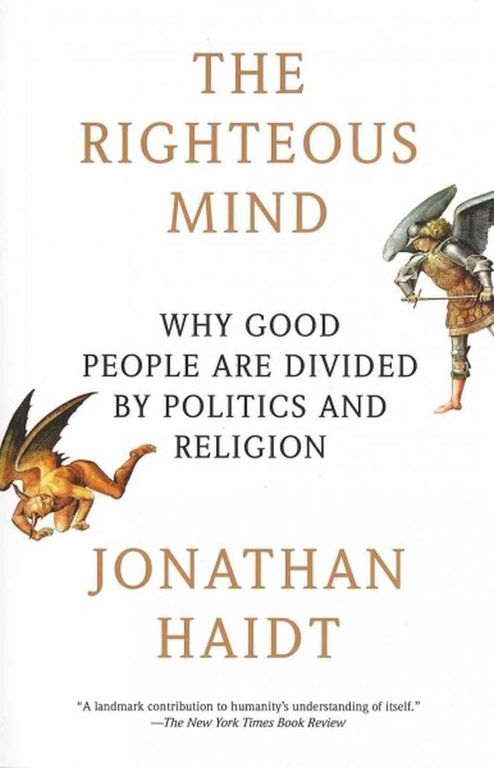
Nova: Exactly! Jonathan Haidt, in his seminal work "The Righteous Mind: Why Good People Are Divided by Politics and Religion," makes a powerful case for this. He famously uses the metaphor of an elephant and a rider. The elephant is our intuition—massive, powerful, and largely in charge. The rider is our conscious reasoning—it it’s steering the elephant, but mostly it's just trying to rationalize where the elephant to go anyway.
Atlas: That’s actually really inspiring. I always thought of "gut feelings" as a bit… unreliable. But Haidt is saying it's the primary driver?
Nova: He argues that moral intuition often precedes rationalization. We something is right or wrong, and then our rational mind scrambles to construct a logical argument to justify that feeling. It's not that reason is unimportant, but its role might be more like a press secretary for our emotions than the CEO of our decisions.
Atlas: Wow, that’s kind of heartbreaking for those of us who pride ourselves on being purely logical. So, if our intuitive elephant is so powerful, how does this play out in, say, consumer choices? Because our listeners, especially those in marketing or product design, are always trying to understand why people buy what they buy.
Nova: Well, if you understand that people often make decisions intuitively and then rationalize them, you can design for that. Think about product packaging. The aesthetics, the feel, the immediate emotional connection—that’s System 1. The fine print, the feature list, the price comparison—that’s System 2. But if System 1 has already fallen in love, System 2 is much more likely to find reasons to justify the purchase.
Atlas: So basically you’re saying, don't just present the facts; make the elephant good first.
Nova: Precisely. It's about crafting choice architectures that subtly nudge the elephant in the right direction. It's why things like default options are so powerful. Most people won't expend the System 2 effort to change a default, even if it's not perfectly optimal for them. The path of least resistance is often the path of intuition.
Atlas: That makes me wonder, if human behavior is so predictably irrational, what ethical responsibilities do we have when designing systems that influence choices, particularly in consumer contexts? It feels like a superpower that could easily be misused.
Nova: That’s the deep question, isn't it? It requires us to move beyond just understanding people make choices to considering we're influencing them and to what end. It moves us into ethical design and responsible nudging. It’s about leveraging these insights for positive impact, for guiding people toward better long-term outcomes, rather than just short-term profit.
Diverse Cognitive Styles: Beyond the Standard Brain
SECTION
Nova: And that naturally leads us to the second key idea we need to talk about, which often acts as a counterpoint to what we just discussed: the power of diverse cognitive styles. While Haidt shows us the commonalities in our decision-making, others, like Temple Grandin, reveal the incredible spectrum of we think.
Atlas: Temple Grandin—she's the one who talks about 'thinking in pictures,' right? I’ve heard her speak; her perspective is truly unique.
Nova: Absolutely. In her book, "Thinking in Pictures: And Other Reports from My Life with Autism," she offers an extraordinary window into a different mode of thought. Grandin, who is autistic, describes herself as primarily a visual thinker. She doesn't think in language or abstract concepts in the same way many neurotypical people do. She literally thinks in detailed, vivid images.
Atlas: So, when she hears the word "church," she doesn't think of the abstract concept of a church, but she sees a montage of every church she's ever seen?
Nova: Exactly! Or when someone talks about a cattle chute, she sees herself walking through it, feels the metal, sees the angles, the shadows. This isn't just an interesting quirk; it's a profound demonstration of how diverse cognitive styles contribute to problem-solving. Her visual thinking allowed her to revolutionize the livestock industry, designing humane and efficient handling facilities that others, thinking in words and abstract diagrams, completely missed.
Atlas: That’s a great example. It’s like if you only ever thought in spreadsheets, you’d miss the spatial relationships a visual thinker would immediately grasp. So, how does this connect back to our 'rational animal' and influencing choices?
Nova: It highlights that there isn't one "rational" way to approach a problem. If you're designing a product or a marketing campaign, and you only cater to a linguistic, sequential thought process, you're missing a huge segment of the population, and potentially, the most innovative solutions. Grandin's work shows us that visual thinkers, pattern thinkers, system thinkers—they all bring unique strengths.
Atlas: I can see how that would be critical for building truly inclusive and effective systems. If you're trying to explain a complex process, for example, just using text might leave out a 'picture thinker' who needs a diagram or a video.
Nova: Or even for team dynamics! Understanding that your colleague who struggles with abstract brainstorming might excel at visualizing the detailed implementation steps can transform how you collaborate. It’s about recognizing that cognitive diversity is a strength, not a deficit.
Atlas: Right, like, that's going to resonate with anyone who's ever felt like their brain just works "differently" from the norm. And for those of us trying to drive impact, especially with new tech like AI, it means we need to think about how these systems are presented and interacted with, not just their underlying logic.
Nova: Absolutely. When we design user interfaces, or even how we communicate complex ideas, embracing diverse cognitive styles allows us to create more effective strategies for product adoption, more resonant marketing messages, or even more robust personal habit formation. It’s about meeting people where their minds are, not forcing them into a single cognitive mold.
Synthesis & Takeaways
SECTION
Nova: So, what we've really uncovered today, Atlas, is that the 'rational animal' is far more complex and fascinating than a simple logic machine. We're driven by powerful, intuitive elephants, and we perceive the world through a kaleidoscope of cognitive styles.
Atlas: It's like we're all walking around with these incredibly sophisticated, yet often misunderstood, internal operating systems. And the more we understand those systems—both the universal intuitive drivers and the diverse ways our brains process information—the better we can design for human well-being and impact.
Nova: Precisely. It shifts our perspective from trying to force people to be "rational" in a narrow sense, to understanding their inherent wiring and designing systems that work that wiring. It suggests that true rationality might lie in acknowledging and leveraging our full cognitive spectrum, rather than trying to suppress it.
Atlas: That’s a great way to put it. It’s not about fighting our nature, but understanding and channeling it. And for anyone looking to make a meaningful impact, whether in business, product design, or just in their personal interactions, that understanding is an incredibly powerful tool. You can’t build effective systems if you don’t understand the human at the center of them.
Nova: It’s a call to profound empathy and thoughtful design. To really see people, not as blank slates to be manipulated, but as complex, intuitive, visual, linguistic, systemic beings. That's where true innovation and ethical influence truly begin.
Atlas: Absolutely. This is Aibrary. Congratulations on your growth!