The 'Predictive' Blind Spot: Why Strategic Foresight Isn't About Fortune-Telling.
Golden Hook & Introduction
SECTION
Nova: Alright, Atlas, quick game. I'm going to throw out a word related to 'the future,' and you just hit me with the first thing that pops into your head. Ready?
Atlas: Oh, I like that. Spontaneous! Hit me.
Nova: Alright, 'future.'
Atlas: Flying cars. Definitely flying cars. Still waiting.
Nova: Ha! Okay, 'strategy.'
Atlas: Uh… spreadsheets. Lots and lots of spreadsheets. And coffee.
Nova: And 'foresight'?
Atlas: Crystal ball. Definitely a shimmering, slightly dusty crystal ball. With a tiny crack in it.
Nova: Crystal ball. See, that's where so many of us get tripped up. We associate foresight, strategic planning, even our own personal futures, with this idea of prediction, of knowing exactly what's next, like gazing into that crystal ball.
Atlas: Right? I mean, who want to know? Especially when you're trying to build something, secure a foundation, scale an impact. We crave that certainty.
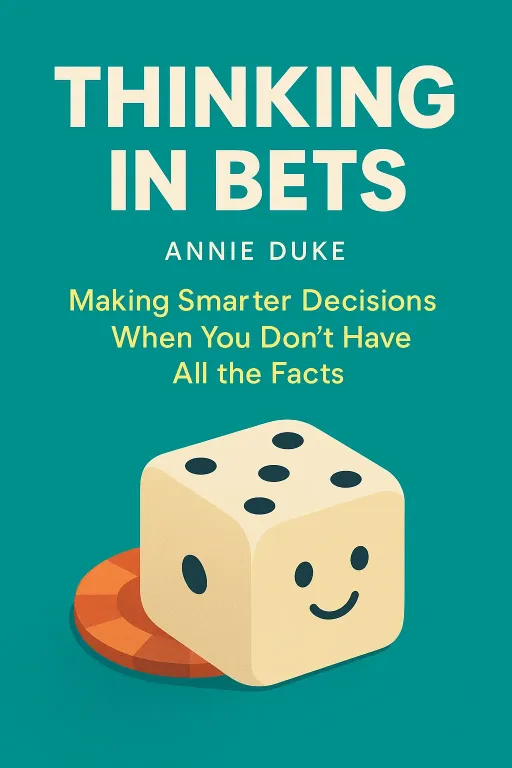
Nova: Exactly. And that craving for certainty, that 'predictive blind spot,' is precisely what Annie Duke challenges in her phenomenal book, "Thinking in Bets."
Atlas: Oh, I love that one. What's so fascinating is Duke's background. She's not some ivory tower academic or a seasoned CEO who's only seen the world from the top. She's a former professional poker player.
Nova: Absolutely. And that's crucial because her insights aren't theoretical; they're forged in the high-stakes, real-time environment of a poker table, where incomplete information is the absolute norm. It's a battle-tested approach to decision-making.
Atlas: So, she's basically saying life, and by extension, strategic planning, is more like a poker game than a game of chess.
Nova: Precisely. And that insight fundamentally shifts your approach from seeking guaranteed outcomes to mastering uncertainty. It’s about understanding probabilities and making robust decisions in environments where you simply don't have all the pieces.
The Myth of Prediction vs. The Reality of Probability
SECTION
Nova: So, let's really unpack this 'predictive blind spot.' Our brains are wired for narrative. We want a clear story: A leads to B, which leads to C. And when it comes to the future, we desperately want that story to be a prediction. We ask, "What happen?"
Atlas: But isn't it natural for leaders, for strategists, to certainty? Especially when you're trying to build something real, like a new product, or secure a market fit. You need a solid foundation, not a guessing game.
Nova: It’s absolutely natural to want it, Atlas. The problem is, it's often an illusion, and chasing that illusion can actually make your strategies more fragile. Think about weather forecasting. A meteorologist doesn't say, "It rain at 3:17 PM." They say, "There's an 80% chance of rain between 3 and 5 PM."
Atlas: Oh, I see. It's less about drawing a straight line to one future, and more about mapping out all the possible detours and roadblocks.
Nova: Exactly. Strategic foresight isn't about perfectly predicting the future; it's about understanding the of possible futures and the probabilities associated with each. It’s about making decisions that are robust enough to succeed across a range of potential outcomes, rather than being perfectly optimized for just one.
Atlas: So, it's about being prepared, not being a seer. That really shifts the pressure. Can you give me a more concrete example of how this probabilistic thinking changes a strategic decision?
Nova: Of course. Imagine two companies launching a new tech gadget. Company A spends all its resources optimizing for one specific market reception—a huge, immediate hit with early adopters. They predict it be a runaway success. Company B, on the other hand, considers several scenarios: a runaway hit, a slow but steady growth, or even a lukewarm reception. They allocate resources to be flexible, perhaps with modular design, adaptable marketing campaigns, and contingency plans for different sales volumes.
Atlas: And what happens when the market doesn't behave exactly as Company A 'predicted'?
Nova: Company A, despite its initial confidence, finds itself scrambling, with excess inventory, an inflexible supply chain, and a marketing message that no longer resonates. Company B, however, can pivot. They might lean into their slow-burn strategy, or quickly adapt their marketing to a different segment. They made a robust decision, not a 'right' prediction. Their strategy was designed to uncertainty, not eliminate it.
Atlas: That makes perfect sense. It’s about building resilience into your plan from the outset, rather than hoping for a single, perfect outcome. I can see how that shifts the pressure away from being 'right' all the time, which is a huge burden for any visionary or architect.
Mastering Uncertainty: The Poker Player's Mindset for Strategic Planning
SECTION
Nova: And this brings us perfectly to Annie Duke's core metaphor: "life is like poker, not chess." This isn't just a catchy phrase; it's a fundamental reorientation of how we think about decision-making, especially for those trying to solidify their future paths.
Atlas: Hold on, that's a pretty bold claim. Most strategists I know would rather be a chess master than a poker player. Chess feels so much more... intellectual, controlled. What's the real distinction here for someone trying to secure product-market fit or scale user acquisition?
Nova: That's a great challenge, Atlas. Chess is a game of perfect information. Both players see all the pieces, all the moves. You can, in theory, calculate the optimal path. Poker, however, is a game of incomplete information. You don't know what cards your opponents have, or what cards are coming next. You make the best decision with the information you, not the information you.
Atlas: So, it's about optimizing your decision-making process, even when the outcome isn't guaranteed? That’s going to resonate with anyone who’s felt the sting of a 'good decision' that led to a bad outcome because of bad luck.
Nova: Exactly! In poker, you can play a hand perfectly and still lose because of the cards dealt. Conversely, you can play terribly and get lucky. Duke argues that the goal isn't to win every single hand – or have every single strategic initiative succeed – but to make consistently good "bets" over time. It's about developing a sound process, assessing probabilities, and understanding the role of luck. This frees you from the tyranny of outcomes.
Atlas: That’s powerful. So, for our listeners who are constantly building and iterating, it means focusing on the rather than always chasing a guaranteed win. Can you give us an example of how this 'process over outcome' thinking applies to, say, long-term visioning workshops?
Nova: Absolutely. Imagine a team in a visioning workshop. Instead of trying to predict future and then building a single, rigid 10-year plan around it, a poker-minded approach would encourage them to explore multiple plausible futures with varying probabilities. They'd ask: "What are the key uncertainties? What are the high-stakes 'bets' we're making about technology adoption, market shifts, or regulatory changes?"
Atlas: And how does that translate into action?
Nova: It translates into building flexibility into their long-term vision. They might identify early indicators for different future scenarios, and design strategic options that allow them to adapt. For instance, if one bet is on a certain technology becoming dominant, they might invest enough to stay competitive, but also keep other options open, rather than putting all their chips on one unproven future. They're making a calculated bet, managing the risk, and preparing to adjust as new 'cards' are revealed.
Atlas: That really shifts the focus from 'was I right?' to 'did I make the best possible choice with what I knew, and am I ready to adapt?' It's a much more sustainable and resilient way to approach strategy, especially for those building something real and impactful.
Synthesis & Takeaways
SECTION
Nova: So, what we're really talking about here is a profound mindset shift. Strategic foresight isn't about being a fortune-teller; it's about becoming a master of probability, a skilled poker player in the game of business and life.
Atlas: For our listeners who are architects of the future, constantly working to secure their foundations, scale their impact, and solidify their paths, the real power comes from embracing the bets, understanding the odds, and building resilience, not from trying to avoid uncertainty.
Nova: Exactly. It’s about making peace with incomplete information and focusing on robust decision processes. That's how you build something truly lasting and impactful, something that can withstand the inevitable twists and turns of an uncertain world.
Atlas: I love that. It’s about trusting your inner knowing, making the best decision you can, and then being ready for whatever comes next. So, what's one strategic 'prediction' you can reframe as a 'probabilistic bet' this week? Just pause and reflect on that for a moment.
Nova: Absolutely. Take 15 minutes, reflect on a big decision, and ask yourself: what are the probabilities here, not the certainties?
Atlas: That's a powerful challenge.
Nova: This is Aibrary. Congratulations on your growth!