The Hidden Cost of Speed: Why Strategic Patience Wins in Complex Markets
Golden Hook & Introduction
SECTION
Nova: Everyone says 'speed is king,' 'fail fast,' 'move quickly.' But what if the fastest way to truly win, especially in complex, long-game markets, is to deliberately slow down?
Atlas: Whoa. Hold on. That sounds… almost heretical in today’s world. I mean, every leader I know, every innovator, they're all pushing for more speed, more agility. Slowing down feels like giving your competitors a massive head start.
Nova: I know, right? It goes against everything we're told. But what if that relentless pursuit of speed is actually our biggest blind spot, leading to costly mistakes and missed opportunities, particularly in those intricate, long-cycle industries?
Atlas: Okay, so you’re saying there's a hidden cost to speed that we're just not seeing? That's going to resonate with anyone who's felt the pressure to make snap decisions in a high-stakes environment.
Nova: Exactly. And that's what we're unpacking today. We're diving into the profound wisdom of strategic patience and resilience, drawing insights from two incredible thinkers. We're talking about how to truly win in complex markets, not by racing, but by mastering the art of the pause.
Atlas: Right. And one of the most fascinating voices in this space, someone who really understands making high-stakes decisions under uncertainty, is Annie Duke, a former professional poker player. Her background alone tells you this isn't fluffy theory; it’s about real-world consequences and calculated risks.
Reframing Obstacles: The Stoic Path to Resilience
SECTION
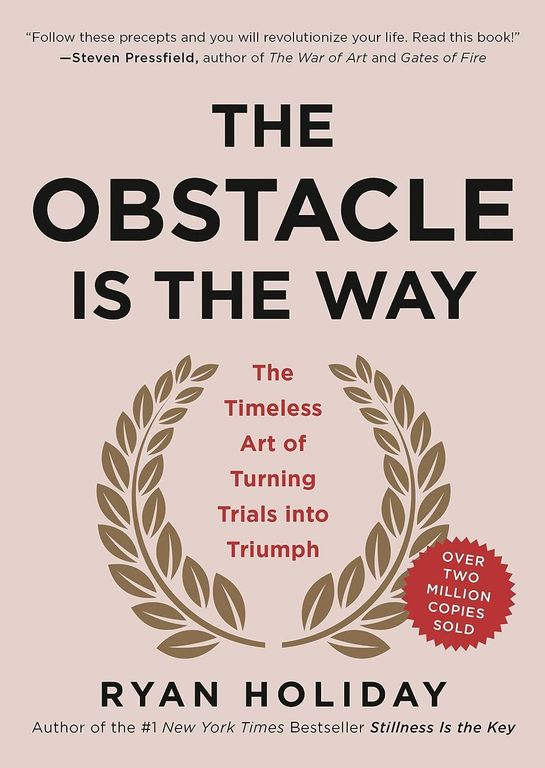
Nova: Absolutely. And her work, along with the Stoic philosophy that anchors Ryan Holiday's "The Obstacle Is the Way," forms the backbone of why strategic patience isn't just a nice-to-have, but a strategic imperative.
Atlas: The Obstacle Is the Way. That's a powerful title. But wait, for a strategist or an innovator, an obstacle often feels like a giant brick wall. It’s something to be removed, circumvented, or bulldozed through, not... embraced.
Nova: I love that reaction, Atlas, because it perfectly captures our initial instinct. We see a challenge, and our immediate response is often frustration, panic, or a desperate sprint to find a quick fix. But Holiday, drawing on ancient Stoic wisdom, flips that script entirely. He argues that challenges are not roadblocks; they're opportunities.
Atlas: Opportunities for what? For more stress? For more late nights? For our listeners building disruptive technologies or sustainable development projects, obstacles often mean budget overruns, delayed timelines, or even complete project failure.
Nova: That's where the mindset shift comes in. Think of it not as "opportunities for more stress," but opportunities for growth, for innovation, for developing a deeper resilience. Imagine a historical figure like Marcus Aurelius, a Roman Emperor who faced constant wars, plagues, and political intrigue. He didn't wish these obstacles away. Instead, his writings, his Meditations, show us that he viewed them as raw material for his character, for his leadership. Every crisis was a chance to practice virtue, to think more clearly, to act with greater justice.
Atlas: So he wasn't just enduring his problems; he was actively using them to become a better leader.
Nova: Precisely. Holiday gives us a powerful framework: perceive the obstacle, then act on it. Percieve it not as a barrier, but as a test, a puzzle, a chance to learn something new about yourself or your market. The cause of the obstacle might be external, like a sudden market downturn. The process is your internal reframing of it. The outcome is not just overcoming it, but emerging stronger, with new insights and capabilities. For instance, a company might face a sudden supply chain disruption. A reactive leader might panic, make impulsive decisions. A leader practicing strategic patience, informed by this Stoic approach, would pause. They'd analyze the disruption, not just as a problem, but as an opportunity to diversify suppliers, innovate their logistics, or even pivot their product line. That pause, that strategic patience, allows for a more resilient, innovative response.
Atlas: I can definitely see that. For someone leading complex deals or trying to build consensus, reframing a difficult negotiation as an 'opportunity to understand the other side's deep needs' rather than just a 'stalemate to break' could be transformative. It's not about being passive, it's about being intentional.
Nova: Exactly. It's proactive resilience. It's recognizing that the very thing slowing you down might contain the seeds of your next breakthrough. It’s about cultivating the kind of strategic foresight that allows you to see beyond the immediate pain point.
Probabilistic Thinking: Navigating Uncertainty with Strategic Clarity
SECTION
Atlas: That makes me wonder, though. Even with that resilient mindset, in complex markets, you’re still making decisions under immense uncertainty. You can reframe an obstacle all you want, but you still don’t know if your new strategy is going to work. How do you navigate that without just guessing?
Nova: That's a brilliant segue, Atlas, because it brings us directly to Annie Duke and "Thinking in Bets." If Holiday teaches us how to the unexpected, Duke teaches us how to within it. Her background as a world-class poker player is crucial here. In poker, you never have all the information. You're constantly making decisions with incomplete data, against skilled opponents, and with real money on the table.
Atlas: So it’s like a high-stakes business negotiation, or launching a disruptive technology where you can't predict the market reaction, or even planning for sustainable development with ever-changing regulations.
Nova: Precisely. Duke argues that we often confuse the quality of a decision with the quality of its outcome. We tend to judge a decision as 'bad' if it leads to a poor outcome, even if it was the best decision given the information available at the time. This leads to impulsive, short-term thinking, driven by fear of a bad outcome. She teaches us to think probabilistically: what were the chances of success the outcome was known?
Atlas: But how do you actually 'think in bets' when the stakes are incredibly high and you need to build for sustainable development, where the long-term impact is everything? It sounds a bit like just embracing risk, which can be terrifying for a community builder.
Nova: It's not about embracing risk, but about embracing uncertainty. Her process involves explicitly assigning probabilities to different outcomes, considering alternative possibilities, and separating the decision-making process from the outcome. For example, a company developing a new sustainable energy solution faces massive uncertainty. Instead of saying, "This work," they might say, "There's a 60% chance this technology achieves market viability in five years, a 20% chance it needs significant recalibration, and a 20% chance it fails." This isn't pessimism; it's clarity. It allows them to build in contingencies, to learn from every iteration, and to avoid betting everything on a single, certain outcome that never existed.
Atlas: So the simple version is, instead of trying to be 100% sure, you acknowledge the uncertainty and plan for the most likely scenarios, but also for the less likely ones. That sounds incredibly empowering for a strategist trying to secure a complex vision. It's about knowing you made a decision, not just the result was.
Nova: Exactly. It shifts the focus from predicting the future to optimizing your decision-making process in the present. This allows for strategic patience because you're not constantly reacting to every market fluctuation with an impulsive, "must fix now" mentality. You've already considered multiple futures and built a robust strategy that can adapt. It's a proactive, resilient mindset that empowers you to execute more thoughtfully and effectively, even when the path ahead is anything but clear.
Synthesis & Takeaways
SECTION
Atlas: So, when we put these two ideas together – reframing obstacles as opportunities and thinking probabilistically about our decisions – it’s not about being slow for the sake of it, is it? It’s about being incredibly deliberate.
Nova: Absolutely. It’s about understanding that true strategic speed often comes from the pause, from the deep thought, from the willingness to engage with complexity rather than shy away from it. This isn't about inaction; it's about intentional, high-quality action that builds for long-term impact and lasting value.
Atlas: That’s actually really inspiring. It means that the very challenges that feel overwhelming can be the crucible for our greatest innovations, if we approach them with patience and a clear-eyed understanding of uncertainty.
Nova: Precisely. It’s about transforming the hidden cost of speed into the profound advantage of strategic patience. How might pausing to reframe an 'obstacle' as an 'opportunity' change your immediate strategic response the next time you face a complex challenge?
Nova: This is Aibrary. Congratulations on your growth!