

The Art of Persuasion: Crafting Messages That Resonate
Golden Hook & Introduction
SECTION
Nova: Atlas, I want to play a game. Five-word review. The concept of 'persuasion.' Go.
Atlas: Oh, man. Okay. Hmm. Invisible influence, often misunderstood.
Nova: Ooh, 'often misunderstood.' I like that. Because today, that's exactly what we're peeling back the layers on: the art of persuasion, and specifically, how to craft messages that don't just get heard, but truly and. We're diving into some fascinating insights from two powerhouse books.
Atlas: Right. Not just shouting louder, but actually connecting. What’s on the docket?
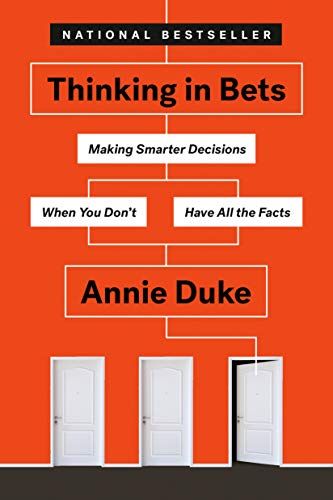
Nova: First up, we're drawing from Annie Duke's brilliant "Thinking in Bets: Making Smarter Decisions When You Don't Have All the Facts." Annie Duke, a former professional poker player, brings such a unique, pragmatic perspective to decision-making under uncertainty – it's like she’s showing us the hidden tells in our own minds. And then, we'll shift gears to the absolute classic, "Made to Stick: Why Some Ideas Survive and Others Die" by Chip Heath and Dan Heath. These brothers, one a Stanford business professor and the other a Duke University scholar, really broke down the anatomy of memorable messages.
Atlas: A poker player and two academics – that's quite the combo for understanding how our minds work. I’m curious how Duke’s high-stakes, probabilistic thinking translates to everyday communication. It implies there’s a strategy beyond just having a 'good argument.'
Nova: Absolutely. Because persuasion isn't just about the strength of your argument; it's about understanding the very mechanisms of the human mind. It's about crafting messages that align with those mechanisms, rather than fighting against them.
The Cognitive Blind Spot: Persuasion Through Understanding Bias
SECTION
Atlas: That makes sense. I mean, we all think we're rational, right? We lay out our facts, our logic, and then we're surprised when people don't immediately jump on board. Why is that? Where's the disconnect?
Nova: That disconnect, Atlas, often lies in what Duke calls our 'cognitive blind spots.' Our brains are incredibly efficient, but sometimes that efficiency leads to predictable errors, or biases. Think about confirmation bias. It's not that people are actively trying to ignore your facts; their brains are hardwired to seek out information that confirms what they already believe.
Atlas: So, even if I present rock-solid evidence for a new strategy, someone might unconsciously filter it through their existing belief, like, 'This new strategy is too risky,' and only absorb the parts that confirm fear?
Nova: Exactly! Let me give you an example. Imagine a project manager, let's call her Sarah, who is absolutely convinced that her current, somewhat outdated workflow is the most efficient. She's been doing it this way for years. Now, a new team member, David, comes in with a proposal for a more agile, data-driven approach, showing compelling metrics from other successful companies.
Atlas: David probably thinks he's got this in the bag.
Nova: He does. He presents all the facts, the improved timelines, the cost savings. But Sarah, without even realizing it, is filtering everything through her 'current workflow is best' lens. When David points out potential delays in the old system, Sarah might subconsciously recall a time the new system had a hiccup at another company, amplifying that memory and downplaying David's positive data.
Atlas: So her brain is actively looking for reasons to dismiss his argument, not because David's argument is bad, but because it challenges her established mental model. That sounds rough for anyone trying to innovate.
Nova: It's a huge hurdle. Duke talks about thinking in probabilities – understanding that even with strong evidence, there's always a degree of uncertainty. If Sarah were thinking in bets, she might evaluate David's proposal not as a threat to her current system, but as a bet with a certain probability of success, weighing the potential upside against the downside more objectively. But our default is often to see it as a binary: "my way is right, your way is wrong."
Atlas: That's fascinating, because it means the starting point for persuasion isn't just delivering your message, but understanding the mental landscape of the person you're trying to persuade. You have to anticipate their internal filters.
Nova: Precisely. It’s like knowing the wind conditions before you kick a football. You can have the strongest leg, but if you don't account for the wind, your shot will go wide. Understanding these cognitive blind spots is the wind condition of persuasion. It's about moving from 'I'm right, listen to me' to 'How can I help you see this from a different, less biased, perspective?'
The SUCCESs Principles: Crafting Messages That Stick
SECTION
Atlas: Okay, so once we understand that our audience is likely filtering our message through their own biases, how do we actually craft something that can cut through that noise and stick? Because that's the holy grail for any leader trying to inspire a team or sell a vision.
Nova: That's where Chip and Dan Heath's "Made to Stick" comes in with their incredibly practical framework: the SUCCESs principles. They identified six common traits that make ideas memorable and impactful. And they're simple: Simple, Unexpected, Concrete, Credible, Emotional, and Stories.
Atlas: SUCCESs. I love an acronym. But how do you make a complex business strategy, for example, 'Simple' without oversimplifying it to the point of uselessness? Or 'Emotional' without sounding manipulative?
Nova: That's a brilliant question, and it gets to the heart of what the Heath brothers teach. 'Simple' doesn't mean dumbing down; it means finding the core, irreducible essence of your idea. Think of JFK's moon mission: "land a man on the moon and return him safely by the end of the decade." That's simple, but incredibly powerful. It didn't specify the rocket design or the physics; it articulated the core goal.
Atlas: Right, so it’s about clarity of purpose, not lack of detail. Okay, what about 'Unexpected'? How do you surprise people into remembering something?
Nova: 'Unexpected' is about breaking a pattern. Our brains are designed to notice things that don't fit. If you're trying to explain a new company policy, instead of just reading bullet points, you could start with a surprising statistic about the of the old policy that no one ever considered. It creates a "knowledge gap" that your audience then wants to fill.
Atlas: Like, "Did you know our old filing system is costing us 10 hours a week in lost productivity, which translates to a quarter-million dollars a year?" That would definitely get my attention.
Nova: Exactly! It makes people sit up and say, "Wait, really?" And then you fill that gap with your solution. Now, 'Emotional' is about connecting to feelings. Take a nonprofit trying to raise money. They don't just give you statistics about poverty; they tell you the story of. That single story, full of concrete details, evokes empathy far more effectively than abstract numbers.
Atlas: That's a perfect example. I imagine a leader trying to roll out a new, uncomfortable change. Instead of just stating the financial necessity, they could tell a story about a past challenge the team overcame together, evoking that shared sense of resilience and purpose.
Nova: Precisely. And that leads directly to 'Stories.' Stories are how we make sense of the world. They're naturally engaging, they provide context, and they often contain all the other SUCCESs principles wrapped up in one package. When you tell a story, you're not just conveying information; you're inviting your audience into an experience. Think about Apple's early marketing. It wasn't just about processors and RAM; it was about "Think Different"—a story of creativity and rebellion.
Atlas: So, for a leader, it's about weaving the company's vision into a compelling narrative that employees can see themselves in, not just a series of bullet points on a slide. It sounds like moving from a monologue to a shared journey.
Nova: It is. The Heath brothers talk about the "curse of knowledge"—the idea that once you know something, it's hard to imagine not knowing it. The SUCCESs principles are a cure for that curse. They force us to step outside our own expertise and frame our messages in a way that resonates with a broader audience, cutting through their cognitive blind spots.
Synthesis & Takeaways
SECTION
Nova: So, bringing it all together, we've got Annie Duke showing us the invisible currents of bias that pull at our decisions, and the Heath brothers giving us the navigational tools – the SUCCESs principles – to steer our messages effectively through those currents. It's a powerful combination.
Atlas: It’s more than just a combination, it's a profound shift in how we approach communication. It's moving from the idea that 'my message is inherently good, so it should be heard,' to 'how can I actually engineer this message to be heard, understood, and acted upon, given how human brains actually work?' It’s about impact, not just information.
Nova: Exactly. True persuasion isn't about overpowering someone with facts. It's about understanding their inner landscape, respecting their cognitive processes, and then crafting your message with empathy and precision, making it so inherently compelling that it can't help but stick.
Atlas: For all our aspiring leaders and strategic thinkers out there, how will you use these tools not just to win an argument, but to genuinely inspire and create lasting impact?
Nova: This is Aibrary. Congratulations on your growth!