Your Inner Compass: Navigating Complexity with Intuition and Logic in Agent Engineering.
9 minGolden Hook & Introduction
SECTION
Nova: POV: You're staring at a whiteboard full of Agent architecture diagrams, and your gut says one thing, but the data's screaming another. That internal tug-of-war? It's not just you.
Atlas: Oh man, I feel seen. That's literally every Tuesday morning for me. You're trying to figure out the optimal path for a complex Agent's decision tree, and you just have this "feeling" about one branch, but the metrics from your simulations point elsewhere. What is that?
Nova: Exactly! That's the very heart of what we're dissecting today. It's that fascinating, sometimes frustrating, battle between intuition and cold, hard logic in the world of Agent engineering. And believe it or not, two incredible books have given us a profound framework for understanding this, not just in ourselves, but in the systems we build.
Atlas: Okay, so spill it. Which books are we talking about that can help me reconcile my gut with my data? Because if there's a secret sauce to making better Agent architectural decisions, I'm all ears.
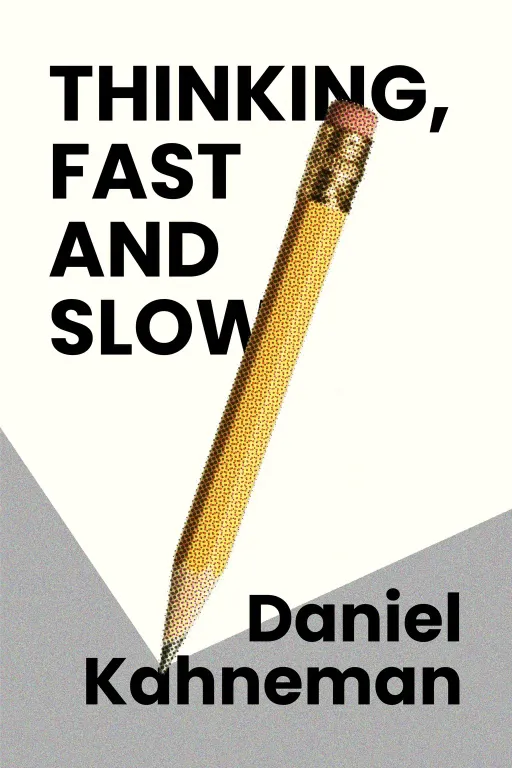
Nova: We're diving into "Thinking, Fast and Slow" by the brilliant Daniel Kahneman, and "Nudge" by Richard H Thaler. What's incredible is that both Kahneman and Thaler were awarded the Nobel Memorial Prize in Economic Sciences for their groundbreaking work, showcasing how deeply these psychological insights impact our understanding of decision-making, even in engineering. They've essentially codified the invisible forces at play.
Atlas: Wow, Nobel laureates weighing in on my internal engineering debates. That's some serious intellectual firepower. So, how do these insights from human psychology actually help us build better Agents and make better engineering decisions?
The Intuitive Engineer: Harnessing System 1 & System 2 in Agent Design
SECTION
Nova: Well, let's start with Kahneman's core idea: System 1 and System 2 thinking. System 1 is your fast, intuitive, emotional, almost automatic thinking. It's what tells you an Agent's response feels "off" instantly. System 2 is your slow, logical, effortful, analytical thinking. That's when you're meticulously tracing the Agent's code path, debugging, or running complex simulations.
Atlas: Okay, so System 1 is my "developer intuition"—that spark of insight or immediate recognition of a pattern. And System 2 is the rigorous, systematic approach we're all trained for. But wait, for engineers, isn't intuition just a fancy word for 'guessing'? We're supposed to be data-driven, methodical. Isn't System 1 just a source of errors?
Nova: That's a great question, and a common misconception. System 1 isn't guessing; it's often highly skilled intuition built on years of experience. Think about an experienced Agent engineer during a critical system outage. They might bypass hours of methodical logging analysis and immediately say, "Check the cache invalidation logic." They've seen that pattern before. Their System 1 is rapidly recognizing a familiar, high-stakes situation.
Atlas: I can definitely relate to that. There are times when you just where the bug is, even before you've opened the debugger. It's almost like muscle memory for the mind. But then, you still have to verify it with System 2, right? You can't just fix it on a hunch.
Nova: Exactly! That's the powerful interplay. System 1 generates hypotheses, provides quick assessments, and handles routine tasks efficiently. System 2 then steps in to scrutinize, verify, and engage in complex problem-solving—like designing a new, robust multi-Agent architecture from scratch, where every component needs careful, logical consideration.
Atlas: So, it's not about ditching the data, but about understanding when to trust that 'gut feeling' that comes from years of experience, and when to slow down and let System 2 do the heavy lifting? How do we actually this intuition, especially in a field as rapidly evolving as Agent engineering?
Nova: Precisely. You hone it through deliberate practice and feedback. When your System 1 makes a quick judgment, make a mental note. Then, use System 2 to gather data and see if your intuition was correct. Over time, that feedback loop calibrates your System 1, making it more accurate. Conversely, be aware of System 1's pitfalls: cognitive biases. For example, confirmation bias can lead an engineer to only seek out data that supports their initial Agent model choice, ignoring contradictory evidence.
Atlas: Oh, I've seen that play out. Someone falls in love with a particular Agent framework, and then every problem looks like a nail for their hammer, even if another tool is clearly better. So, System 2 acts as the guardrail against our own intuitive blind spots. That's a crucial insight for any architect trying to design a stable and scalable system.
Architecting for Influence: Designing Agents with Nudge Principles
SECTION
Nova: Speaking of guiding decisions and designing robust systems, that brings us beautifully to our second big idea: how we can actually design Agent systems to 'nudge' behavior, drawing from Richard Thaler's work in "Nudge."
Atlas: Okay, 'nudging' sounds a bit manipulative. How does that apply to building a high-performance Agent system, or integrating it into a business for? Are we talking about dark patterns, or something else entirely? Because as a value creator, I'm looking to build trust, not trick users.
Nova: That's a really important distinction, and it's absolutely about dark patterns. Thaler's concept of nudging is about subtle interventions that influence choices without restricting them. It's about designing "choice architecture" to guide people towards better outcomes, not force them. Think of it like this: an Agent system, or any software, presents choices. How those choices are presented can significantly impact what users do.
Atlas: Can you give an example of how an Agent could 'nudge' someone? Because when I think of Agent engineering, I'm thinking about complex algorithms and decision-making, not subtle psychological influence.
Nova: Absolutely. Consider an Agent designed to help manage personal finances. Instead of just listing all spending categories, a well-designed Agent might to categorizing certain "non-essential" spending as "discretionary" and visually highlight it. Or, when setting up an Agent, the privacy settings could be the most secure option, requiring the user to actively of higher data sharing. That's a nudge.
Atlas: Ah, I see! So it's like when you install new software, and the "recommended" option is usually the one that protects your privacy or optimizes performance, and you have to explicitly go into "custom" to change things. That's clever. For an architect, this is about more than just functionality; it's about shaping interaction and user experience.
Nova: Precisely. Or imagine an Agent designed for internal team collaboration. It could nudge users towards better practices by, for example, making "summarize meeting notes" a prominent default action after a call, rather than burying it in a menu. Or an Agent that, after analyzing code, to suggesting a more efficient algorithm, requiring the engineer to actively override it if they prefer the current one.
Atlas: That's fascinating! So, it's about designing the 'choice architecture' within the Agent system itself to guide internal processes or external user behavior towards more optimal or beneficial outcomes. How can a full-stack engineer implement this without needing a psychology degree?
Nova: It starts with understanding the user's goals and potential pain points. Then, it's about asking: "What's the easiest, most frictionless path to a good outcome?" And then designing the Agent's interface, its default behaviors, and its feedback loops to align with that path. Simple things like clear, concise prompts, smart default values, and immediate, understandable feedback for actions can all be powerful nudges. It's about thoughtful design, not complex psychology.
Synthesis & Takeaways
SECTION
Nova: So, what we've really explored today is how understanding both our own human cognition—our fast intuition and slow logic—and how to apply that to the design of Agent systems can be a game-changer. It's about building Agents that are not just intelligent, but also 'wise' in their interaction, both internally and with users.
Atlas: I love that. This isn't just about code, it's about human behavior, and how we design our intelligent systems to meet humans where they are. It's about creating systems that are intuitively user-friendly and deliver real business value, not just raw processing power. For anyone looking to integrate Agent tech into business, this is about strategic design.
Nova: Exactly. Remember that "healing moment" we talked about? Recall a recent Agent engineering decision. How might understanding System 1 and System 2 thinking have altered your approach or confidence? Or how could a subtle nudge have improved the outcome for your users or your internal Agent's efficiency?
Atlas: This makes me think about the "growth advice" for our listeners: breaking boundaries, merging tech with business. This is a perfect example of that. Your inner compass isn't just for you; it's a blueprint for the Agents you build. It's about translating these profound human insights into tangible results and truly creating value.
Nova: So, for your next Agent project, don't just think about the algorithms. Think about the 'choice architecture' you're designing. And pay attention to that gut feeling – then run it through System 2.
Atlas: Exactly. Go forth and build wisely, with both intuition and logic.
Nova: This is Aibrary. Congratulations on your growth!