Unmasking the Rational Myth: How Emotions Really Drive Decisions.
8 minGolden Hook & Introduction
SECTION
Nova: What if I told you that the smartest decision you made this week, the one you painstakingly analyzed, the one you're most proud of, wasn't actually driven by logic at all?
Atlas: Hold on, Nova. Are you serious? Because I just spent days meticulously planning our next quarter's strategy, and I'd like to think there was a fair bit of logic involved there.
Nova: Oh, absolutely, Atlas. And I'm sure it was brilliant. But what if the underlying currents, the subtle nudges that guided those meticulous plans, were less about pure, cold rationality and more about something far more primal, far faster, and frankly, a lot more human?
Atlas: That makes me wonder, what are we talking about here? Because that sounds like it could upend a lot of what we we know about how we operate.
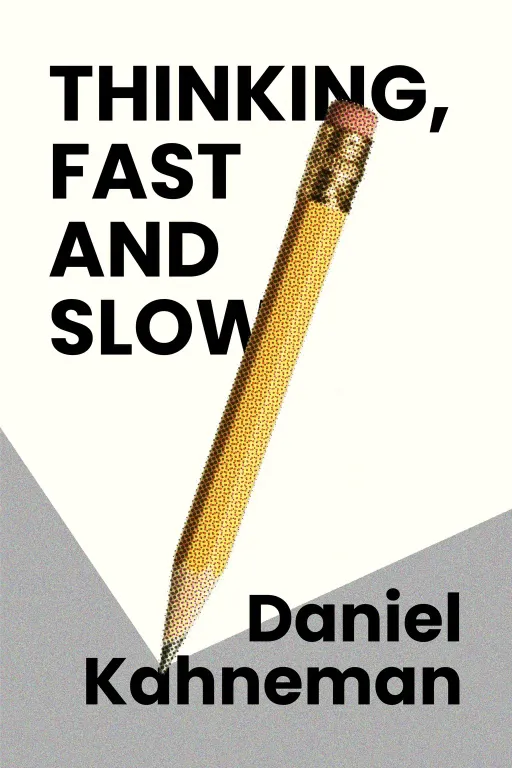
Nova: Precisely. Today, we're diving into the groundbreaking work of a truly revolutionary thinker: Daniel Kahneman, and his seminal book,. Kahneman, a psychologist, actually won the Nobel Memorial Prize in Economic Sciences, which tells you everything about how profoundly his insights challenged conventional wisdom across disciplines.
Atlas: Wow, a psychologist winning an economics Nobel. That alone tells you this isn't just another business self-help book. That’s a massive interdisciplinary leap, and it suggests he uncovered something fundamental about human nature that transcends specific fields.
Nova: Absolutely. And at the heart of it is this idea that we all operate with a significant blind spot when it comes to our own decision-making. We we're predominantly logical beings, but the truth is far more complex and, frankly, fascinating.
The Blind Spot: Our Illusory Logic
SECTION
Nova: So, let's start with this blind spot. Picture this: you're in a high-stakes meeting, proposing a new direction, or perhaps evaluating a crucial investment. Every argument you present feels robust, backed by data, logically sound. But Kahneman argues that often, lurking beneath that veneer of logic, are powerful, quick, intuitive forces and deep-seated biases that are actually running the show.
Atlas: But isn't logic what we for? Especially for those of us trying to build sustainable systems, craft effective strategies, or lead teams? We're taught to analyze, to deliberate, to remove emotion from the equation.
Nova: Exactly, Atlas. We're to strive for it, and we genuinely we're achieving it. But Kahneman reveals that our minds have these two distinct systems. And the first one, the fast, intuitive, emotional one, often bypasses the slower, more deliberate, logical one. Imagine a company deciding to launch a new product based on a charismatic pitch and a few early, enthusiastic customer testimonials, even when the detailed market research suggests a more cautious approach.
Atlas: I can definitely relate to that. I've seen teams get swept up in the excitement, projecting their own enthusiasm onto a product, even when the numbers whisper caution. So, the blind spot is that we we're using System 2, but System 1 is actually at the wheel?
Nova: Precisely. We're often victims of what's called an "illusion of control" or an "overconfidence bias." We feel in command of our rational faculties, but our intuitive system is constantly creating a coherent, simple narrative of the world, often at the expense of accuracy. This makes us predict behavior less accurately and design less effective strategies, because we're missing half the picture of what truly drives us, and others.
Atlas: So, it's like we're watching a movie and only seeing the edited, polished final cut, not realizing all the rapid-fire, subconscious decisions that went into making it. That's a powerful idea, especially for understanding team dynamics. If leaders assume pure logic, they'll miss the emotional currents and biases influencing their people.
The Shift: Kahneman's Dual Systems of Thought
SECTION
Atlas: That makes sense, but how does this actually work? What did Kahneman uncover that was so revolutionary about these two systems of thought?
Nova: He gave them names: System 1 and System 2. System 1 is our 'fast thinking.' It operates automatically and quickly, with little or no effort and no sense of voluntary control. Think about recognizing a familiar face, understanding simple sentences, or driving a car on an empty road. It's the source of our gut feelings and intuition.
Atlas: Okay, so like a reflex, or when you instantly know the answer to a simple math problem like two plus two. It just.
Nova: Exactly. Now, System 2 is 'slow thinking.' It allocates attention to effortful mental activities that demand it, including complex computations. Think about solving a challenging math problem, comparing two complex insurance policies, or focusing on one voice in a crowded room. It's deliberate, analytical, and requires effort.
Atlas: So, System 2 is the one we we're always using when we're making important decisions. But you're saying System 1 often overrides it? That sounds like a recipe for disaster if we're building long-term strategies. How does System 1 System 2, especially when we we're being logical?
Nova: The trick is, System 1 is incredibly efficient. It's constantly generating suggestions for System 2: impressions, intuitions, intentions, and feelings. If System 2 is busy or lazy, it often endorses these suggestions without much scrutiny. Consider a company evaluating two potential acquisition targets. System 1 might be influenced by the CEO's personal connection to one of the target companies, or a recent, highly publicized success story of a similar acquisition, creating a strong positive bias.
Atlas: Ah, so System 1 forms a quick, compelling narrative, and System 2, rather than doing the heavy lifting of challenging it, just goes along because it's easier. So, that charismatic pitch you mentioned earlier, it's System 1 pulling all the emotional levers, and System 2 nodding along, not fully engaging its critical faculties.
Nova: Precisely. That's where "predictable irrationality" comes from. Our minds are wired to take mental shortcuts, or heuristics, which are often helpful but can lead to systematic errors. Understanding this interplay fundamentally shifts your perspective. It's not about being 'irrational,' but about understanding the predictable ways our minds deviate from pure logic. For anyone trying to unlock deeper user psychology or scale their impact, recognizing these two systems is a game-changer.
Synthesis & Takeaways
SECTION
Nova: So, what we've really been talking about today is the profound power of understanding our own cognitive architecture. It's not about condemning intuition, but about knowing when to trust it and, crucially, when to engage that slower, more deliberate System 2.
Atlas: That's actually really inspiring. Because it means we're not just at the mercy of our biases. We can actively design strategies and processes to account for them. Nova, the book really makes you think about your own decisions. It asks us to reflect on a recent decision we or our team made and identify where System 1 might have played a larger role. For our listeners who are constantly making high-stakes decisions, what's a practical first step to start unmasking their rational myth and leveraging this insight?
Nova: A powerful first step is simply awareness. Before a critical decision, take a deliberate pause. Ask yourself: "What's my immediate gut feeling here? What story is my System 1 quickly constructing?" Then, consciously engage your System 2: "What data am I missing? What alternative perspectives haven't I considered? What assumptions am I making?" Even a five-minute reflective pause can drastically change the outcome. It's about building a foundation for more sustainable growth, one conscious decision at a time.
Atlas: That’s a fantastic, actionable insight. It empowers us to not just make decisions, but to understand we're making them, which is crucial for any resilient learner or strategic builder.
Nova: Absolutely. It's about achieving that mastery you're always striving for, by truly understanding the most complex system of all: your own mind.
Atlas: Incredible. Thank you, Nova.
Nova: Always a pleasure, Atlas.
Nova: This is Aibrary. Congratulations on your growth!