Unmasking Influence: How to Navigate Human Decisions and Drive Change
10 minGolden Hook & Introduction
SECTION
Nova: Here’s a controversial idea: your most important decisions, the ones you swear were purely logical, were probably made by a part of your brain that doesn’t even speak English.
Atlas: Oh, I love that. So, all those spreadsheets and pros-and-cons lists, just an elaborate charade for our intuition? That’s going to resonate with anyone who spends hours agonizing over a strategic move.
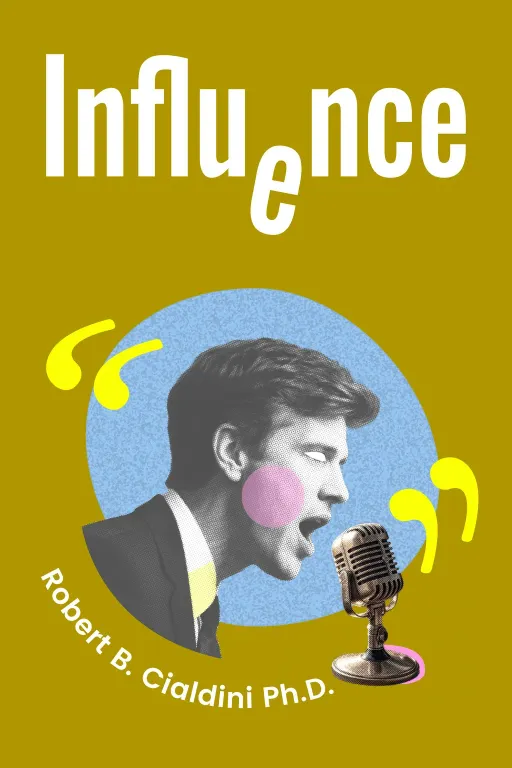
Nova: Exactly! And today, we’re unmasking the invisible architects of those decisions. We’re diving deep into the profound insights from two seminal works: Robert Cialdini’s and Daniel Kahneman’s Nobel Prize-winning. Cialdini, famously, spent years going undercover, observing sales experts and fundraisers in their natural habitat to discover the universal triggers of human behavior. Kahneman, on the other hand, gave us the scientific framework for understanding those triggers work, by introducing us to our two systems of thought.
Atlas: That’s a powerful combo. For our listeners who are constantly seeking innovation and trying to build habit-forming products, understanding people do what they do is gold. So you’re saying it’s not about convincing someone with a bullet-point presentation, but rather about understanding the fundamental psychological levers?
Nova: Precisely. It’s about recognizing that most of our decision-making isn't a slow, deliberate calculation. It’s a rapid, often unconscious response to deeply ingrained psychological shortcuts. And once you see these shortcuts, you can't unsee them.
The Invisible Architecture of Decision-Making: System 1 and Cialdini's Triggers
SECTION
Nova: Let's start with Kahneman’s groundbreaking revelation: we have two systems of thinking. System 2 is our slow, logical, analytical self; it's the one that crunches numbers and solves complex problems. But System 1? That's our fast, intuitive, emotional, and often unconscious autopilot. It’s making thousands of decisions for us every day, often without us even realizing it. Most of the time, System 1 is incredibly efficient. But it's also highly susceptible to certain triggers.
Atlas: Okay, so our rational brain is like the CEO who thinks they’re running the company, but System 1 is the intern who actually makes all the day-to-day decisions and just tells the CEO what they want to hear.
Nova: A perfect analogy! Now, Cialdini identified six universal principles that powerfully influence this System 1 thinking. They are reciprocity, commitment and consistency, social proof, authority, liking, and scarcity. These aren't manipulative tricks; they're deep-seated human tendencies that have evolved over millennia. Let's take social proof, for instance.
Atlas: Social proof. I’m curious, how does that play out in the wild, especially for someone trying to disrupt a market with a new idea?
Nova: Imagine this: you're launching a new software for project management. You can talk endlessly about its features, its efficiency, its ROI. Or, you can highlight that "80% of leading tech startups are already using it." Which message do you think resonates more powerfully with a busy founder looking for a solution?
Atlas: Oh, I see. It’s like when you’re scrolling through an app store, and you see a thousand five-star reviews. Suddenly, that app just more reliable, more effective, even if you haven’t read a single review yourself. It’s the wisdom of the crowd, or at least the perceived wisdom.
Nova: Exactly. We are wired to look to others for guidance, especially when we're uncertain. If everyone else is doing it, it must be the right thing to do. In a startup, this can manifest when a team member hesitates on a new strategy. If they see several key leaders enthusiastically adopting it, their own doubts often diminish, not because of new data, but because of social proof.
Atlas: That’s fascinating. But wait, couldn’t that also be incredibly dangerous? What if the crowd is wrong? For someone building a groundbreaking product, you often have to go against the grain. How do you leverage social proof without just following the herd?
Nova: That's the crucial nuance. Understanding these principles isn't about blind application. It’s about conscious design. For a disruptor, social proof isn't about to the status quo; it’s about a new status quo. It’s about getting those first few influential early adopters, showcasing their success, and then letting their endorsement become the social proof that attracts the next wave. It's about strategically cultivating the perception that innovative path is the one others should follow.
Atlas: Right, like building a community around your vision, rather than just selling a product. That makes me wonder about scarcity. In a world of infinite digital products, how do you even create scarcity?
Nova: Ah, scarcity. It's not just about physical limitations, like a limited-edition sneaker drop. It's about perceived value and urgency. Think about "exclusive beta access" or "early bird pricing for the first 100 users." It's the idea that if something is rare or hard to get, it must be more valuable. Our System 1 brain interprets scarcity as importance.
Atlas: So, for an architect building a new platform, it’s not just about having the best features, but also about creating a sense that joining or getting access to is a unique opportunity that won't last. It taps into that fear of missing out.
Nova: Precisely. It’s about leveraging that innate human drive to acquire what is perceived to be rare or desirable. And this isn't just about sales; it can be about motivating team members. "This is a unique opportunity to shape the foundational code of our next product, and we need your specialized expertise now." It creates an urgency and a sense of exclusive importance around their contribution.
Ethical Influence & Strategic Nudges: Building Impact and Resilience
SECTION
Nova: Now, this brings us to the ethical tightrope walk. Understanding these powerful psychological levers gives you immense power. The question then becomes: how do you use this knowledge not for manipulation, but for positive influence and strategic nudges that genuinely benefit your users and your team?
Atlas: That's the core of it, isn't it? For someone driven by impact and sustainable growth, the goal isn't just to get people to click a button, but to help them build better habits, make better decisions, or engage more deeply with a valuable product. How do we shift from persuasion to purposeful influence?
Nova: Let’s look at commitment and consistency. This principle states that once we commit to something, especially publicly, we feel a strong pressure to behave consistently with that commitment. This is a profound lever for positive change. Instead of someone to adopt a new, healthier habit, you them to make a small, public commitment.
Atlas: Like when you sign up for a fitness challenge online, and you have to post your progress. The intention is good, but the pressure of that public commitment actually helps you stick with it. That’s clever.
Nova: It is. Or in a team setting, if you want a new process to stick, don't just announce it. Ask team members to publicly affirm their commitment to trying it for a week, and perhaps even share their initial thoughts on how it could improve their workflow. This small, active commitment significantly increases adherence. It’s about making the desired behavior the consistent one with their self-image.
Atlas: That’s a brilliant way to apply these principles for team resilience and productivity. It’s not just about getting people to something, but to it. But what about the other side? For a founder leading with strength, how do you protect yourself and your team from being unethically influenced? Because if these principles are so powerful, they can definitely be used against you.
Nova: That’s where Kahneman’s System 2 comes back into play, and it's also where self-awareness and critical thinking become your shield. The best defense against unwanted influence is to consciously engage your System 2. When you feel a strong urge to buy something "limited edition," or you're swayed by "everyone else is doing it," pause. Ask yourself: Is this decision truly logical? Am I being swayed by a psychological trigger, or is this truly the best choice for me or my business?
Atlas: So, it’s about recognizing the psychological tugs and then deliberately stepping back to analyze them. That’s a powerful tool for founder resilience, especially when you’re constantly bombarded with pitches, trends, and market noise. It’s not about ignoring your gut, but vetting it.
Nova: Exactly. It's about being the architect of your own decisions, rather than a passive recipient. And it’s about using these principles to design experiences that genuinely serve your users' well-being and growth, by nudging them towards beneficial actions, rather than just exploiting their vulnerabilities. For instance, using liking – building genuine rapport and trust with your users and team – creates a foundation for influence that is built on respect, not just clever tactics.
Synthesis & Takeaways
SECTION
Nova: What we've discussed today is that the world of human decisions isn’t a chaotic free-for-all. Instead, it’s governed by predictable, powerful psychological forces. From Cialdini’s six principles to Kahneman’s System 1 and System 2, these insights give us a practical toolkit for understanding why we—and everyone around us—make the choices we do. And with that understanding comes immense responsibility.
Atlas: Absolutely. For our listeners who are disruptors and architects, this isn't just academic theory; it's a manual for designing compelling user journeys and leading with integrity. It means moving beyond surface-level metrics to truly understand the deeper motivations of your audience and your team.
Nova: Indeed. The tiny step we’d encourage everyone to take this week, directly inspired by these books, is to identify a recent decision you made. Think about something you bought, a project you started, or even a team decision. Which of Cialdini's six principles – reciprocity, commitment and consistency, social proof, authority, liking, or scarcity – might have influenced you or others involved? Just observe, without judgment.
Atlas: That’s a fantastic exercise. It’s about becoming a conscious observer of your own mind, and the minds around you. It’s about building that strategic foresight, seeing the patterns before they fully manifest. And it’s a crucial step towards leading with strength and achieving sustainable impact.
Nova: Because ultimately, mastering influence isn't about bending others to your will. It’s about understanding the human condition well enough to design systems, products, and leadership strategies that genuinely empower people toward better outcomes. It's about recognizing the profound impact of these invisible forces, and choosing to wield them for good.
Atlas: That gives me chills, Nova. It’s such a hopeful way to look at something that can often feel so complex and even manipulative. It's about being an ethical architect of change.
Nova: This is Aibrary. Congratulations on your growth!