The Silent Language of Influence: Decoding Human Behavior for Better Business
10 minGolden Hook & Introduction
SECTION
Nova: Forget everything you think you know about making decisions. That last 'logical' choice you made? It was probably hijacked. Today, we're pulling back the curtain on the silent forces that truly run the show.
Atlas: Whoa, hijacked? You’re making it sound like a spy movie! I mean, I pride myself on being a pretty rational person. Are you saying my spreadsheets and pros-and-cons lists are just window dressing?
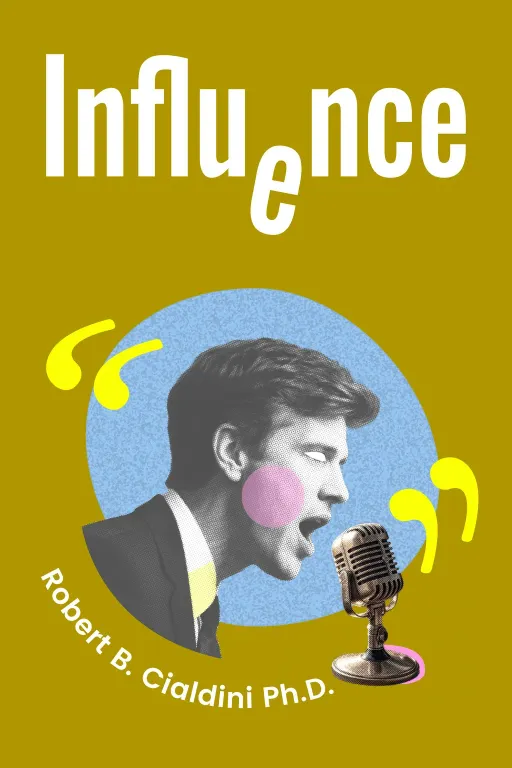
Nova: Honestly, Atlas, for most of us, most of the time? Yes, they are. We're cracking open the minds behind two seminal works today: Robert Cialdini's and Daniel Kahneman's.
Atlas: Two giants! I’ve seen those titles everywhere.
Nova: Absolutely. What’s fascinating about Cialdini is that he’s a social psychologist who actually went undercover for three years, working in various sales and fundraising roles to directly observe persuasion tactics in action. It gave his academic work this incredibly gritty, real-world foundation. And Kahneman, of course, won a Nobel Prize for his work in behavioral economics, essentially proving that humans are not rational actors.
Atlas: That’s amazing! An undercover academic. So, these aren't just theories; they're battle-tested insights into how we tick. But how do these seemingly academic ideas translate to real-world impact for our listeners? I'm curious about the immediate application.
Nova: Well, the core idea is that we all have this huge blind spot. We assume people, ourselves included, make decisions purely based on logic. But beneath the surface, there are these powerful, hidden psychological triggers constantly influencing us. Ignoring these isn't just a missed opportunity; it can actively limit your ability to persuade and connect, whether you're leading a team or just trying to get your kids to eat their vegetables.
The Hidden Persuaders & The Blind Spot
SECTION
Atlas: So basically, we're all walking around with a giant 'kick me' sign on our backs, only it says 'influence me'?
Nova: Pretty much! Think about it this way: imagine you’re in the market for a new coffee maker. You’ve researched features, read reviews, compared prices—all very logical, right? But then you walk into a store, and there’s this sleek, beautifully designed machine, glowing under a spotlight, with a barista offering you a free sample of the best coffee you’ve ever tasted. You buy it. Was it purely the technical specs that sealed the deal, or was it the sensory experience, the feeling of luxury, the immediate gratification?
Atlas: Oh, I've been there! I once bought a blender because the salesperson made me a smoothie that tasted like a tropical vacation. My old blender was perfectly fine.
Nova: Exactly! Your old blender was System 2 logical, but the new blender tapped into System 1 emotional appeal. This is what we call "the blind spot." We tell ourselves a logical story about why we chose something, but the deeper psychological forces were already at play. This fundamentally changes how you view customer interactions, moving beyond surface-level logic to deeper motivations.
Atlas: That makes me wonder, how does this 'blind spot' manifest in a business setting? Say, for someone trying to launch a new product or get buy-in for a big project?
Nova: Well, many companies make the mistake of focusing solely on data and features, hoping pure logic will win people over. They'll say, "Our software has 20% more processing power and saves 15% on costs!" And while that's important, it often falls flat because it's speaking to System 2, which is slow and lazy. A company that understands the blind spot, however, might frame their product around aspiration, community, or solving a deep-seated frustration. They might tell a compelling story about how their software one client's struggling business, making them feel like a hero.
Atlas: So basically, instead of just saying "buy our faster software," they're saying "become a hero with our faster software." That’s actually really inspiring, because it means connecting on a human level is more powerful than we often assume. It's about tapping into that emotional core.
Ethical Influence & Cialdini's Six Principles
SECTION
Nova: And this leads us perfectly into Cialdini's work, which doesn't just identify these triggers, but categorizes them into six universal principles of persuasion. They are: Reciprocity, Commitment and Consistency, Social Proof, Authority, Liking, and Scarcity.
Atlas: Okay, these sound like powerful levers. Can you give me a real-world scenario where, say, 'reciprocity' isn't just common courtesy, but a powerful business tool? I'm picturing a lot of our listeners thinking, "How does this actually work without seeming manipulative?"
Nova: That’s a great question, and it's key to Cialdini's ethical approach. Think about a restaurant. At the end of the meal, the server brings the check, and perhaps with it, a small, unexpected piece of chocolate or a mint. It's a tiny, seemingly insignificant gift. What studies have shown is that this small act of giving, this unexpected gesture of reciprocity, significantly increases the tip percentage. People feel a subtle, unconscious urge to give back.
Atlas: So it's not about bribery; it's about initiating a positive exchange. That’s clever. What about 'commitment and consistency'? How does that play out?
Nova: For commitment, it’s about getting people to make a small, initial commitment. For example, in one study, researchers found that if they first asked residents in a neighborhood to put a small "Be a Safe Driver" sign in their window, those residents were far more likely to agree to put a large, unsightly "Drive Carefully" billboard in their front yard weeks later. That initial small commitment to the idea of safe driving made them consistent with that identity when a larger request came.
Atlas: Wow, who would have thought a tiny sign could have such a ripple effect! That makes me wonder about 'social proof.' It feels like that's everywhere these days, especially online. How does that play out in, say, online reviews, and how do we ensure it's ethical?
Nova: Social proof is incredibly powerful. When we're uncertain, we look to others for guidance. If you're choosing a new product and see "4.8 stars, 10,000 reviews," that's social proof at work. It signals that many people have tried it and approved. The ethical dimension comes from ensuring that proof is genuine. It's about showcasing real testimonials and authentic community consensus, not fabricating popularity. It's about demonstrating that others value what you offer, which satisfies our innate need to belong and to make good choices.
System 1 vs. System 2 & Kahneman's Insights
SECTION
Nova: What’s truly fascinating is that Cialdini's principles often tap into something even deeper. Kahneman gives us the scientific framework for these triggers work, through his concept of System 1 and System 2 thinking.
Atlas: I've heard of System 1 and System 2, but it still feels a bit abstract. Can you break it down, especially for someone in business who needs to make clear, data-driven decisions? How does this explain why emotional appeals are often more effective than cold, hard data, especially in business where we prize rationality?
Nova: Absolutely. Think of System 1 as your gut reaction, your intuition. It's fast, automatic, emotional, and requires very little effort. It's what tells you a sound is a threat or a face looks friendly. System 2, on the other hand, is your logical, analytical, slow-thinking self. It's what you use to solve a complex math problem or fill out your tax returns. It's effortful and deliberate.
Atlas: So, System 1 is the impulsive teenager, and System 2 is the tired parent trying to clean up the mess?
Nova: A perfect analogy! Now, the crucial part is that System 1 often makes the initial decision, and System 2 then comes in to rationalize it. So, when a marketing campaign tells a compelling story about how a product one person's life, or a charity shows a single, struggling child, they're speaking directly to your System 1. Your emotions are engaged, you feel empathy, you feel a connection.
Atlas: And then my System 2 kicks in to say, "Well, it's a good cause, and it's tax-deductible, so it makes perfect sense to donate."
Nova: Exactly! The emotional appeal, the story, the connection—that's System 1. The logical justification comes later. This is why emotional appeals often work better than pure data. Data speaks to System 2, which needs more effort to process. A story, a vivid image, a feeling of scarcity, or the pull of reciprocity—these all bypass System 2's gatekeeper and go straight to System 1.
Atlas: So basically, we're wired to feel first, then think. That’s actually really inspiring, because it means connecting on a human level is more powerful than we often assume. It’s about understanding that deep human impulse.
Synthesis & Takeaways
SECTION
Nova: Precisely. What Cialdini and Kahneman reveal is that influence isn't about manipulation; it's about understanding the deep-seated psychological currents that drive human behavior. It's about moving beyond surface logic to deeper motivations, and then ethically guiding decisions by recognizing these universal triggers.
Atlas: For our curious listeners who want to start applying this, what's one immediate thing they can do to begin decoding these silent languages in their own lives or work?
Nova: I'd say, consider a recent business interaction you had, or even a personal decision you made. Try to identify if one of Cialdini's principles might have played a role, even subtly. Did you feel a sense of obligation? Did you follow the crowd? Or, when you made that 'logical' choice, can you see how your System 1 might have made the initial emotional leap, with your System 2 just tidying up the explanation later?
Atlas: That’s a brilliant exercise. It’s about making the invisible visible, and realizing how much of our world is shaped by these psychological undercurrents. It’s not just theory; it’s the operating system of human interaction.
Nova: It truly is. Once you start seeing these patterns, you can't unsee them. And that's where the real power of ethical influence begins.
Atlas: Mind-blowing stuff today, Nova. Thank you.
Nova: My pleasure, Atlas.
Nova: This is Aibrary. Congratulations on your growth!