The Scarcity Trap: Why Your Time is Your Most Valuable Asset.
10 minGolden Hook & Introduction
SECTION
Nova: Atlas, I'm going to give you a classic psychological riddle. A bat and a ball cost $1.10 in total. The bat costs $1.00 more than the ball. How much does the ball cost?
Atlas: Oh, I like this. Okay, a dollar ten total. Bat is a dollar more. My gut says… ten cents. The ball costs ten cents. That's what everyone says, right?
Nova: Exactly what everyone says. And it's wrong.
Atlas: Wait, hold on. My brain just did a full system reboot. How can it be wrong? That's what it feels like!
Nova: It feels that way because our brains are brilliant at giving us quick, intuitive answers. But sometimes, those quick answers are actually a blind spot, leading us straight into error. The correct answer, by the way, is five cents. If the ball is five cents, the bat is $1.05, and together they make $1.10.
Atlas: Five cents! My mind is blown! That's such a simple problem, but it completely tricked me. So, what you're really getting at today is that our rational brains aren't as rational as we think, is that it?
Nova: Precisely. Today, we're diving into the fascinating world of cognitive biases and decision-making, inspired by an essential briefing titled, "The Scarcity Trap: Why Your Time is Your Most Valuable Asset." It's a powerful look at how our mental shortcuts can lead to poor choices, especially when we're under pressure or feeling a sense of scarcity. This is all rooted in the groundbreaking work of Nobel laureates like Daniel Kahneman and Richard Thaler, who fundamentally challenged the long-held belief in pure human rationality.
Atlas: That makes me wonder, how many decisions have I made in my life, especially business decisions, thinking I was being totally logical, when in reality, my brain was just playing tricks on me?
Nova: Probably more than you realize, and that's our first core topic: "The Blind Spot." We often walk around believing we're these perfectly rational, calculating machines, especially in high-stakes environments like business. But the truth is, our brains are wired with these incredibly efficient shortcuts, or heuristics, that, while useful for survival, can lead us right off a cliff when it comes to complex decisions.
Atlas: So basically, our brains are trying to save energy, and sometimes they cut corners in ways that hurt us?
Nova: Exactly. Think of it like this: your brain is constantly trying to conserve processing power. So, when faced with a decision, it often goes for the quickest, easiest answer, even if that answer isn't the most accurate or optimal. This is where biases creep in. For example, confirmation bias – we tend to seek out and interpret information that confirms our existing beliefs. If you already think a project is a good idea, you'll unconsciously look for data that supports it and ignore data that contradicts it.
Atlas: Oh, I've definitely seen that in meetings. Someone gets an idea in their head, and then every piece of data they present just happens to back up their initial hunch. It's almost like they're building a case the verdict.
Nova: That's a perfect example. Another classic is the anchoring effect. Imagine you're negotiating a price. The first number mentioned, even if it's completely arbitrary, tends to 'anchor' the negotiation. All subsequent offers and counter-offers revolve around that initial anchor, pulling the final price closer to it. It's a powerful, often unconscious, influence.
Atlas: So, if I'm selling something, I should always throw out a high number first, even if it's a bit of a stretch?
Nova: It’s a common tactic, precisely because of this bias. People don't adjust their estimates enough away from that initial anchor. It's not about being malicious; it's just how our minds process information, often without us even realizing it. Our brains are essentially creating a simplified model of reality, and sometimes that model leaves out critical details.
Atlas: That's actually kind of unsettling. It means I could be making important decisions, totally convinced I'm being objective, while my brain is just doing its own thing behind the scenes.
Nova: It's a sobering thought, isn't it? And it's why recognizing these biases is the absolute first step towards better strategy. If you don't know you have a blind spot, you'll never correct your course. This recognition is what led to a massive "Cognitive Shift" in how we understand decision-making, which brings us to our second core topic.
The Cognitive Shift: Two Systems of Thinking & Contextual Nudges
SECTION
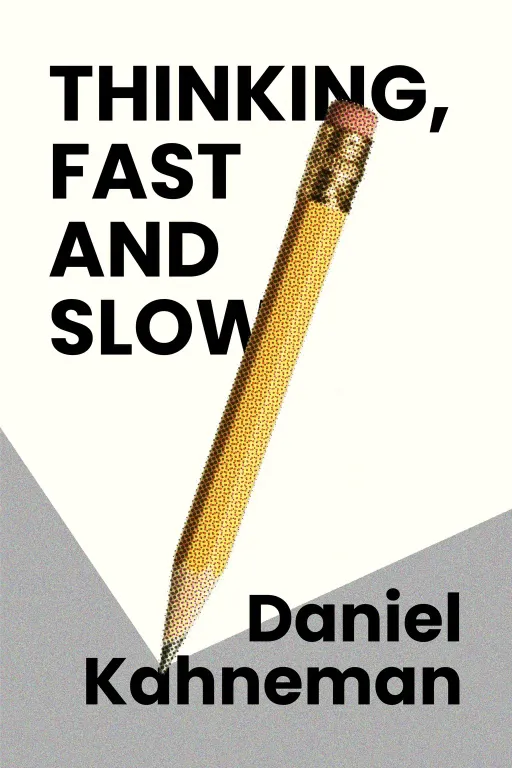
Nova: This shift was largely ignited by the groundbreaking work of Daniel Kahneman, who won a Nobel Prize for his research, even though he's a psychologist and not an economist. His seminal book, "Thinking, Fast and Slow," introduced the world to the idea that our minds operate with two distinct systems.
Atlas: Okay, two systems. Tell me more.
Nova: He calls them System 1 and System 2. System 1 is our 'fast thinking.' It's intuitive, automatic, emotional, and often unconscious. It's what gives you the answer to "2 + 2" instantly, or tells you someone is angry by their facial expression. It's brilliant for quick reactions, but it's also where those biases and shortcuts we just talked about often originate.
Atlas: So, my ten-cent answer to your bat and ball riddle? That was pure System 1. Fast, intuitive, and wrong.
Nova: Exactly! And then there's System 2, which is 'slow thinking.' This is your deliberate, effortful, logical, and conscious thought process. It's what kicks in when you have to solve a complex math problem, or carefully weigh the pros and cons of a major life decision. It's much more reliable, but it's also lazy. It takes effort, so our brains try to avoid using it whenever possible, defaulting to System 1.
Atlas: That makes so much sense. We want to believe we're always operating in System 2, but most of the time, we're just letting System 1 run the show on autopilot.
Nova: Precisely. And understanding this dichotomy is foundational. But it goes a step further with another Nobel laureate, Richard H. Thaler, and Cass R. Sunstein, who wrote "Nudge." They took these insights about our irrationalities and asked: If people aren't perfectly rational, can we design environments that 'nudge' them towards better decisions without restricting their freedom of choice?
Atlas: Nudge? Like, a gentle push in the right direction?
Nova: Exactly. Think about how many companies have defaulted their employees into 401k programs, where you have to opt rather than opt. Participation rates skyrocket. Or how cafeterias arrange food: putting healthy options at eye level, and less healthy ones further away. People still have the choice to eat whatever they want, but the 'architecture of choice' subtly influences them towards better outcomes.
Atlas: That's fascinating. So, it's about understanding human psychology so well that you can predict behavior and design the environment to encourage better choices, whether it's for saving money, eating healthier, or making better business decisions.
Nova: Absolutely. These insights fundamentally challenge the idea of pure rationality that dominated economic and business thought for so long. They tell us that humans are predictably irrational, and that's not a weakness to hide, but a reality to understand and leverage. It means we need a far more nuanced approach to strategy, recognizing that our decisions are not just about logic, but about psychology, context, and even the subtle 'nudges' around us.
Atlas: So, it's not just about trying harder to be rational, but about recognizing where our brains are likely to trip up, and then actively designing our processes and environments to mitigate those blind spots.
Nova: You've hit the nail on the head. It's about designing for human nature, rather than against it. And this applies everywhere, from personal finance to corporate strategy. If you're a leader, understanding these biases means you can structure meetings, design incentives, or even frame problems in ways that lead your team to more effective outcomes, rather than falling prey to groupthink or confirmation bias. It's about creating a system that makes good decisions the default.
Atlas: I'm curious, what's a simple example of a nudge I could apply to my own life, maybe to avoid a personal 'scarcity trap'?
Nova: Oh, that's a great question, Atlas. A classic one, especially if you're feeling overwhelmed or like you don't have enough time, is to simply make the desired action easier. If you want to exercise more, lay out your workout clothes the night before. If you want to eat healthier, pre-chop your vegetables or keep only healthy snacks visible. You're nudging your future self by removing friction from the desired behavior. It's about recognizing that your willpower isn't infinite, and you can design your environment to support your goals.
Atlas: That makes sense. It's like rigging the game in your own favor, against your own lazy System 1.
Nova: Exactly. It's a powerful tool for self-improvement and strategic thinking.
Synthesis & Takeaways
SECTION
Nova: So, Atlas, as we wrap up, what's the biggest takeaway for you from this dive into our cognitive blind spots and the power of nudges?
Atlas: Honestly, it's the realization that true rationality isn't about perfectly logical thinking all the time, but about understanding our. It's about being humble enough to admit our brains have these shortcuts, and then being smart enough to design around them. That bat and ball riddle is going to haunt me in the best way possible. It was a perfect, tiny illustration of how our gut feelings, while fast, can lead us astray.
Nova: It’s a perfect anchor for the idea, isn't it? And what I hope listeners take away is that this isn't just academic theory. This is practical wisdom that can transform how you approach every decision, big or small. From avoiding the "scarcity trap" by consciously allocating your most valuable asset—your time—to designing your environment for success, these insights offer a profound shift in perspective. It's about moving from simply reacting to consciously designing your choices and your life.
Atlas: That's actually really inspiring. It feels like a superpower, knowing that you can influence outcomes by understanding these hidden forces. It's not about being perfect, it's about being informed.
Nova: Absolutely. It empowers you to ask: Where in my current projects or daily life might unconscious biases be influencing important decisions? And once you ask that question, you're already on the path to making better, more deliberate choices.
Atlas: That's a powerful question to end on. It puts the ball back in our court, literally.
Nova: Indeed. This is Aibrary. Congratulations on your growth!