The 'Right' Decision is a Myth: Embrace Uncertainty for Agent Innovation.
8 minGolden Hook & Introduction
SECTION
Nova: What if I told you that the smartest, most logical decisions you've made in your Agent projects were probably influenced by something you didn't even know existed? Something that consistently steers us away from optimal outcomes?
Atlas: Whoa, hold on a second. For anyone building Agent systems, every decision, from architecture to algorithm choice, feels incredibly deliberate and rational. Are you suggesting we're all just… operating on autopilot sometimes, even in high-stakes technical environments?
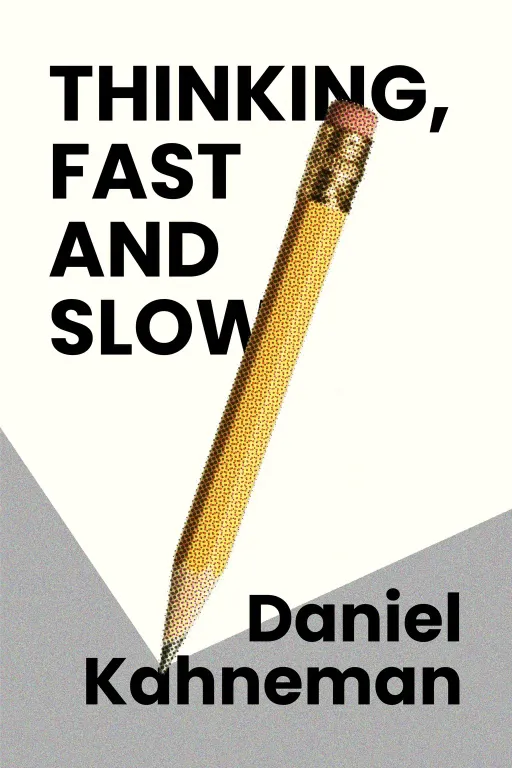
Nova: Absolutely, Atlas. And that's exactly what we're diving into today. Our insights come from two groundbreaking works: "Thinking, Fast and Slow" by the Nobel laureate Daniel Kahneman, and "Nudge" by Richard H. Thaler. These books fundamentally changed how we understand human decision-making, revealing the hidden forces at play.
Atlas: Okay, so if our decisions aren't purely rational, what's actually happening in our Agent work? This sounds like a critical blind spot for anyone trying to build truly intelligent systems.
The Blind Spot: Unmasking Cognitive Biases in Agent Decision-Making
SECTION
Nova: Exactly, a blind spot. We, especially in technical fields, often operate under the illusion of pure rationality. We believe our choices are based solely on data, logic, and objective analysis. But Kahneman, with his work, shows us there are two systems of thinking. System 1 is fast, intuitive, emotional—it's what makes snap judgments. System 2 is slow, deliberate, and logical.
Atlas: So you're saying that even when we think we're being methodical, like carefully selecting an Agent's LLM or a data pipeline, there's always this intuitive ghost in the machine? Can you give me an example of how System 1 might sneak into a technical decision for an Agent, especially for someone architecting complex systems?
Nova: Let's consider a common scenario for an architect under tight deadlines. They need to choose a core algorithmic approach for a new Agent feature, say, a recommendation engine. There are several options, some familiar, some newer and potentially more optimized but requiring more research. Under pressure, System 1, driven by familiarity and the desire for quick closure, might subconsciously push the architect towards the familiar, slightly less efficient algorithm.
Atlas: Ah, the comfort zone. I’ve seen that.
Nova: Precisely. They might then rationalize this choice later with System 2, saying it was "risk aversion" or "proven technology." But the underlying cause was the cognitive ease of System 1. The process was a quick mental shortcut, avoiding deeper exploration. The outcome? Subtle performance bottlenecks down the line, harder to diagnose, and potentially higher operational costs for the Agent system that could have been avoided. It wasn't a "bad" decision in isolation, but it wasn't optimal either.
Atlas: That's a great way to put it. It’s not about outright error, but about subtle sub-optimality that compounds over time. What's the biggest bias you see impacting Agent innovations right now, especially for someone trying to push boundaries?
Nova: I’d say confirmation bias, or perhaps the anchoring effect. When a team has invested heavily in a particular Agent architecture or model, there's a strong tendency to seek out and interpret new information in a way that confirms their initial choice. Or, the very first metric they optimized for becomes an "anchor," making it hard to pivot to a more holistic set of objectives for the Agent, even if the market shifts. It stunts true innovation because it makes us less receptive to truly disruptive alternatives.
Atlas: That makes perfect sense. It’s hard to iterate and innovate if you're always trying to prove your initial assumptions right, instead of letting the data, or the Agent's performance, speak for itself.
Architecting for Human Nature: Nudging Better Agent Interactions
SECTION
Nova: Understanding these biases isn't just about identifying problems; it's about empowerment. And that naturally leads us to the second key idea: how do we our Agent systems to account for this very human psychology? This is where Thaler's "Nudge" comes in.
Atlas: Nudging Agent innovation? That sounds like a fascinating paradox. How do we 'nudge' an Agent, or rather, nudge the of an Agent system towards better outcomes, when the Agent itself is supposed to be 'rational'?
Nova: That's the brilliance of it! Thaler demonstrates how choice architecture – the way options are presented – can subtly influence human behavior without restricting freedom. It's about designing the environment around the decision, not forcing a choice. For Agent systems, this means moving beyond just delivering "correct" output to delivering "psychologically intelligent" output.
Atlas: Give me an example. How would a "nudge" actually work within an Agent system for, say, a developer or an end-user?
Nova: Let's imagine an Agent designed to assist with project management, perhaps suggesting task priorities or flagging potential roadblocks. Instead of simply listing tasks by urgency, which can be overwhelming, the Agent could default to presenting tasks that have clear, positive feedback loops at the top. For instance, "tasks that will unlock the next feature" or "tasks that directly impact a visible user improvement."
Atlas: Oh, I see! So it's leveraging our bias for immediate gratification and clear progress. It’s not telling me what to do, but making the most beneficial path the easiest or most visible one.
Nova: Exactly! Another "nudge" could be for weekly progress reports from the Agent. Instead of making it an opt-in feature, where users have to actively choose to receive it, the Agent could make it an opt-out. By simply changing the default, significantly more users would receive and likely engage with those reports, increasing user awareness and accountability for the Agent's progress. The cause is user procrastination or decision fatigue. The process is simply changing the default or framing the choices. The outcome is increased user productivity and better project flow, all because the Agent's interaction design understood human nature.
Atlas: So, it's about designing the 'environment' around the Agent's output, rather than just the raw output itself? For an architect, this means thinking beyond just the algorithm's accuracy to its interface with human behavior. That’s a powerful reframing. But are there risks to 'nudging'? Could it feel manipulative if users realize they're being subtly guided?
Nova: That's a crucial point. The ethical dimension of nudges is paramount. The goal is always to guide users towards outcomes that are demonstrably beneficial to them, not to exploit their biases for a hidden agenda. Transparency is key. A good nudge helps users make choices they would rationally prefer, if they had infinite time and cognitive resources. It’s about making the healthy or productive choice the easy choice, not tricking them.
Synthesis & Takeaways
SECTION
Nova: So, what we've really been talking about today is that the 'right' decision, in its purest, perfectly rational sense, is a myth. Our brains are wired with these shortcuts, these biases. But recognizing that isn't a limitation; it’s an incredible opportunity.
Atlas: It’s a superpower, actually. The 'right' decision isn't about trying to eliminate all uncertainty or bias from our Agent projects, but about understanding it and building systems that work human nature, not against it. It's about designing for the human at the other end, or even the human the Agent.
Nova: Precisely. By embracing this uncertainty, by understanding the psychological landscape, we can design Agent systems that are not just logically robust, but also psychologically intelligent, leading to more innovative, user-friendly, and ultimately more successful outcomes. It transforms our approach from simply optimizing algorithms to optimizing the entire human-Agent interaction.
Atlas: That’s actually really inspiring. For our listeners who are building the next generation of intelligent systems, I’d offer this challenge: Think about a recent technical decision in your Agent work. How might a cognitive bias have influenced the outcome, and what could you do differently next time, perhaps by applying a 'nudge' in your design or even in your own decision-making process?
Nova: We'd love to hear your thoughts and experiences. Share your insights with the Aibrary community. Let's continue this conversation about building smarter, more human-centric Agents.
Atlas: This is Aibrary.
Nova: Congratulations on your growth!