The Power of Persuasion: Influencing Decisions in Complex Agent Systems.
9 minGolden Hook & Introduction
SECTION
Atlas: We spend countless hours perfecting our algorithms, optimizing for performance, building the most elegant Agent systems imaginable. And then… crickets. Or worse, outright resistance. Why do you think that happens, Nova?
Nova: Because, Atlas, the most powerful code in the world won't deploy itself. And it certainly won't persuade humans to adopt it if we're only speaking its language.
Atlas: Right? It's like we're building these incredible intelligent systems, but we forget the intelligence—or lack thereof, sometimes—of the humans we need to convince.
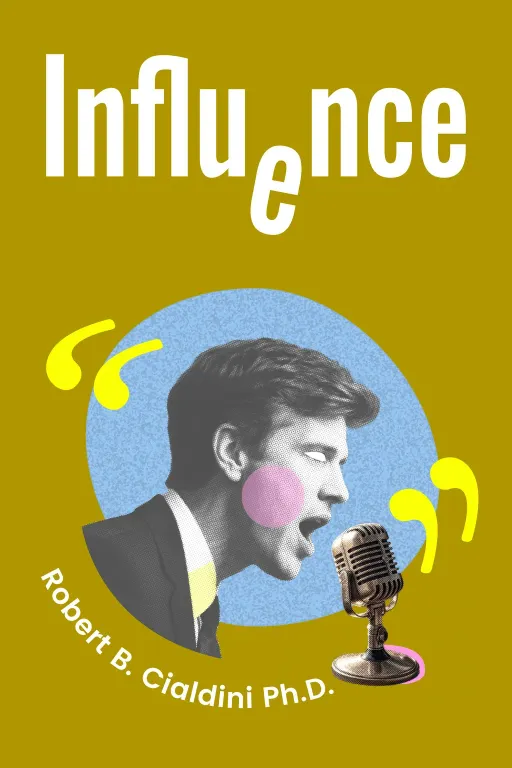
Nova: Absolutely. And that's exactly what we're tackling today. We're diving into. This episode draws heavily from the foundational work of Robert Cialdini's seminal book,, a perennial bestseller that reshaped our understanding of human decision-making, and Daniel Kahneman's Nobel Prize-winning, which laid bare the dual systems governing our thoughts.
Atlas: So, we're talking about the psychology behind getting our brilliant tech actually adopted. I’m all ears.
Nova: Exactly. And the first thing we need to acknowledge is what I call "The Engineer's Blind Spot."
The Engineer's Blind Spot: Why Logic Alone Fails in Persuasion
SECTION
Nova: We, especially in technical fields, are trained to believe that logical arguments, data, and irrefutable facts are sufficient to persuade. We build the most robust, scalable, and efficient Agent systems, present the benchmarks, and expect immediate buy-in. But human decision-making is deeply rooted in psychological triggers. Ignoring these is a missed opportunity for any value creator.
Atlas: But our job logic. We deal in code, in architecture, in verifiable outcomes. Are you saying we should abandon our logical approach for… 'feelings'? That sounds a bit out there.
Nova: Not abandon, Atlas, but understand. It's like trying to debug a human system with only code, not psychology. Daniel Kahneman gives us a crucial framework here: System 1 and System 2 thinking. System 1 is fast, intuitive, emotional, and often subconscious. System 2 is slow, logical, deliberate, and analytical. We engineers tend to speak exclusively to System 2.
Atlas: Okay, so, we're meticulously crafting arguments for the logical, analytical part of the brain, but most people are making their initial decisions with the fast, gut-feeling part?
Nova: Precisely. Let's take a common scenario. Imagine an Agent engineering team that has just developed a groundbreaking new framework for multi-agent collaboration. It’s technically superior, offers unprecedented efficiency, and their internal benchmarks are flawless. They present this to business stakeholders—data, diagrams, a perfect architecture. Yet, the stakeholders are hesitant, citing "gut feelings" about complexity or "it just doesn't feel right."
Atlas: That sounds so familiar! I imagine a lot of our listeners have been there. We've all poured our souls into a technical masterpiece, only to face inexplicable resistance. So, what's really happening in that room? Are they just being irrational?
Nova: From a purely logical perspective, it might seem that way. But System 1 thinking, driven by biases, heuristics, and emotional responses, often dominates those initial reactions. It's about familiarity, trust, perceived risk, or even just how the information to them, long before their System 2 fully engages to process the logical merits. The engineers spoke only to System 2, missing System 1 entirely.
Atlas: So, we're building cutting-edge AI, but we're forgetting the ancient, messy AI sitting across the table? That's a brutal irony. It's like building a rocket ship but forgetting to design the launchpad for human astronauts.
Nova: A perfect analogy. And that realization fundamentally shifts your approach from merely presenting facts to understanding and ethically leveraging the psychology that drives effective collaboration and adoption.
The Persuasion Playbook for Agent Systems: Cialdini's Principles & Kahneman's Systems
SECTION
Nova: Exactly, Atlas. And that's where Cialdini steps in, giving us a playbook to engage that 'ancient AI' ethically. He identified six universal principles of persuasion. Let's look at three key ones for our Agent engineers: Reciprocity, Social Proof, and Authority.
Atlas: Okay, reciprocity—so if I help a peer debug their Agent, they're more likely to support my next architecture proposal? That makes sense. It's human nature. But what about 'social proof' for something as new as an Agent system? It's not like everyone else is already doing it.
Nova: That's a great question, and it highlights how we need to adapt these principles. Social proof isn't just about mass popularity; it's about perceived validity through the actions of others. For a novel Agent system, this could mean showcasing successful internal pilot programs, even small ones. It could be securing testimonials from early adopters within the company who can speak to its value. Or, if similar Agent technologies are gaining traction in other industries or with respected competitors, that provides social proof.
Atlas: I see. So, instead of just saying "our Agent system is efficient," we can say "Team Alpha saw a 30% reduction in XYZ tasks using our Agent system," or "Industry leader X just invested heavily in this type of multi-agent architecture." It's giving people evidence that others, like them or whom they respect, are validating this direction.
Nova: Precisely. And then there's Authority. We tend to trust experts. If you're introducing a complex multi-agent orchestration layer, instead of just presenting the technical specs yourself, you could bring in an industry expert, or an internal lead with a strong track record, to endorse the underlying principles or the approach. Their credibility lends weight to your proposal.
Atlas: Okay, so let's tie this back to a practical example. Imagine an Agent architect wants to introduce this new, complex multi-agent orchestration layer. How would they use these principles beyond just a technical presentation?
Nova: Great question. Instead of just a tech spec document, they could start by offering to build a small, free Proof of Concept tailored to solve an urgent, specific problem for a key team. That's reciprocity in action—a small gift that creates an obligation.
Atlas: So, instead of asking for a huge buy-in upfront, you offer a concrete, low-risk solution first.
Nova: Exactly. And then, during the presentation of the POC's success, they wouldn't just show code. They'd bring in the leader of the team that benefited from the POC to share their positive experience—that's powerful social proof. And they might reference research or insights from recognized authorities in AI or distributed systems that support the architectural choices—that's authority.
Atlas: That's a complete shift! We're not just selling code; we're selling a vision, backed by human psychology. It's about bridging that gap between technical brilliance and human buy-in. It's about making our Agent systems not just smart, but.
Nova: And we haven't even touched on Commitment and Consistency—getting people to agree to small steps that lead to bigger ones; Liking—people are more likely to be persuaded by those they like; or Scarcity—the perception that something is limited or exclusive can drive action. Each offers an ethical lever for driving adoption.
Synthesis & Takeaways
SECTION
Nova: So, what we're really saying is that understanding Kahneman's System 1 and System 2 thinking helps you frame your message to resonate with how people actually process information. And Cialdini's principles provide the ethical tools to deliver that message effectively, especially when you're trying to integrate complex Agent systems into existing human and business processes.
Atlas: So, for our listeners—the full-stack engineers, the architects, the value creators—it's not about manipulation. It's about being a more effective communicator and leader for your groundbreaking tech. It's about ensuring your innovations don't just exist but thrive.
Nova: Exactly. It's about breaking boundaries. Integrating technology with business value isn't just about writing perfect code; it's about understanding the human operating system. It's the ultimate upgrade for your influence, transforming resistance into widespread adoption.
Atlas: That's a powerful takeaway. So, the growth advice isn't just to build better agents, but to understand the agents us, and how to communicate with them more effectively.
Nova: Precisely. And to truly unlock the potential of your Agent systems, start by asking: 'Which of these psychological levers am I currently ignoring when trying to get buy-in for my latest innovation?' You might just find the key to your next big breakthrough.
Nova: This is Aibrary. Congratulations on your growth!