The Human Element: Why Empathy is Your Most Powerful Engineering Tool.
9 minGolden Hook & Introduction
SECTION
Nova: We engineers, we love our logic, our efficiency. We pride ourselves on building robust, perfectly structured systems. But what if I told you that sometimes, your most brilliant, technically perfect Agent system is utterly failing because you've forgotten the squishy, unpredictable thing called a "human"?
Atlas: Whoa, Nova, that's a bold claim. "Failing" because we forgot the human? I mean, we're building cutting-edge Agent technology here, not designing a new coffee machine. Isn't the core value in the algorithms, the data, the sheer computational power?
Nova: Absolutely, those are critical. But the ultimate value, the true impact, comes when a human that Agent system and finds it intuitive, effective, and even delightful. That's where the "human element" becomes not just a consideration, but your most powerful engineering tool. We’re talking about shifting from purely technical specifications to the core user experience.
Atlas: So, you're saying our blind spot isn't a lack of technical skill, but a lack of empathy? That's a challenging idea for many of us who are deep in the code, building complex architectures.
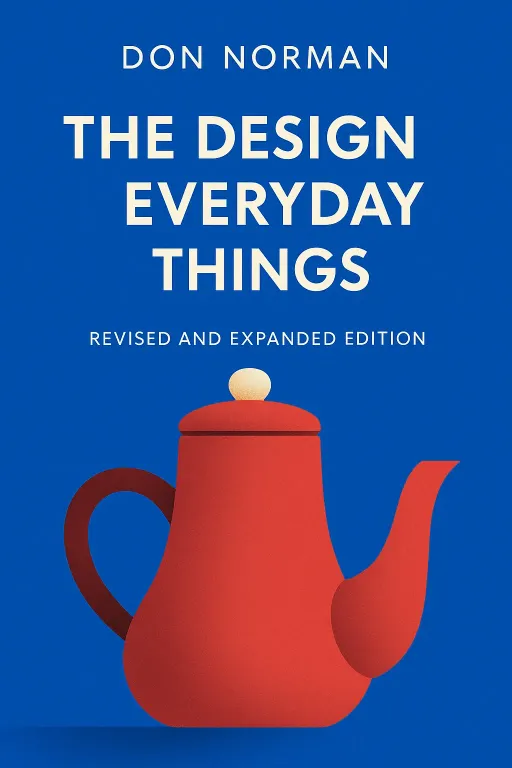
Nova: Exactly. And to unpack this, we're going to draw insights from two foundational thinkers whose work, though not directly about AI, fundamentally reshaped our understanding of design and decision-making. We're talking about "The Design of Everyday Things" by Don Norman, and "Thinking, Fast and Slow" by Daniel Kahneman. These aren't just academic texts; they're blueprints for understanding the users of the Agent systems we're building.
Atlas: Okay, I'm intrigued. Don Norman and Daniel Kahneman... how do these giants of design and psychology become essential reading for an Agent architect?
Deep Dive into Don Norman & The Invisible Design of Agent Systems
SECTION
Nova: Well, let's start with Norman. He famously argues that good design is invisible, while bad design shouts its failures. Think about a door. If you push when you should pull, or vice-versa, you don’t blame yourself; you blame the door. That's bad design screaming at you.
Atlas: I know that feeling! There’s nothing more frustrating than a door with no clear handle or signage, and you end up pushing and pulling like a mime. But how does a confusing door relate to a complex Agent architecture? Our Agent systems are about logic, efficiency, and solving complex problems. Isn't an Agent's logic the primary concern, not its "feel"?
Nova: It's precisely the "feel" that determines if your Agent system is adopted, used correctly, and creates value. If an Agent's interface, its prompts, or its feedback mechanisms are ambiguous, it’s like that confusing door. The user, operating under stress or time constraints, will blame the Agent, not themselves. Think about an Agent designed to automate complex financial transactions. If its confirmation prompts are unclear, or if its error messages are opaque, that technically perfect system becomes a source of anxiety and potential mistakes.
Atlas: So, an Agent that's technically sound but frustrating to use is, in Norman's terms, "shouting its failures." What would an "invisible" Agent design look like then? One that doesn't shout?
Nova: An invisible Agent design is one that anticipates your needs, provides clear, consistent feedback, and guides you intuitively without requiring a manual. Imagine an Agent that, based on your past project management patterns, proactively suggests a resource allocation adjustment before you even realize you need it, and presents it in a way that’s immediately understandable and actionable. It doesn't bombard you with options; it subtly nudges you towards the optimal path. The technology disappears, and the value simply. It's about designing for discoverability and appropriate feedback, making the complex simple.
Atlas: That makes perfect sense for someone like an architect who’s constantly trying to integrate new tech seamlessly into existing business processes. We don't want our Agent solutions to be another layer of complexity; we want them to simplify and enhance. Norman's idea of "invisible design" means the user isn't even thinking about the Agent, they're just getting their job done better.
Deep Dive into Daniel Kahneman & Designing for Human Thought Pathways
SECTION
Nova: Absolutely. And if Norman shows us good design looks like from the outside, Kahneman pulls back the curtain on our brains process it. He introduces us to System 1 and System 2 thinking in "Thinking, Fast and Slow." System 1 is our fast, intuitive, emotional, almost automatic thinking. System 2 is slow, logical, deliberate, and requires effort.
Atlas: Okay, so System 1 is gut reaction, System 2 is deep thought. I can see how that applies to humans, but how does this translate to designing Agent systems? Are we saying engineers should dumb down Agent systems for System 1 users? We build complex solutions for complex problems; isn't System 2 thinking part of the user's job when interacting with advanced AI?
Nova: That’s a common misconception. It's not about "dumbing down." It's about designing for the that users, even highly skilled ones, operate in System 1 most of the time to conserve mental energy. When they encounter something unexpected or confusing, they're forced into System 2, which is slow, draining, and often leads to frustration or errors. Think about an Agent that provides a critical alert. If that alert is ambiguous or requires multiple steps to understand its urgency, it forces the user into System 2 in a high-stakes moment.
Atlas: So, if an Agent's prompt or a data visualization is designed poorly, it’s not just a minor annoyance; it's actively forcing the user into a slower, more effortful mode of thinking when they might not have the capacity or the time. That sounds like a recipe for user burnout or even critical mistakes, especially in high-performance environments.
Nova: Precisely. A well-designed Agent system caters to System 1 for routine tasks and clear communications, reserving System 2 for genuine decision-making moments that require deep thought. For example, an Agent that summarizes complex data points using clear visual cues and concise language allows the user's System 1 to grasp the gist quickly. If more detail is needed, System 2 can then be engaged voluntarily, not forced.
Atlas: That makes me wonder, how can I, as an architect, apply this to make my Agent's decision-making more intuitive to the end-user? It's not just the interface, but the underlying intelligence.
Nova: Exactly! It's about how the Agent presents its reasoning. Can the Agent's "thought process" be made transparent enough for a System 1 understanding, even if the underlying algorithms are System 2 complex? Perhaps through clear, concise explanations of its recommendations, or by highlighting the key factors influencing its decisions. It's about building trust by making the Agent's intelligence feel accessible, not like a black box.
Synthesis & Takeaways
SECTION
Nova: So, bringing Norman and Kahneman together, we see a powerful synergy. Norman teaches us the importance of intuitive, "invisible" design in the physical and digital world, and Kahneman gives us the cognitive framework for that intuition works, and how our brains process information, both fast and slow.
Atlas: So basically you’re saying that integrating these insights fundamentally shifts our perspective from purely technical specifications to the core user experience. It's not just about building Agent solutions that, but Agent solutions that are truly valuable, accessible, and even delightful for the people using them. It’s about creating flow, not friction.
Nova: And that's where empathy truly becomes an engineering tool. It’s the ability to step into your user's shoes, anticipate their System 1 reactions, and design an Agent system that guides them effortlessly, reserving their precious System 2 capacity for tasks that genuinely require deep thought. It's the path to building not just smart Agents, but Agents.
Atlas: That's a great way to put it, "wise Agents." This definitely challenges my conventional thinking as an architect. It makes me think about that deep question you posed earlier.
Nova: Indeed. Consider an Agent feature you recently built, or one you're currently designing. How might a user with System 1 thinking perceive or interact with it in their daily workflow? What immediate "invisible" improvements could you make to cater to that fast, intuitive thinking, making it more intuitive and less frustrating?
Atlas: That's an excellent challenge. It’s not just about adding features, it’s about refining the experience. It asks us to look beyond the code and truly understand the human on the other side. This is going to resonate with anyone who struggles with bridging the gap between technical brilliance and real-world usability.
Nova: It's about remembering that at the heart of every complex system is a human trying to get something done. Designing for that human isn't a distraction; it's the ultimate goal.
Atlas: Absolutely. This has been incredibly insightful, Nova. I'm already thinking of a few Agent prompts I need to revisit.
Nova: Fantastic! We love to hear it. For all our listeners out there, we encourage you to share your thoughts on this. How has focusing on the human element changed your approach to Agent design? What "invisible" improvements have you made? Find us online and let us know.
Atlas: Your insights enrich our community, and we're always eager to learn from your experiences.
Nova: This is Aibrary. Congratulations on your growth!