The 'How-To' Twist: How to See the Unseen Patterns in Culture's Canvas.
10 minGolden Hook & Introduction
SECTION
Nova: We all think we’re great observers, don’t we? We look, we listen, we process. But what if I told you the truly fascinating, impactful stuff—the real engine of human behavior—isn’t what you see, but what you consistently overlook?
Atlas: Whoa. Consistently overlook? That’s a bold claim, Nova. I imagine a lot of our listeners, especially those who make a living by really seeing the world, like visual storytellers or designers, are thinking, "What exactly are we missing?"
Nova: Exactly! Because culture isn't just about what's visible on the surface—the food, the festivals, the obvious traditions. It’s a profound, silent language, an invisible operating system dictating how we think, how we create, and how we connect. Ignoring its subtle cues can lead to massive misunderstandings, especially when you’re trying to build bridges or craft resonant messages.
Atlas: Right. I can see how that would be a huge blind spot. It's like trying to navigate a city with a map that only shows the buildings, but not the hidden alleyways or the flow of traffic. For anyone driven to make a tangible impact, that's a critical piece of the puzzle. So, how do we even begin to perceive this invisible language?
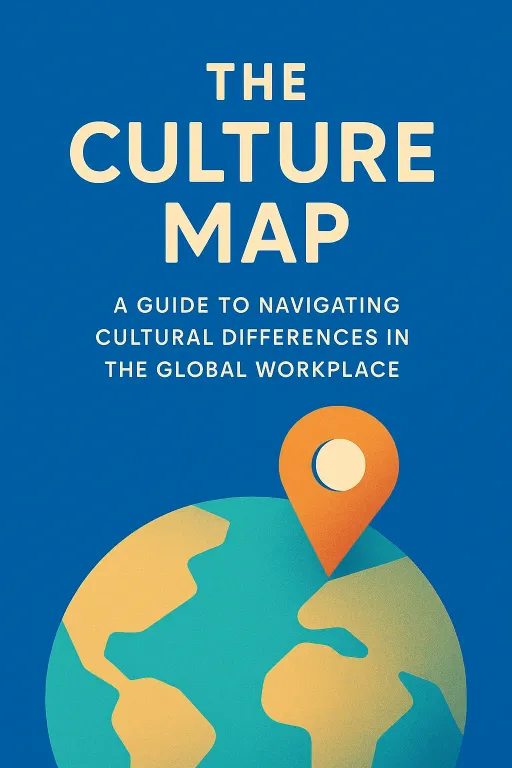
Nova: Well, today, we’re going to dive into the 'How-To' Twist: how to see the unseen patterns in culture's canvas. We’ll be looking at powerful insights from two brilliant minds: Erin Meyer with her groundbreaking work, "The Culture Map," and Daniel Kahneman’s revolutionary "Thinking, Fast and Slow." These aren't just academic texts; they're practical tools to observe and interpret the hidden patterns that drive human behavior, enriching your own storytelling and understanding of the world.
The Invisible Language of Culture: Unseen Forces Shaping Our World
SECTION
Atlas: That’s a powerful promise: enriching storytelling. But let’s start with that initial cold fact you dropped. Culture as a "silent language"—can you elaborate on that? Why is it so hard for us to see these forces, even when we’re actively looking?
Nova: Absolutely. Think about it: culture is the air we breathe, the water fish swim in. It's so fundamental to our existence that we rarely notice it. It shapes our default settings for everything: how we give feedback, how we make decisions, what we consider polite, even how we perceive time. It's ingrained in our System 1, our fast, intuitive thinking, which means we react culturally without even consciously deciding to.
Atlas: I see what you mean. It’s not just a set of rules; it’s an entire framework that dictates our spontaneous reactions. For someone who’s naturally inquisitive, always seeking the 'why' behind things, this sounds like a massive underlying 'why' we often miss. Can you give me an example, a story, where this unseen culture caused a real, tangible misunderstanding or even a failure?
Nova: Oh, I have a perfect one. Imagine a brilliant architect, let’s call her Clara, from a culture known for its direct, explicit communication—think North America or Germany. She’s designed a stunning, innovative public park for a client in a high-context culture, let’s say a major city in East Asia. Clara presents her design with meticulous detail, direct language, and expects clear, straightforward questions.
Atlas: Okay, so a visual storyteller, a creator, bringing their vision to life. What happens?
Nova: The client team listens politely, nods, and offers what Clara interprets as vague, positive feedback. Things like, "It is very interesting," or "We will consider this carefully." Clara leaves feeling confident, believing her design is well-received, and assumes any issues would have been directly raised. She proceeds with the next phase of detailed planning.
Atlas: Ah, I have a bad feeling about this. I’m guessing the "interesting" wasn't a compliment.
Nova: Exactly! Weeks later, Clara gets a polite, but very firm, email indicating the project is being "re-evaluated," and then quietly, almost imperceptibly, it's shelved. Clara is baffled, even hurt. She saw no clear rejection, no specific critique. She felt blindsided.
Atlas: Wow. So, the cause was Clara’s assumption of low-context communication—that if there was a problem, they’d say it directly. The process was this subtle, indirect feedback that she completely missed. And the outcome was a brilliant design, a passionate creator, and a significant project, all derailed by an unseen cultural pattern. That’s actually really heartbreaking. It’s like having a beautiful drawing, but the cultural 'lines' were invisible to her, leading to a completely different interpretation.
Nova: Precisely. The client team, operating in a high-context culture, expected Clara to read between the lines, to understand that their vague positivity and lack of direct engagement the polite way of signaling concerns or even a soft rejection. Direct criticism would have been seen as rude, confrontational, and damaging to the relationship. They were communicating clearly, just in a language Clara wasn't fluent in.
Atlas: That’s a perfect illustration of how what we don't see—or don't understand—can have monumental impact. It makes me wonder how many times we’ve all been Clara, missing these crucial cues in our own interactions, or even in the stories we try to tell about others.
Decoding Cultural Dimensions: Practical Lenses for Deeper Insight
SECTION
Nova: It happens more often than we realize! And that naturally leads us to the second key idea we need to talk about: if culture can be such a powerful, invisible force, how do we get a map to it? How do we start to see these 'invisible lines' and understand the 'why' behind different reactions? This is where frameworks like Erin Meyer's "The Culture Map" come in.
Atlas: Okay, so Meyer gives us a map. For a purposeful creator, someone who’s driven to connect and make a tangible impact, how does this translate into practical application? How do we use it to 'design messages that truly resonate' or understand how others 'see and feel'?
Nova: Meyer’s "Culture Map" identifies eight scales that help you decode how cultures operate, like communication, leadership, decision-making, and giving feedback. Let’s take the communication scale: it ranges from to. In low-context cultures, like the US or Germany, good communication is precise, explicit, and clear. You say what you mean. In high-context cultures, like Japan or many Asian and Middle Eastern countries, good communication is nuanced, layered, and often implied. You read between the lines, drawing on shared context and history.
Atlas: So, it’s not about being vague or unclear; it’s just a different way of conveying information. Like in Clara’s story. It's like the difference between a highly detailed blueprint and an impressionistic painting—both convey information, but you need a different lens to interpret them.
Nova: Exactly! Understanding this scale alone can transform how you interact. If you’re giving feedback, for instance, some cultures are incredibly cultures – you say "that's not good" clearly. Others are cultures, where that same message is couched in layers of positive comments, or delivered privately, or even through a third party. If you're a creative director, knowing this changes how you'd critique a team member from a different cultural background to ensure your feedback is actually heard and acted upon, rather than causing offense or being ignored.
Atlas: That’s incredible. And it makes me think about Daniel Kahneman's work, "Thinking, Fast and Slow." How do these cultural dimensions actually shape the way our brains process information, that "fast and slow" thinking he talks about? It seems like they’re intimately connected.
Nova: They are, profoundly! Kahneman describes two systems in our brain: System 1 is fast, intuitive, emotional, and largely unconscious. System 2 is slow, deliberate, and logical. Our cultural upbringing heavily conditions our System 1. The way we're raised, the stories we hear, the social norms we internalize—all of that builds our cultural "software."
Atlas: So, when Clara’s client was nodding politely, their System 1, conditioned by a high-context culture, was already flashing "problem" even as their System 2 was formulating a polite, indirect response.
Nova: Precisely! Their System 1 had a culturally-trained "gut feeling" about directness versus indirectness, about what's appropriate. So, when Clara was direct, their System 1 might have flagged it as aggressive or inappropriate, even before their System 2 could logically process the design's merits. This helps explain why people react so differently to similar stimuli. A joke that lands perfectly in one culture might be baffling or offensive in another, triggering very different System 1 reactions.
Atlas: That’s a powerful lens for truly understanding how others 'see and feel' – which is crucial for any creator, any storyteller. It’s not just about what we say, but how our cultural operating system influences their gut reactions and their deliberate thoughts. It adds so much depth to seeing the world in rich detail.
Synthesis & Takeaways
SECTION
Nova: It truly does. Understanding these hidden cultural patterns isn't just about avoiding missteps, it’s about enriching our entire human experience. It empowers more impactful storytelling, fosters genuine connection, and allows us to truly appreciate the full, vibrant canvas of human behavior. It’s about moving beyond superficial observation to deep insight.
Atlas: This is so much more than just avoiding offense; it’s about unlocking new levels of connection and impact. For all the curious explorers and purposeful creators listening, what’s one small, tiny step we can take, starting today, to begin seeing these unseen patterns?
Nova: Here’s your tiny step: Observe a recent interaction you had with someone from a different background, whether it’s a colleague, a friend, or even a character in a film. Reflect on how cultural nuances might have influenced their communication style, their reactions, or even your own interpretation of their behavior. Just become aware.
Atlas: I love that. It brings it right back to our own daily lives. It’s about trusting your unique lens, but also recognizing that lens is shaped by culture, and so are everyone else's. And by intentionally cross-pollinating these ideas, we can build something truly meaningful.
Nova: Absolutely. The world's canvas is vast and complex. The more we understand the unseen patterns, the richer our creations and connections become. Keep exploring, keep questioning, and keep looking for those invisible lines that shape our world.
Atlas: That’s a fantastic thought to leave us with. Thank you, Nova.
Nova: My pleasure, Atlas.
Nova: This is Aibrary. Congratulations on your growth!