The Empathy Advantage: How Understanding Others Fuels Your Journey
10 minGolden Hook & Introduction
SECTION
Nova: Alright, Atlas, quick challenge for you. If you had to describe "The Empathy Advantage" in exactly five words, what would they be? Go!
Atlas: Oh, easy. "Understand others, unlock your potential."
Nova: Ooh, I love that! Short, punchy, gets right to the heart of it. Mine would be: "Feel smart, think smarter, succeed." And that, my friends, is exactly what we’re diving into today. We're talking about how truly understanding people isn't just a nice-to-have, it's your superpower.
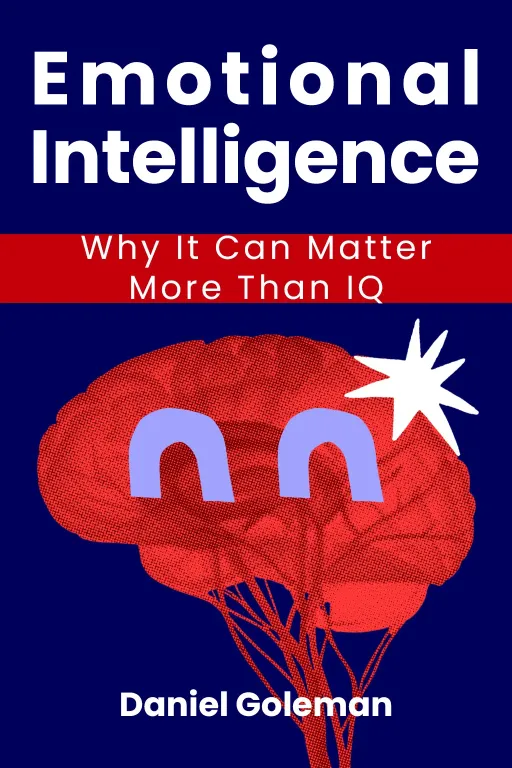
Atlas: Absolutely. It sounds simple, but it's deceptively profound. And we're drawing our insights today from two absolute titans in the field: Daniel Goleman's groundbreaking work, "Emotional Intelligence," and Daniel Kahneman's Nobel-winning masterpiece, "Thinking, Fast and Slow."
Nova: That's right. What's fascinating about Goleman is his background as a science journalist for The New York Times. He took incredibly complex brain and behavioral research and made "emotional intelligence" a household term, showing us it's not just about how smart you are, but how you smart with your feelings and others'. And then Kahneman, a Nobel laureate in Economic Sciences, completely reshaped our understanding of human decision-making, revealing the systematic quirks in our own minds.
Atlas: Seriously, these aren't just academic musings. These are the blueprints for navigating every human interaction, whether you're closing a deal, leading a team, or just trying to understand why someone reacted the way they did in traffic. It's about moving beyond surface-level exchanges to something much deeper.
Deep Dive into Core Topic 1: The Foundational Power of Emotional Intelligence
SECTION
Nova: Exactly. And that brings us to our first core idea: the foundational power of emotional intelligence. For so long, we've been conditioned to believe that IQ, raw intellectual horsepower, is the ultimate predictor of success. But Goleman fundamentally challenged that, showing that emotional intelligence, or EQ, often outweighs IQ when it comes to real-world achievement.
Atlas: Wait, are you saying that being good with feelings is more important than being, you know, traditionally smart? That sounds a bit counterintuitive to a lot of our listeners who might have spent years honing their technical skills.
Nova: It absolutely is, because it's not about replacing intellect, it's about it. Think about two project managers, both brilliant, both with stellar technical skills. One project manager, let's call her Sarah, has high emotional intelligence. She walks into a room and immediately senses the tension, picks up on unspoken frustrations, and can read the mood of her team. When a deadline looms and stress is high, she doesn't just bark orders. She empathizes with her team's overload, acknowledges their efforts, and then calmly helps them prioritize, perhaps even offering to help reallocate tasks.
Atlas: So, she's not just managing tasks, she's managing the managing the tasks.
Nova: Precisely. Her team feels seen, heard, and valued. They trust her. Even under immense pressure, they're more likely to collaborate effectively, communicate openly about roadblocks, and ultimately deliver superior results. Now, imagine another project manager, David. Equally brilliant, but with low emotional intelligence. He might not notice the simmering resentment, misinterpret a team member's quietness as laziness, or dismiss concerns as mere complaints. When a problem arises, he might blame, criticize, or simply push harder without understanding the underlying emotional dynamics.
Atlas: Oh man, I know that feeling. I imagine a lot of our listeners have been on David's team at some point. The project might get done, but the cost in morale, burnout, and long-term trust is enormous. It feels like walking on eggshells.
Nova: Exactly! The of the project might superficially look similar, but Sarah's team is engaged, resilient, and ready for the next challenge, while David's team is probably looking for new jobs. That's the practical manifestation of EQ. It's about self-awareness, knowing your own triggers and strengths; self-regulation, managing your reactions; motivation, driving yourself with purpose; empathy, understanding others' perspectives; and social skills, building rapport and influencing effectively. It's like a finely tuned engine versus one that's constantly sputtering because the driver isn't paying attention to the dashboard.
Atlas: That's a great analogy. But I'm curious, how do you even begin to cultivate that in yourself, especially when you're in a high-stakes environment where your own emotions are running wild? It's easy to preach self-regulation, but in the moment, it feels impossible sometimes.
Nova: You've hit on a critical point, Atlas. It's not about being a robot; it's about. It starts with recognizing those emotions in yourself, not suppressing them. And that naturally leads us to the second key idea we need to talk about, which often acts as a counterpoint to what we just discussed, but also deeply complements it.
Deep Dive into Core Topic 2: Strategic Empathy: Navigating Cognitive Biases for Deeper Connection
SECTION
Nova: This is where Daniel Kahneman's work on "Thinking, Fast and Slow" becomes an absolute game-changer. We often think our minds are these perfectly logical machines, always weighing pros and cons. Kahneman showed us that's simply not true. We have two systems of thinking: System 1 and System 2.
Atlas: So, what exactly are these systems, and how do they impact our daily interactions? I imagine they're not like two little brains in our heads.
Nova: Not at all! Think of System 1 as your gut reaction, your intuition. It's fast, automatic, emotional, and requires little to no effort. It's what allows you to instantly recognize a friend's face, or duck when something flies at you. System 2 is your conscious, logical, effortful thinking. It's what you use to solve a complex math problem, or carefully plan a business strategy. System 1 handles most of our daily heavy lifting, often making quick judgments and assessments without us even realizing it.
Atlas: Okay, so one's the autopilot, the other's the manual override. But how does knowing this help me connect deeper with someone? Doesn't it just make me better at predicting their irrationality, maybe even exploiting it? That sounds a bit out there, like psychological manipulation.
Nova: That's a fantastic question, and it gets to the heart of. It's not about manipulation; it's about. Imagine you're in a negotiation. If you only focus on the logical arguments, you might miss the underlying emotional triggers, the System 1 biases that are truly driving the other person's decisions. For example, people often suffer from "loss aversion"—they feel the pain of a loss twice as much as the pleasure of an equivalent gain.
Atlas: Right, like trying to convince someone to give up an old, barely working car. Logically, it makes sense, but emotionally, it's a huge loss for them.
Nova: Exactly. Now, if you understand that System 1 bias, you can frame your offer not as "giving up" something, but as "gaining" something even better, or avoiding a future loss. Instead of saying, "You need to get rid of that old car," you might say, "Imagine the peace of mind you'll have without those constant repair bills, and the comfort of a new model." You're appealing to their instinctive desire to avoid pain and gain comfort, rather than just presenting a logical spreadsheet.
Atlas: That's a powerful shift. But what if someone's System 1 reaction is completely irrational, based on some deep-seated fear or prejudice? How do you even begin to bridge that with logic?
Nova: That's where strategic empathy truly shines. You don't dismiss the irrationality; you it. You understand that their System 1 has fired off a quick, perhaps biased, judgment. Then, instead of directly confronting that System 1 with a System 2 argument, which often backfires, you gently try to engage their System 2. You might ask open-ended questions, provide new information in a non-confrontational way, or offer a different perspective that allows their logical mind to slowly re-evaluate. It's like gently guiding a powerful, fast-moving river into a more deliberate, thoughtful channel. You're not trying to stop the river, but to redirect its flow. This allows for deeper connection, because you're showing you understand their internal landscape, even the parts they might not consciously acknowledge.
Synthesis & Takeaways
SECTION
Nova: So, the Empathy Advantage truly comes from this powerful combination: the emotional sensitivity to what others are experiencing, combined with the cognitive insight to. It’s about merging Goleman’s EQ with Kahneman’s understanding of our mental architecture.
Atlas: That's actually really inspiring. It means we don't have to be mind readers; we just need to be more observant and understand the fundamental operating systems of human beings. For someone who is constantly navigating new places and people, this is gold. But what's one tiny step someone can take, tomorrow, to start building this advantage?
Nova: I love that you asked for a tiny step, because that's exactly what the content suggests. Tomorrow, before a conversation—any conversation, big or small—consciously try to identify in the other person without them saying a word. Are they stressed? Excited? Reserved? Confident? Just observe.
Atlas: That's brilliant. It forces you to look beyond the words and really the person. And that's where the real connection begins, isn't it? Every mile teaches you something new, and every observation builds that muscle.
Nova: Absolutely. By simply being more attuned to the subtle cues of human emotion and cognition, you can transform every interaction into an opportunity for deeper understanding, stronger connection, and ultimately, a more successful journey. How might this shift in perspective, this Empathy Advantage, truly change the way you navigate your world?
Atlas: That's a question worth pondering.
Nova: This is Aibrary. Congratulations on your growth!