The Anti-Fragility Principle: Thriving Amidst Chaos and Uncertainty
9 minGolden Hook & Introduction
SECTION
Nova: We're often told "what doesn't kill you makes you stronger." It's a classic, right? A mantra for resilience, for bouncing back.
Atlas: Oh, absolutely. It's practically etched into every self-help book and motivational poster. We aim for robustness, for systems that can just a hit and stand firm.
Nova: Exactly. But what if that's not just an incomplete truth, but dangerously misleading? What if some things, when they don't kill you, actually make you?
Atlas: Whoa. That's a curveball. Most of us are just trying to survive the hit, let alone come out weaker. You're saying there's a third option?
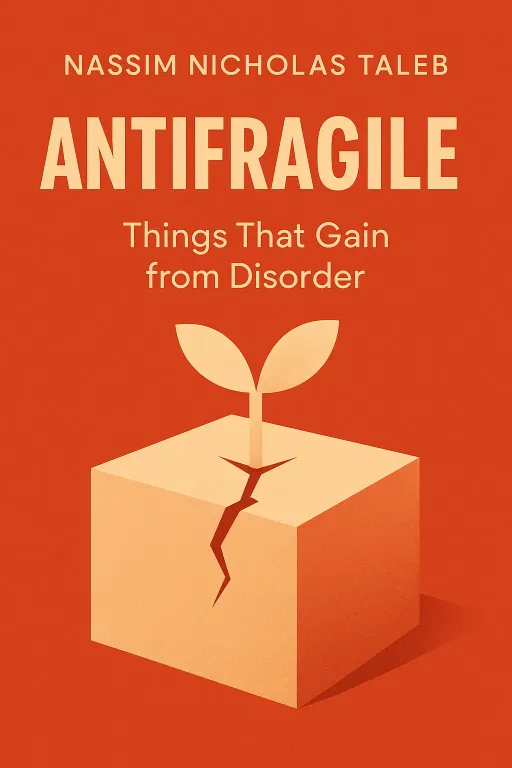
Nova: There is. And it's a concept that transforms uncertainty from a threat into your greatest ally. Today, we're diving into this revolutionary idea from Nassim Nicholas Taleb's groundbreaking book,.
Atlas: And I have to say, Taleb’s background as a former options trader and philosopher gives his work a profound, almost street-smart depth. He’s not just theorizing; he’s seen extreme uncertainty play out in real markets. But to truly understand we don't naturally lean into this, we also need to bring in Daniel Kahneman's Nobel Prize-winning insights from.
Nova: Absolutely. So, today we'll unpack what it truly means to be anti-fragile, going far beyond simple resilience. Then, we'll discuss the crucial role our own cognitive biases play in either hindering or helping us design systems that actually benefit from chaos.
Atlas: I'm already hooked. You mentioned a "third way" – something that actively benefits from disorder. What does that even look like? For someone who’s constantly building and trying to make things robust, what is this new paradigm?
The Anti-Fragility Principle: Beyond Robustness
SECTION
Nova: Well, let's start with the basics. Taleb defines three categories. Most things are. Think of a delicate glass. Drop it, and it shatters. It hates disorder. It breaks under stress.
Atlas: Makes sense. We all know fragility. We try to protect fragile things.
Nova: Then you have things. Imagine a sturdy cardboard box. You can drop it, kick it a bit, and it might get dented, but it generally holds together. It resists shocks. That's what most of us aim for: resilience, bouncing back to the original state.
Atlas: Right. That's the ideal, isn't it? Surviving the storm, getting back to baseline. For an architect building a system, robustness is the goal.
Nova: But Taleb says there's a third category:. This is something that doesn't just resist shocks; it from them. It gets stronger, improves, or performs better when exposed to stress, disorder, and volatility.
Atlas: That sounds almost mythical. Like a superhero. Can you give me a concrete example of something that actually from being hit? Because my intuition, and probably a lot of our listeners' intuition, is screaming that stress is bad.
Nova: Think about your own body, Atlas. When you lift weights, you're intentionally introducing small stressors to your muscles. Do your muscles break? No, if done correctly, they tear slightly and then rebuild themselves, becoming stronger. Your immune system, too. Exposure to pathogens, within limits, strengthens its ability to fight future infections.
Atlas: So, when we're trying to build something that lasts, whether it's a company, a career, or our own sense of well-being, we usually aim for robust. But you're saying that's not enough, and it might even be a blind spot for someone who builds systems, someone who’s always trying to cultivate sustainable growth.
Nova: It absolutely is. Consider a large, centralized corporation with rigid structures. A small market disruption, a minor supply chain issue, and the whole thing can seize up. It's fragile to small shocks. Now, imagine a network of independent, small businesses or startups. One fails? The others learn from it, adapt, and the overall ecosystem becomes more innovative and robust. The system as a whole gains from the failure of its individual parts.
Atlas: But isn't it counter-intuitive to stress? For someone who's cultivating sustainable growth, wouldn't they want to minimize disruption? How do you intentionally introduce small stressors without just inviting chaos, especially when you're responsible for building something foundational?
Nova: That's the crucial distinction. We're not talking about catastrophic, system-ending stressors. We're talking about controlled, small-scale volatility, what Taleb calls "small doses of harm." Think of optionality. Having many small, low-risk options with high potential upside. Or building in redundancy – having multiple ways to achieve a goal. If one path fails, the others pick up the slack, and you learn which paths are truly robust. Decentralized decision-making, where local failures don't cascade, but instead provide valuable information to the larger system. It's about designing for experimentation and learning from small mistakes.
Cognitive Biases: The Human Element in Antifragile Design
SECTION
Nova: Now, if antifragility offers such clear advantages, why don't we naturally design our lives, our businesses, and our systems this way? This is where Daniel Kahneman's work on cognitive biases becomes incredibly illuminating.
Atlas: So our brains are actually wired against seeking out this beneficial chaos? For someone trying to build lasting value, someone who’s dedicated to resilience, what's the biggest mental trap they need to watch out for when trying to embrace anti-fragility?
Nova: One of the biggest traps is the. We tend to overestimate the likelihood of events that are easily recalled or vivid in our memory. If we've experienced a major failure or a catastrophic event, our minds will constantly bring that to the forefront, making us incredibly risk-averse. We then design systems to prevent, rather than designing for general antifragility.
Atlas: I can see that. It's like, if a bridge collapses, everyone focuses on building stronger bridges, not necessarily on building a system of transportation that benefits from small, localized failures in other areas. We get stuck in a reactive loop, rather than proactively building adaptability.
Nova: Exactly. Another one is. We naturally seek out information that confirms our existing beliefs. If our belief is that stability and predictability are paramount, we'll gravitate towards data and experts who reinforce that, ignoring signals that suggest volatility might actually be beneficial. This leads us to build brittle systems, believing them to be robust, simply because they conform to our preferred narrative of order.
Atlas: So, if we're trying to design a system, or even a personal strategy, to be antifragile, how do we actively counteract these biases? For an "Architect" listener, someone laying foundational stone, what's a concrete way to integrate insights from "Thinking, Fast and Slow" into building a more antifragile structure?
Nova: A powerful strategy is to intentionally create what are called "red team" exercises. Instead of just having a team design a system, you assign another team the explicit job of trying to it, to find its vulnerabilities. This forces you to confront potential weaknesses that confirmation bias might make you overlook.
Atlas: So, you're literally building in a structured way to introduce those small, productive stressors we talked about earlier. Not just waiting for them to happen, but actively seeking them out. That’s a very practical application.
Nova: Precisely. Or, in your own decision-making, actively seek out dissenting opinions. Don't just surround yourself with "yes" people. Make it a practice to ask, "What's the absolute worst-case scenario if we try this small experiment?" or "How could this seemingly robust plan actually fail in an unexpected way?" It's about creating intellectual optionality, not just financial. It’s about building in a conscious process to expose your blind spots.
Synthesis & Takeaways
SECTION
Nova: So, bringing it all together, antifragility isn't just a property of certain systems; it's a profound design philosophy that requires us to overcome our innate human tendencies. It's about designing systems, and frankly, our lives, to not just withstand the unexpected, but to actively thrive on it.
Atlas: It sounds like we're not just building stronger systems, but more systems. Ones that acknowledge our inherent flaws and leverage the very chaos we often fear. It's about cultivating growth by understanding the fundamental principles of how things truly flourish in an unpredictable world. It’s about creating lasting value by not shying away from the very things that test us.
Nova: Indeed. True strength isn't found in avoiding all shocks. That leads to fragility. It's found in strategically inviting the right ones, the small, manageable ones, and having the self-awareness, thanks to insights from Kahneman, to learn from them and adapt. That’s how you transform uncertainty into a powerful catalyst for superior performance.
Atlas: That's a powerful thought. So, for our listeners, where in your own life or work could you intentionally introduce a small stressor or variation today, not to break it, but to truly make it stronger?
Nova: This is Aibrary. Congratulations on your growth!