Stop Guessing, Start Seeing: The Guide to Data-Driven Clarity in Complex Systems
9 minGolden Hook & Introduction
SECTION
Nova: Atlas, if I were to say "Stop Guessing, Start Seeing," what's the first thing that pops into your head?
Atlas: Oh, Nova, you're really putting me on the spot! I'd say... it sounds like the title of the self-help book I desperately needed I tried to bake sourdough for the first time without a recipe. Turns out, intuition and yeast are not always best friends.
Nova: You and me both, Atlas! But you've actually hit on the core of what we're exploring today, drawing from the profound insights within "Stop Guessing, Start Seeing: The Guide to Data-Driven Clarity in Complex Systems." This isn't just about baking, though your sourdough saga is a perfect metaphor. It's about how we navigate truly complex information without letting our gut feelings lead us astray.
Atlas: So, it's less about my flour-dusted kitchen and more about... everything else?
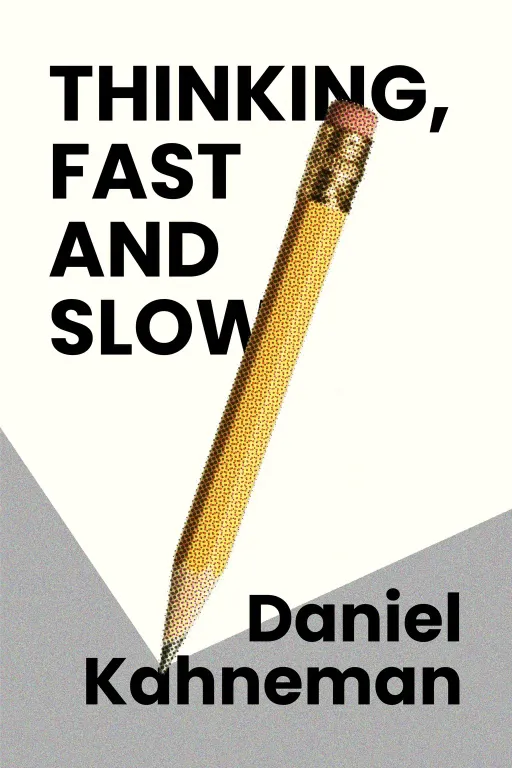
Nova: Exactly! And the ideas woven into this guide are heavily influenced by intellectual giants like Daniel Kahneman, a Nobel laureate who completely reshaped our understanding of human judgment, and Nate Silver, whose uncanny ability to predict everything from elections to baseball outcomes comes from his mastery of data. They both show us how our brains can play tricks on us and how to cut through the noise.
Atlas: That's a powerful duo. Kahneman won the Nobel in Economics, which is fascinating for a psychologist. It speaks to how deeply his work impacts our understanding of decision-making beyond just the individual mind.
Nova: Absolutely. Their work underpins this crucial idea: that by recognizing our brain's shortcuts, we can deliberately engage deeper thought to uncover the actual drivers behind observed phenomena. It’s about moving from instinct to insight.
The Intuition Trap: How Our Brains Lead Us Astray (System 1 vs. System 2)
SECTION
Nova: And that brings us directly to our first big idea: the intuition trap. We often trust our gut too much, especially when faced with complex information. This reliance on intuition, while sometimes useful, can hide deeper truths and lead to biased conclusions, making it hard to truly understand what you see.
Atlas: Oh, I know that feeling. It's like when you just a visual story you're crafting is going to land perfectly, only to realize later, after feedback, that some crucial element was completely missed because you were operating on a hunch.
Nova: That's a fantastic example, Atlas. And it perfectly illustrates what Kahneman delves into with his concept of two systems of thought. Think of it like this: your brain has a "System 1" and a "System 2." System 1 is fast, intuitive, emotional, and automatic. It's what tells you a startled sound means danger, or that 2+2=4. It’s incredibly efficient.
Atlas: Like my automatic reaction to the smell of burnt toast – panic!
Nova: Precisely! But System 1 is also prone to biases. It jumps to conclusions. System 2, on the other hand, is slow, logical, effortful, and deliberate. It's what you use to solve a complex math problem or write a detailed analysis.
Atlas: So you're saying my sourdough intuition was System 1, and the recipe I eventually consulted was System 2.
Nova: Exactly! Now, imagine a visual artist, someone who thrives on creative instinct. They're working on a new piece, and they intuitively feel that a certain shade of blue will perfectly convey a sense of calm. They've used it before, it's always worked, it's their "go-to" calm blue.
Atlas: Sounds like a strong System 1 at play – past success reinforcing a quick decision.
Nova: Right. But what if their audience, perhaps due to cultural context or a specific lighting setup in the gallery, actually perceives that blue as cold or even melancholic? The artist, relying solely on that fast, intuitive System 1, misses the deeper truth. They it's calm, but the actual impact is different. The cause is their brain's shortcut, the process is an instant, biased judgment, and the outcome is a disconnect with their audience.
Atlas: That’s going to resonate with anyone who struggles with getting their creative vision across. But Nova, for someone who values their unique lens, their artistic intuition, isn't that a bit... disheartening? Are you saying we should never trust our gut in the creative process? Because honestly, some of the most profound visual stories or even culinary breakthroughs come from that initial, intuitive spark.
Nova: That's a critical question, Atlas. It's not about trusting your gut. It's about. It’s about awareness. System 1 is brilliant for quick decisions, but for complex situations where the stakes are high, or understanding requires nuance, we need to consciously engage System 2. The artist isn't wrong to have an intuitive starting point, but the guide suggests they then engage System 2 – perhaps by testing the color on a small focus group, or researching color psychology in their specific cultural context, or even just stepping away and coming back with fresh eyes. It's about questioning that initial reaction and seeking more robust evidence.
Atlas: So, it's about adding a layer of deliberate analysis to intuition, rather than replacing it. That makes sense. It's the difference between blindly following a hunch and using a hunch as a starting point for deeper investigation.
Decoding Reality: Distinguishing Signal from Noise in a Data-Rich World
SECTION
Nova: And that naturally leads us to the next layer of seeing clearly, which is about what we focus on once we've engaged that slower thinking: distinguishing the signal from the noise. This is where Nate Silver’s brilliance truly shines.
Atlas: Ah, the art of prediction. I'm imagining a complex ecosystem, trying to figure out if a sudden drop in a certain insect population is a temporary blip or a sign of something much bigger.
Nova: A perfect example! Silver shows us how to distinguish meaningful patterns – the "signal" – from random fluctuations – the "noise" – in a data-rich world. This skill is absolutely crucial for making accurate predictions and informed decisions, whether you're forecasting an election or, as you said, analyzing ecosystem dynamics.
Atlas: But Nova, in something as intricate as an ecosystem, isn't a signal to someone, or just more noise to another? How do you even begin to untangle that? It feels like it could be paralyzing, trying to figure out what truly matters.
Nova: It can feel that way, but that's precisely the challenge Silver addresses. Let's take your eco-curious community group. They're passionate about a local pond, and they notice a sudden, dramatic drop in the number of dragonflies over a single week. Their System 1 immediately screams "environmental crisis!"
Atlas: And that's a natural, intuitive reaction. You see something unusual, you jump to conclusions.
Nova: Exactly. But if they only focus on that one week's observation – that's often noise. The signal would be analyzing data over several seasons, understanding the life cycle of dragonflies, looking at temperature fluctuations, rainfall, predator populations, or even broader hydrological changes in the area. The perceived "crisis" might simply be a natural, temporary migration pattern or a short-term weather event, rather than a systemic collapse.
Atlas: So, the cause was focusing on a limited data point, the process was an immediate, alarming interpretation, and the outcome was potentially misdirected effort or unnecessary panic. They saw a fluctuation and mistook it for a trend.
Nova: Spot on. They misinterpret noise for signal. Instead of gathering more robust, long-term data – the true signal – they react to the immediate, anecdotal observation. This can lead to misallocated resources, unnecessary alarm, and a failure to identify the drivers if there a problem.
Atlas: So, for our listeners who are trying to understand complex systems, whether it's the dynamics of an ecosystem or even the intricate flavor profiles in culinary science, what are some of the practical questions they should be asking to find the signal?
Nova: That's where we engage System 2. Instead of "What's happening?" ask "What's the broader historical context?", "What other variables might be influencing this?", "Are there multiple data sources confirming this pattern, or just one?", and critically, "What are the for what I'm seeing?" It’s about asking "what if I'm wrong?" and actively seeking evidence that contradicts your initial hypothesis.
Synthesis & Takeaways
SECTION
Nova: So, bringing it all together, "Stop Guessing, Start Seeing" isn't just a catchy title. It’s a powerful directive to empower ourselves. By understanding Kahneman's System 1 and System 2, we become aware of our cognitive blind spots. And by applying Silver's insights, we gain the tools to systematically filter out distractions and find the true signal in a world overflowing with data.
Atlas: It’s about cultivating a profound curiosity, Nova, but pairing it with rigorous analysis. It’s moving beyond just observing the surface to dissecting, understanding, and then truly creating with clarity.
Nova: Absolutely. It encourages us to deliberately engage deeper thought to uncover the actual drivers behind observed phenomena. It's a call to challenge our intuition, not to dismiss it entirely, but to refine it with robust evidence and a clear understanding of reality.
Atlas: So, where in your current work or interests might you be over-relying on System 1 thinking, and what data could you gather to challenge that intuition?
Nova: We'd love to hear your thoughts on this. Share your insights on how you're moving from guessing to truly seeing.
Atlas: This is Aibrary. Congratulations on your growth!