From Chaos to Clarity: Mastering the Art of Decision-Making Under Pressure
10 minGolden Hook & Introduction
SECTION
Nova: Alright, Atlas, quick game. I'm going to throw out a word related to decisions, and you just fire back the first thing that pops into your head. Ready?
Atlas: Oh, I like that. Always ready for a mental sparring match. Hit me.
Nova: "Pressure."
Atlas: Sweat. And maybe a bad coffee.
Nova: "Intuition."
Atlas: Wild card. Sometimes a hero, sometimes a villain.
Nova: "Regret."
Atlas: The ghost of choices past. Oof.
Nova: "Clarity."
Atlas: The holy grail. The promised land after the sweat and ghosts.
Nova: Exactly! The holy grail. Because today, that's what we're chasing: clarity in the chaotic world of decision-making, especially when the stakes are high. We're diving into how we move from that gut-feeling chaos to a more deliberate, impactful approach.
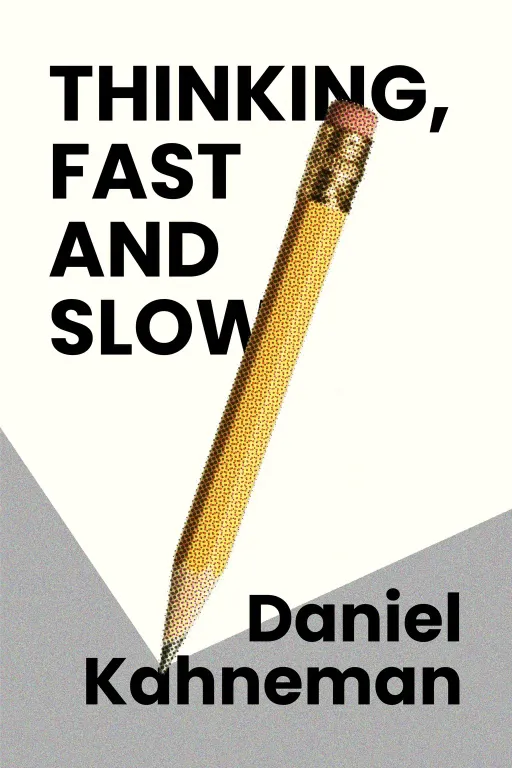
Atlas: And to get us there, we're looking at some absolute titans in the field. We're talking about "Thinking, Fast and Slow" by Daniel Kahneman, and "Nudge" by Richard H. Thaler and Cass R. Sunstein. These aren't just books; they're blueprints for understanding our own minds.
Nova: Absolutely. And what's fascinating is that Kahneman, a psychologist, actually won the Nobel Prize in Economics for his groundbreaking work, proving just how deeply our human psychology influences everything, including the economy. It wasn't just theory; it reshaped entire fields. And then you have "Nudge," which took these psychological insights and literally changed public policy around the globe, showing how small changes can lead to massive shifts in behavior. It's a powerful combination.
Atlas: That's incredible. So, we're not just talking about abstract ideas; we're talking about the fundamental wiring of our brains, and then how we can use that knowledge to build better systems.
The Blind Spot: Over-reliance on Intuition & Cognitive Biases
SECTION
Nova: Precisely. And the first place we need to start is with what I call 'the blind spot.' We often trust our gut feelings too much, especially in complex situations. Atlas, you called intuition a 'wild card,' and you're spot on. We like we're making rational choices, but our minds have these built-in biases, these mental shortcuts, that can actually lead us straight into a ditch.
Atlas: Hold on. Isn’t a gut feeling important for quick decisions, especially when you're under pressure? Like, in a fast-paced environment, you can't analyze every single variable. Sometimes you just, right?
Nova: You absolutely can't analyze every single variable, and yes, intuition has its place. But Kahneman helps us understand it's a wild card, and when it's more likely to betray us. He introduces System 1 and System 2 thinking. Think of System 1 as your mental autopilot: fast, intuitive, emotional, automatic. It’s what tells you 2+2=4 or makes you flinch at a loud noise. It's brilliant for survival and routine tasks.
Atlas: Okay, so, quick, instinctive reactions. That sounds efficient.
Nova: It is! But then there's System 2: slow, deliberate, logical, effortful. This is what you use to solve a complex math problem or decide whether to invest in a new product line. The problem is, System 1 is always running in the background, influencing System 2, and often taking over when it shouldn't.
Atlas: So you're saying our 'autopilot' can actually hijack our 'navigator'? That sounds a bit out there. How does that play out in a real scenario?
Nova: Let's take a classic cognitive bias: confirmation bias. It’s a prime example of System 1 at play. Imagine a leader, let's call her Sarah, who is convinced her new marketing strategy is genius. She's poured a lot of energy into it. Now, she's looking for feedback. System 1, her autopilot, wants to be right. So, when she gets a report with mixed results, her System 1 instinctively focuses on the data points that support her original idea, and easily dismisses or rationalizes away any contradictory evidence.
Atlas: Oh, I’ve been there. I totally know that feeling. You your idea to work, so you see what you want to see.
Nova: Exactly! The cause is our inherent desire for consistency and to be right. The process is a subconscious filtering of information. The outcome? Sarah ends up doubling down on a flawed strategy, not because it's the best strategy, but because her mind selectively processed information to confirm her initial belief. This can lead to significant resource waste and missed opportunities, especially in environments focused on growth and innovation.
Atlas: That's a bit like building an entire house on a shaky foundation because you only looked at the strong parts of the blueprint. For our listeners who are building ecosystems, fostering growth, that’s a dangerous blind spot. It can derail an entire initiative.
Nova: It absolutely can. And recognizing these blind spots, knowing that your gut isn't always your best advisor, is the first critical step to overcoming them. It’s about understanding that our brains are efficiency machines, but sometimes that efficiency comes at the cost of accuracy.
The Shift: Designing Better Decision Environments
SECTION
Atlas: That makes me wonder, if our brains are wired with these shortcuts, can we actually them, or are we just doomed to repeat the same biased mistakes?
Nova: That's a brilliant question, and it naturally leads us to our second core idea: the shift from simply choices to actively better decision environments. This is where Thaler and Sunstein's work on 'nudges' becomes incredibly powerful. They argue that since our System 1 is so susceptible to context, we can subtly 'nudge' ourselves and others towards better choices by intelligently structuring those contexts.
Atlas: So basically you’re saying, instead of trying to fight our biases head-on every single time, we can set up the playing field so the choice is the easier, more natural one?
Nova: Precisely! Think of it as choice architecture. Just like a physical architect designs a building to make certain behaviors easier – like putting the stairs in a prominent place to encourage walking over taking the elevator – we can design our mental and physical environments to encourage better decisions.
Atlas: Can you give an example? Because for someone creating a culture-first leadership approach, this sounds like it could be incredibly impactful, or incredibly manipulative. Where's the line?
Nova: That's a crucial distinction, and it speaks to the ethical considerations of nudging. A nudge, as Thaler defines it, is any aspect of the choice architecture that alters people's behavior in a predictable way without forbidding any options or significantly changing their economic incentives. It's about making the desired choice easier, not forcing it.
Nova: A classic example comes from organ donation. In many countries, you have to actively to be an organ donor. The default is 'no.' The result? Low donation rates. But in countries like Austria, the default is. You are automatically a donor unless you actively choose not to be. The result? Donation rates shoot up to over 99%.
Atlas: Wow, that’s incredible. So the cause is a subtle change in the default option, the process is leveraging our System 1's tendency to stick with the path of least resistance, and the outcome is a massive societal benefit. It's not forcing anyone, it's just making the beneficial choice the easier one.
Nova: Exactly. And this isn't just about public policy. For leaders, for 'Culture Architects,' this is gold. How do you 'nudge' your team towards innovation? Maybe you make brainstorming sessions the default, or you create a physical space that encourages spontaneous collaboration. How do you 'nudge' better recruiting? Perhaps the default first interview includes a skills test, rather than a purely conversational one, to combat unconscious bias.
Atlas: That’s a great way to put it. It’s like, instead of constantly telling people to 'think outside the box,' you literally remove the box, or at least make it easier to step over. It shifts the entire dynamic from a constant uphill battle against human nature to working it. That’s a powerful tool for sustainable success, for building adaptable, innovative teams.
Nova: It totally is. It's about understanding that our context profoundly shapes our choices, and if we're intentional about shaping that context, we can unlock clarity and better outcomes, even under immense pressure. It's a proactive approach to decision-making, moving us from reactive to architect.
Synthesis & Takeaways
SECTION
Atlas: This has been a fascinating journey, Nova. From realizing how often our gut feelings can mislead us, to understanding that we can actually design our way to better decisions. It's a huge shift in perspective.
Nova: It really is. It’s about moving beyond the idea that we're perfectly rational beings and embracing the beautiful, flawed complexity of our minds. Once we recognize those blind spots, like confirmation bias, we can then start to consciously construct environments – whether it's our personal workspace, our team meeting structure, or even how we frame a problem – that nudge us towards clarity and better judgment.
Atlas: And that's the real power here, isn't it? It's not about being perfect, but about being aware and intentional. For anyone building, leading, or seeking growth, understanding these principles is like having a superpower. It allows you to create systems, not just make ad-hoc choices.
Nova: Absolutely. It's the difference between being a passenger in your decision-making and being the architect. It empowers us to actively shape our future, rather than just react to it. So, think about a recent important decision you've made. Which cognitive biases might have influenced your thinking, and how could you approach it differently next time, perhaps by designing a tiny 'nudge' for yourself?
Atlas: That's a fantastic challenge. I imagine a lot of our listeners are already running through their own decision history right now. It's a powerful way to put these insights into immediate practice.
Nova: Indeed. The journey from chaos to clarity is an ongoing one, but with these tools, it becomes a path we can consciously build.
Atlas: Well said. This is Aibrary. Congratulations on your growth!