Beyond Logic: The Hidden Power of Intuition and Fast Thinking
10 minGolden Hook & Introduction
SECTION
Nova: What if I told you that the vast majority of your 'rational' decisions today weren't rational at all, but were actually made by a lightning-fast, often invisible force within you?
Atlas: Whoa, Nova. That's a bold claim. Are we talking about subconscious whispers or something more scientific? Because honestly, as someone constantly trying to build robust systems, the idea that my own brain might be a little… unpredictable, is both terrifying and fascinating.
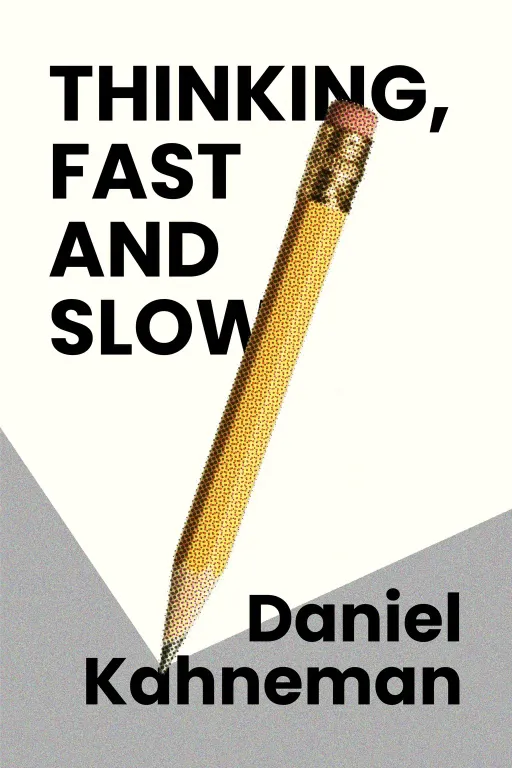
Nova: Something far more scientific, Atlas. Today, we're cracking open a concept that fundamentally reshaped our understanding of human thought, largely thanks to the Nobel Prize-winning work of Daniel Kahneman, particularly in his seminal book, "Thinking, Fast and Slow."
Atlas: Oh, that's a heavyweight. I remember hearing about his work. It really feels like he pulled back the curtain on how our minds actually operate, rather than how we they operate. So we're talking about the science behind why we do what we do, even when it makes no sense? For someone trying to architect robust systems, understanding human nature is key.
Nova: Exactly. And it all begins with understanding the two systems that drive our thinking. Kahneman, along with Amos Tversky, really brought to light this dual-process theory of the mind.
Atlas: Okay, so spill it. What are these two secret agents in our heads?
The Unseen Architect: How Our Two Minds Shape Every Decision
SECTION
Nova: Alright, imagine your mind has two main characters. On one side, you have System 1. This is your fast-thinking, intuitive, emotional, automatic self. It's the one that instantly knows 2 + 2 = 4, or slams on the brakes when a car swerves. It operates effortlessly, constantly generating impressions, intuitions, and feelings.
Atlas: So, it's like the highly efficient, always-on autopilot that handles most of the daily operations without me even realizing it. I like that; it sounds incredibly productive.
Nova: It is! But then there's System 2. This is your slow-thinking, logical, effortful, deliberate self. It's the one that solves complex math problems, or consciously focuses on a difficult task. It’s lazy by nature, prefers to conserve energy, and needs to be actively engaged.
Atlas: Ah, the one I have to bribe with coffee to get things done. I can definitely relate to that. So, is System 1 like the autopilot and System 2 the pilot when things get tricky? For someone trying to build intuitive products, for example, understanding this interaction is critical. How do these two actually dance together?
Nova: They dance constantly. Most of the time, System 1 is in charge, running the show smoothly. It offers up suggestions, impressions, and intentions to System 2. If System 2 accepts these, great. If System 1 encounters something it can't handle, or if the stakes are high, it calls on System 2 for backup.
Atlas: That makes sense. But what happens when System 1 gets a little too confident, or maybe a little… sloppy? Does System 2 always catch those mistakes?
Nova: Not always, and that's where the blind spots emerge. Let me give you a classic example. I call this the Bat and Ball Problem. Ready?
Atlas: Lay it on me. My System 2 is engaged. I think.
Nova: A bat and a ball together cost $1.10. The bat costs $1.00 more than the ball. How much does the ball cost?
Atlas: Oh, I've heard this one! My System 1 is screaming "10 cents!" right now. But my System 2 is trying to do the math… it’s like a little internal struggle.
Nova: And that's exactly what happens. Your System 1 immediately jumps to 10 cents because it feels intuitive and easy. But if you pause and engage System 2, you'll realize that if the ball cost 10 cents, the bat would be $1.10, making the total $1.20.
Atlas: Right, the ball actually costs 5 cents. The bat is $1.05, total $1.10. Wow. My System 1 is a fast talker, but not always accurate. So even smart people fall for that? It sounds like our brains are designed to trick us. What are the implications for high-stakes decision-making in a business context? If our initial gut reaction can be so off?
Nova: It's a profound implication. System 1 is fantastic for quick judgments and survival, for recognizing patterns. But it's also prone to biases and shortcuts, especially when faced with novel or complex situations. System 2, while capable of logic, is inherently lazy. It often defaults to the easy answer System 1 provides, unless it's explicitly prompted to exert effort. For leaders, for architects of systems, this means you can't always trust your first instinct, especially when the problem looks deceivingly simple.
Navigating the Predictably Irrational: Harnessing Intuition, Avoiding Pitfalls
SECTION
Nova: And that naturally leads us to the second key idea, which often acts as a counterpoint to our perception of ourselves. If Kahneman showed us we think, Dan Ariely, in his equally influential work, 'Predictably Irrational,' shows us our choices often defy logic, yet are consistently predictable.
Atlas: Predictably irrational? That sounds like a paradox. So, even our illogical choices follow a pattern? That's fascinating for anyone trying to understand customer behavior or team dynamics. It suggests there's a method to the madness, right?
Nova: Precisely. Ariely's work reveals the invisible forces that shape our decisions, showing how our choices are often irrational yet consistently predictable. He delves into these systematic errors our System 1 makes. One of my favorite examples is the power of 'relativity' and the 'decoy effect.'
Atlas: Relativity? Like, everything is relative? How does that play into our decisions about, say, what product to buy or which team member to promote?
Nova: Imagine this. Ariely once presented an experiment based on a real-world subscription offer from The Economist. There were three options:
Atlas: Wait, the print-only and print-and-digital were the same price? That seems… inefficient.
Nova: Exactly! Most people would rationally choose the print-and-digital option because it's clearly superior to print-only for the same price. But here's the kicker: when presented with these three options, a significant number of people chose the print-and-digital combo.
Atlas: Okay, that makes sense. You get more for your money.
Nova: But then, Ariely removed the "decoy" option – the print-only subscription for $125. Now, only two options remained: digital-only for $59, and print-and-digital for $125. What do you think happened?
Atlas: My System 1 wants to say people would still pick the print-and-digital because it's still a good deal. But if it's "predictably irrational," something else must have happened. Did more people go for the cheaper digital-only?
Nova: Bingo! When the decoy was removed, the number of people choosing the digital-only option for $59 skyrocketed! The seemingly useless print-only option served as an "anchor" or a "decoy," making the print-and-digital seem like an incredible deal by comparison. Without that decoy, the cheaper digital-only option suddenly looked more appealing.
Atlas: Oh, I've seen that in action! It's like when you're buying software, and there's always that middle-tier option that suddenly looks like the best deal, even if you only need the basic. So, how do we use this knowledge without being manipulative? For an architect focused on ethical design, this is crucial. We want to guide, not trick.
Nova: That's the heart of it, Atlas. True mastery comes from understanding our logical and intuitive minds. It’s knowing when to trust each, and crucially, how to mitigate their inherent flaws. It’s about recognizing when System 1 is likely to lead us astray with its quick, biased judgments, and then deliberately engaging System 2 to pause, reflect, and gather more information.
Atlas: So, it's not about eradicating intuition, but about refining it and building guardrails around it. It's about being aware of the invisible forces, both within our own minds and in the environments we operate in.
Synthesis & Takeaways
SECTION
Nova: Absolutely. Our minds are powerful, efficient machines, but they are also profoundly biased. The wisdom Kahneman and Ariely offer isn't about becoming perfectly rational robots. It's about recognizing the dance between fast and slow thinking, between our gut feelings and our deliberate analysis.
Atlas: So, for our listeners, especially those who are building systems, leading teams, or constantly trying to make impactful decisions, where do we start? How do we actually apply this 'mastery' in our daily decisions? Because it sounds like a big shift in how we approach everything.
Nova: It is a profound shift, but it starts simply. First, embrace reflection. Dedicate time each week to journal your insights about decisions you’ve made. Ask yourself: "Did my System 1 jump to a conclusion here? What was my initial gut feeling, and did I pause to question it?"
Atlas: That's a great practical step. It's about developing that meta-cognition, that awareness of our own thinking processes.
Nova: Exactly. Second, when facing high-stakes decisions – whether it's a critical product feature, a hiring choice, or a strategic partnership – consciously engage System 2. Don't just go with your gut. Ask: "What information am I missing? What biases might be at play here? How would someone with a different perspective view this?" Actively seek out dissenting opinions.
Atlas: So, a bit like building in a 'pause for review' stage in our own internal decision-making pipeline.
Nova: Precisely. And third, learn to leverage your intuition wisely. For routine decisions or in areas where you have deep expertise, trust your refined System 1. But always be ready to switch to System 2 if something feels off, or if the situation is novel and complex. It's about becoming the architect of your own decision-making process.
Atlas: That's actually really inspiring. It's not about being perfectly rational all the time, but about being smart about to be rational and to trust your gut. It's like designing a system with intelligent checks and balances, just for your brain. It feels like a pathway to making more meaningful, more sustainable impact.
Nova: It is. It’s about cultivating wisdom in your own journey, understanding the hidden power of intuition, and knowing when to let logic take the lead. And that's a profound journey.
Nova: This is Aibrary. Congratulations on your growth!