

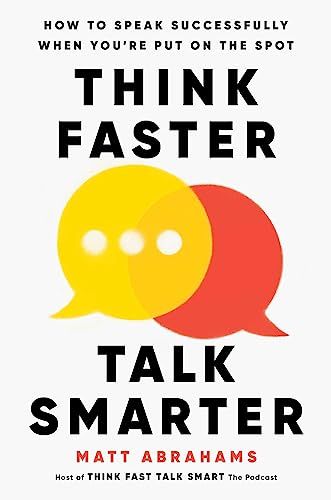
Mastering the Art of Spontaneous Speech
Golden Hook & Introduction
SECTION
Nova: The most dangerous thing you can do before a high-stakes presentation is memorize every single word of your opening statement.
Atlas: That sounds like a recipe for a total meltdown. If I am not memorizing my lines, I am just winging it, right? And winging it feels like walking onto a stage without pants.
Nova: You are falling into the trap that most high-achievers land in. We treat speech like a performance to be rehearsed rather than a conversation to be built. Today we are diving into the core principles of Mastering the Art of Spontaneous Speech. This is about why the most articulate people in the room are not the ones with the best scripts, but the ones with the strongest mental frameworks.
Atlas: Okay, I am intrigued because that hits home. I have spent my whole career building structures, and I usually apply that same rigidity to my communication. I want to know how to build a mental framework that survives the pressure of a live conversation.
Nova: That is exactly the shift we need to make. We are looking at the strategies that turn a chaotic, high-pressure situation into a moment of clarity. It is the difference between a rigid building that snaps under pressure and a flexible structure that sways with the wind.
The Architecture of Readiness
SECTION
Atlas: So, let’s get into that architecture metaphor. If I am not memorizing a script, how do I avoid rambling? Because when I try to be spontaneous, I usually end up circling the drain, repeating myself, and losing the room.
Nova: The problem is that you are focusing on the content rather than the container. Think of it like this. When you are designing a building, you do not memorize the exact placement of every brick before you start the foundation. You design the structural load-bearing walls, the flow of the hallways, and the purpose of the rooms. The rest, the furniture, the decor, the specific lighting—that adapts based on who is using the space.
Atlas: That makes sense. I get the foundation part. But in a conversation, I do not always know what the "rooms" are going to be. If I am in a board meeting and someone throws a curveball question, how do I know which structural wall to lean on?
Nova: You rely on what we call "mental scaffolding." This is a technique where you categorize your knowledge into modular blocks. Instead of memorizing a speech, you memorize three or four key pillars of your argument. When that curveball comes, you do not need to invent a new answer. You simply pick the pillar that supports the question.
Atlas: I see where you are going with this. It is like having a set of pre-built modules. If I am talking about a new project, I have a module for "Budget," a module for "Timeline," and a module for "Risk." When someone asks about the budget, I pull the "Budget" block, and I already know the key data points associated with it. I am not winging the data; I am just assembling the structure in real-time.
Nova: Exactly. And the beauty of this is that it frees up your cognitive load. When you are trying to remember a verbatim script, your brain is occupied with word retrieval. You are looking at the floor, you are stuttering, and you are losing eye contact. But when you are working with modular pillars, your brain is free to focus on the person you are talking to. You can read their body language, you can sense their confusion, and you can adjust your pace accordingly.
Atlas: That is a huge relief. I feel like most of the anxiety in public speaking comes from the fear of forgetting a specific sentence. But what happens when the conversation goes off-script? What if I have my "Budget" pillar ready, but the question is about something completely unrelated, like the company culture or a sudden market shift?
Nova: That is where the second layer of the architecture comes in: the bridge. You need to develop a set of mental connectors that allow you to pivot from an unexpected topic back to your core pillars. You are essentially building a hallway between the unexpected question and the known territory.
Atlas: Can you give me an example of what that bridge looks like in practice? Because it sounds easy in theory, but in the heat of the moment, I usually just panic and say, "That is a great question," while my brain frantically searches for a connection.
Nova: We have all been there. The "That is a great question" filler is a classic stall tactic. Instead, use a bridging statement that validates the question and redirects the energy. If someone asks about company culture when you were talking about the budget, you say, "That is an essential perspective. The culture of our team is actually the primary driver behind how we manage our budget allocations. Let me explain why."
Atlas: Oh, I like that. You are not dodging the question; you are reframing it as a subset of your existing framework. You are saying, "I have a block for that, and it connects to this other block."
Nova: Precisely. You are the architect of the conversation. You get to decide how the rooms connect. The moment you accept that you are in control of the flow, the fear of the curveball disappears. It becomes an opportunity to show how your different pillars of knowledge are interconnected.
The Principle of "Yes, And" in Professional Contexts
SECTION
Atlas: Okay, I am buying into the scaffolding idea. But let’s talk about the interaction part. I have heard the "Yes, And" rule from improv comedy, and honestly, it sounds a bit chaotic for a professional setting. If a client suggests a terrible idea, am I supposed to just say "Yes, and" to that? That sounds like a fast track to a disaster.
Nova: That is a very common misconception. People think "Yes, And" means you have to agree with everything. It does not. It means you have to acknowledge the reality of the input before you add your own value. In a professional context, "Yes, And" is about validation and contribution.
Atlas: Okay, break that down for me. If a client says, "I think we should double the scope of this project for the same price," and I say, "Yes, and," I am basically signing my own death warrant. How do I apply this without losing my shirt?
Nova: You are focusing on the content of their request rather than the process of their thinking. If you simply say "No," you shut down the conversation. The client feels defensive, and now you are in an argument. Instead, use "Yes, And" to acknowledge their desire and pivot to the constraints. You say, "I see that you are looking for more comprehensive results, and to achieve that level of scope, we need to adjust our timeline or resource allocation to ensure the quality remains at our standard."
Atlas: Wow. So, "Yes" is the acknowledgment of their goal, and "And" is the reality check of the constraints. You are not agreeing to the terrible idea; you are agreeing to the conversation about the idea.
Nova: Exactly. You are validating their intent. Their intent is to get better results. If you start with "No," you are attacking their intent. If you start with "Yes," you are aligning with their intent and then guiding the outcome. It is a subtle shift, but it changes the entire dynamic. It turns an adversarial negotiation into a collaborative problem-solving session.
Atlas: That is a game changer for me. I usually go straight to the "No" or the "Actually, that won't work" because I want to be efficient. But I am realizing that being efficient with my words is actually making me less effective with people. I am prioritizing the logic of the project over the psychology of the partnership.
Nova: And that is the trap of the analytical mind. We think that logic is the only currency in a professional setting. But human connection is the multiplier. If you can make the other person feel heard—even when you are about to tell them their idea is impractical—they are ten times more likely to accept your counter-proposal.
Atlas: So, how do I practice this? Because in the moment, my instinct is to defend my position. How do I train my brain to pause and use this "Yes, And" framework instead of the immediate "No"?
Nova: It starts with a simple pause. We have a tendency to want to fill the silence immediately. When someone challenges us, we feel the need to speak within a millisecond to show we have an answer. But that speed is what leads to defensiveness. Practice taking a deliberate, three-second breath before you respond.
Atlas: Three seconds feels like an eternity in a meeting. Everyone is staring at me.
Nova: It feels like an eternity to you, but to the listener, it looks like deep thought. It looks like you are considering their input with the gravity it deserves. That pause is a power move. It signals that you are not just reacting; you are processing. And in that pause, you have time to formulate your "Yes, And."
Atlas: That is such an interesting point. I have always viewed pauses as a sign of weakness or a lack of preparation. Like if I am not speaking, I am failing the test. You are telling me that silence is actually a tool for authority.
Nova: It is the ultimate tool for authority. Think about the most confident leaders you have encountered. They are rarely the ones talking the fastest. They are the ones who are comfortable with the silence. They let the weight of their words sink in.
The Architecture of Silence and Pacing
SECTION
Atlas: This brings me to something I have been struggling with. I am a fast talker. I think fast, I speak fast, and I assume everyone else can keep up. But I have noticed that when I am speaking to clients who are not as close to the project as I am, I lose them. They get that glazed-over look.
Nova: You are running a marathon, and they are trying to keep up on a tricycle. Your pace is out of sync with their processing speed. This is a classic issue for people with high mental processing speeds. You are already at the conclusion, and they are still trying to understand the premise.
Atlas: It is frustrating, honestly. I feel like I am wasting time. But I guess I am wasting time in a different way—by having to repeat myself because I didn't land the point the first time.
Nova: Exactly. You are paying the "repetition tax." If you slow down and structure your speech with deliberate pauses, you only have to say it once. Use the "period" technique. When you finish a thought, stop. Do not add a "you know?" or a "does that make sense?" Just stop. Let the period hang in the air.
Atlas: I catch myself doing that all the time. The "does that make sense" is my security blanket. It’s like I am asking for permission to continue.
Nova: Drop the security blanket. When you finish your point, stop speaking. If the other person needs clarification, they will ask. If they do not, it means they are with you. That silence is the space where they get to process what you just said. If you keep talking, you are actually interrupting their processing time.
Atlas: That is a profound way to look at it. I am literally interrupting their ability to understand me. I am going to try that. Stop at the period. No filler questions.
Nova: It will feel uncomfortable for the first few days. You will feel like you are being rude, or that the silence is awkward. But I promise you, the people you are talking to will perceive it as confidence. It is a sign that you are secure in your ideas.
Atlas: I can see how that ties back to the architecture metaphor. If I am building a house, I don't build the walls and then immediately start asking the client if they like the walls. I build the wall, I step back, and I let them look at it.
Nova: That is a perfect analogy. You are giving them the space to walk through the room you just built.
Synthesis & Takeaways
SECTION
Atlas: This has been really eye-opening. We have covered the idea of moving away from scripts and toward mental scaffolding, using the "Yes, And" technique to validate before we pivot, and mastering the power of the deliberate pause. It sounds like the secret to spontaneity is actually the opposite of what I thought. It is not about being fast; it is about being intentional.
Nova: You nailed it. Spontaneity is not about speed. It is about access. It is about having your information so well-structured and your presence so grounded that you can access whatever you need, whenever you need it, regardless of the situation. It is the ability to show up as your full self, without the crutch of a script.
Atlas: I am thinking about the "Aspiring Architect" profile we talk about—someone who craves structure in a world of noise. This feels like the ultimate tool for that. It is not just about being a better speaker; it is about being a better thinker. It is about creating a mental architecture that allows for freedom rather than restriction.
Nova: That is the ultimate goal. When you have that architecture, you are no longer afraid of the unexpected. You are no longer worried about the curveball. You know that you have the foundation to build any answer you need, right there on the spot.
Atlas: I am definitely going to start practicing that three-second pause in my next meeting. It sounds like a small change, but I can already imagine how it would change the dynamic of the conversation.
Nova: It will change everything. And remember, it is a practice. You are building a skyscraper, not a tent. It takes time to lay the foundation, but once it is there, it is solid.
Atlas: I love that. We are building for the long term. This has been a great conversation, Nova. I feel like I have a much clearer blueprint for how to approach my next interaction.
Nova: I am glad to hear that. The most important thing is to take one of these principles—maybe just the pause, or just the "Yes, And"—and apply it to your next interaction today. Don't try to change everything at once. Just build one room at a time.
Atlas: That is the most actionable advice I have heard all week. One room at a time. I can do that.
Nova: That is how you master the art. This is Aibrary. Congratulations on your growth!