The Scarcity Trap: Why You Need Abundance Thinking for Wealth.
Golden Hook & Introduction
SECTION
Nova: Atlas, quick game for you. Five words to describe our topic today, which is all about 'The Scarcity Trap: Why You Need Abundance Thinking for Wealth.' What comes to mind?
Atlas: Oh, I love that. Let's see... Mindset, money, freedom, growth, and absolutely essential. How'd I do?
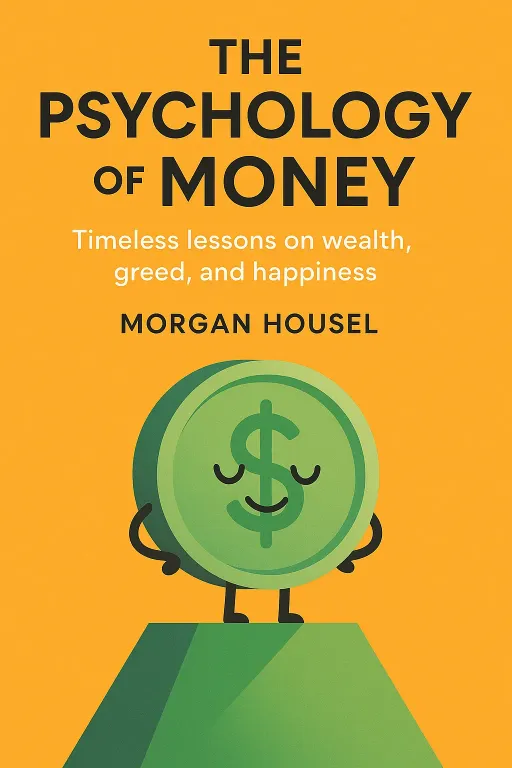
Nova: Perfectly encapsulated! And honestly, 'essential' is the keyword here, because today, we're dissecting a concept that ties into giants like Morgan Housel's and Napoleon Hill's. These aren't just books; they're blueprints.
Atlas: Both incredibly influential, no doubt. I mean, Housel, for instance, spent years as a financial columnist before distilling his observations into a book that's often lauded for its plain-spoken wisdom. He has this incredible knack for making complex financial behaviors accessible to everyone, which is why his work resonates so deeply.
Nova: Exactly. And the core idea we're grappling with is that true financial success isn't just about how much you earn or accumulate. It's about how you about money. And for many, there's a significant blind spot there.
Atlas: A blind spot? That makes me wonder, what deeply held belief about money might be limiting our financial potential right now? That's a powerful question to start with.
The Blind Spot
SECTION
Nova: It really is, and it's the perfect segue into our first core idea: 'The Blind Spot.' So many people genuinely believe that if they just made more money, all their financial problems would vanish. More income, more peace, right? But that's often not the case.
Atlas: Right? Like, you'd think if you're pulling in serious cash, say, a six-figure salary, that you'd automatically translate that to financial peace. Where's the disconnect? Why would someone with a high income still feel strapped or anxious?
Nova: Oh, I know that feeling! It's because the foundation of wealth isn't solely external; it's internal. Let's imagine "The High-Earning Spender." This person is a brilliant software engineer, pulls in a fantastic salary, but they're constantly feeling broke. Every bonus disappears, credit card balances creep up. They're stuck in this cycle, earning more, but never feeling ahead.
Atlas: But why? What's driving that dynamic? It sounds counterintuitive.
Nova: It's precisely the blind spot we're talking about. For our High-Earning Spender, their financial decisions aren't dictated by their spreadsheet; they're dictated by a subconscious scarcity mindset. Maybe they grew up with financial insecurity, so their brain's immediate response to money is fear-based. They spend impulsively to prove they're not poor anymore, or they hoard cash in a savings account but never invest it, paralyzed by the fear of loss. Housel talks extensively about how our personal history and emotions, not logic, often dictate our financial choices. These are the invisible scripts we carry from childhood or societal pressures, telling us that money is fleeting, or that we'll never have enough.
Atlas: That's fascinating. So, it's not about the number in their bank account; it's about the narrative running in their head. It's like having a super-fast car but constantly hitting the brakes because you're terrified of crashing, even on an open road.
Nova: Exactly! It's the underlying belief system. The blind spot prevents them from seeing that simply accumulating more cash won't solve the deeper psychological issues. They're chasing an external solution to an internal problem. And until they address that mindset, they'll always feel like they're in a financial trap, no matter how much they earn.
The Power of Abundance Thinking
SECTION
Nova: So, if the blind spot is about what's holding us back, the next logical step is how do we? How do we move from that scarcity mindset to one of abundance? This is where the wisdom of someone like Napoleon Hill becomes incredibly relevant.
Atlas: I'm curious, how do you actually cultivate this "burning desire" or build this "mental blueprint" when the world feels full of scarcity? It sounds a bit abstract, like just "think positively." What are the tangible actions?
Nova: That's a great question, and it's precisely where Hill's work, which was based on extensive interviews with successful individuals like Andrew Carnegie, really shines. It's not just positive thinking; it's a profound mental shift that leads to concrete action. Let's consider "The Creative Entrepreneur." This individual started with very little, perhaps even facing significant debt, but they had an unwavering belief in their ability to create value and solve problems.
Atlas: So, they didn't just for wealth; they had a conviction.
Nova: Precisely. For this entrepreneur, every setback wasn't an insurmountable obstacle; it was a learning opportunity. They viewed the world as full of possibilities, not limitations. They actively sought knowledge, built networks, and relentlessly pursued their vision. This embodies Hill's concept of a "clear, burning desire" – it's an intense, focused intention that becomes a mental blueprint for financial achievement. They weren't waiting for money to appear; they were actively creating value, trusting that resources would follow.
Atlas: That makes sense. It's like they had an internal compass pointing towards growth, even when external conditions were challenging. It's a proactive, growth-oriented mindset versus the reactive, fear-based one of our High-Earning Spender.
Nova: Absolutely. The Creative Entrepreneur understood that wealth isn't just about accumulating money; it's about the ability to generate value, solve problems, and adapt. They saw abundance in opportunities, even in areas where others saw only competition or lack. This isn't just fluffy thinking; it's a concrete strategy for financial freedom that leverages mental resilience and a belief in one's own capacity. They built their financial future not just with capital, but with consciousness.
Atlas: So, it's about mastering your mind to master your money. It's about actively designing that mental blueprint, almost like an architect designs a building, rather than just hoping the bricks magically arrange themselves.
Synthesis & Takeaways
SECTION
Nova: That's a perfect analogy, Atlas. What we've really been exploring today is that true financial strength and peace don't come from a bigger paycheck alone. They flow from a deeper, more profound shift in how we perceive and interact with money. It's about moving beyond that financial blind spot, which often keeps us in a cycle of scarcity, regardless of our income level.
Atlas: It's a powerful idea. It suggests that financial freedom isn't just an external state; it's an internal revolution. It's the difference between constantly feeling like you're playing defense with your money, and actively playing offense, creating opportunities.
Nova: Exactly. And the journey starts with asking yourself that deep question we posed earlier: What deeply held belief about money might be limiting your financial potential right now? Because often, those limiting beliefs are subconscious, and uncovering them is the first step towards building that mental blueprint for abundance.
Atlas: I imagine a lot of our listeners are now reflecting on their own money stories. So, Nova, what's one practical takeaway, one single step someone can take today to start shifting from scarcity to abundance thinking?
Nova: I’d say, start small: learn one new concept about money or wealth creation daily. It could be a simple principle, a new investment idea, or even just reading a chapter from one of these books. Consistent, deliberate learning chips away at the scarcity mindset and builds that abundance blueprint, one insight at a time.
Atlas: That's actually really inspiring. It grounds a big concept into something actionable. So, for everyone out there, challenge your assumptions, embrace that profound understanding, and keep building that financial freedom.
Nova: Absolutely. This is Aibrary. Congratulations on your growth!