

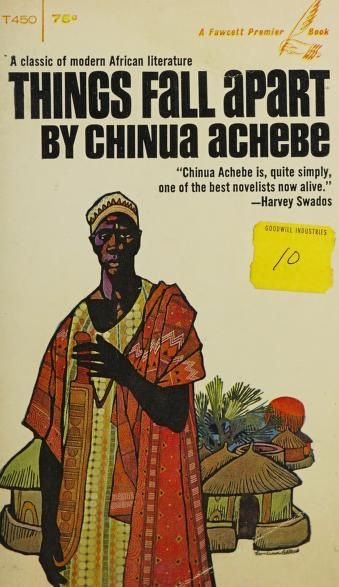
When Systems Collide: Leadership, Resilience, and the Anatomy of Change in Things Fall Apart
Golden Hook & Introduction
SECTION
Nova: What happens when a system that has sustained a community for generations suddenly meets an unstoppable external force? Do the cracks appear from the outside, or do they start from within? Today, we are diving deep into Chinua Achebe's legendary novel,, but we are looking at it through a completely fresh lens. We are going to explore this literary masterpiece not just as a historical tragedy, but as a masterclass in systemic health, institutional adaptation, and leadership resilience. Today, we will tackle this book from three distinct angles. First, we will look at the internal homeostasis of Umuofia and why its rigid structures made it vulnerable. Second, we will analyze the colonial disruption as a systemic shock, looking at how trade, religion, and governance dismantled the local social fabric. And finally, we will extract powerful leadership lessons on how to guide organizations and communities through massive transitions without falling apart. Joining me today is Solo Marvin Kasongo, a medical student, leadership alumnus, and strategist who looks at the world through the lens of systems, sustainability, and growth. Solo, it is so wonderful to have you here with us!
Solo Marvin Kasongo: Thanks, Nova! It is absolutely fantastic to be here. You know, when we look at, many people see it purely as a story of cultural conflict. But as someone training in medicine and passionate about leadership, I see it as a profound study in systemic vulnerability. In medicine, we talk about homeostasis—how a body maintains internal stability while adjusting to external conditions. Umuofia had its own homeostasis, a complex web of culture, agriculture, and judicial systems. But it was highly rigid. When a system cannot bend, it breaks. I am really excited to dissect how Achebe illustrates this, and what it teaches us about leading sustainable change today.
Nova: Oh, I love that medical analogy! Homeostasis is the perfect word for it. Umuofia felt so stable, yet it was so fragile. Let's dive right into that.
Deep Dive into Core Topic 1
SECTION
Nova: So, let's set the scene in Umuofia before the arrival of the British. On the surface, it is a highly structured, successful society. We see Okonkwo, our main character, who is the epitome of Umuofia's traditional values—strength, hard work, and wealth measured in yams and wives. But underneath this prosperous exterior, there are deep structural tensions. Solo, how do you view the internal dynamics of Umuofia before the external shock hits?
Solo Marvin Kasongo: It is fascinating, Nova. If you look at Umuofia as an ecosystem, it has incredibly strong feedback loops. Their judicial system, run by the egwugwu—who are the ancestral spirits represented by the masked elders—is highly effective at maintaining order. They have a wealth economy based on agriculture, specifically yams, which requires discipline and physical labor. But here is the catch: the system is hyper-masculine and leaves very little room for vulnerability, deviation, or empathy. Okonkwo's entire life is driven by a profound fear of failure and weakness, which he associates with his father, Unoka. This fear is not just personal; it is a reflection of a societal pressure that marginalizes anyone who doesn't fit the ideal mold.
Nova: Exactly! And we see this marginalization manifest in some really tragic ways. Think about the outcasts, the, who are completely excluded from the religious and social life of the clan. Or the birth of twins, who are viewed as an abomination and abandoned in the Evil Forest. Even Ikemefuna, the young boy from a neighboring village who becomes like a son to Okonkwo, is ultimately sacrificed to appease the Oracle. These are major internal stressors, aren't they?
Solo Marvin Kasongo: Absolutely. In public health or epidemiology, we look at pre-existing conditions that make a population vulnerable to an outbreak. These marginalized groups—the, the mothers of twins, the men who didn't achieve titles—they were the "pre-existing conditions" of Umuofia's social fabric. They were the cracks in the foundation. When a system ignores or oppresses a segment of its population, it creates a latent energy of discontent. The system might look stable because of strict enforcement, but it lacks genuine social cohesion. It is a high-pressure cooker waiting for a release valve.
Nova: That is such a powerful way to put it! The marginalized people were essentially the systemic vulnerabilities. And Okonkwo himself is like the ultimate rigid element in this system. He cannot adapt. When his gun accidentally explodes during a funeral and kills a clansman, he is exiled for seven years. This is a turning point. The system enforces its rules blindly, without considering the long-term strategic cost of losing one of its strongest defenders.
Solo Marvin Kasongo: Yes, the exile of Okonkwo is a perfect example of a rigid, algorithmic response to a complex crisis. The law is the law, and to cleanse the land, he must leave. But while Okonkwo is away in his motherland, Mbanta, the external environment changes completely. The British missionaries arrive. Now, if Umuofia had a more adaptive leadership structure—one that could assess new variables and integrate feedback—they might have responded differently. But their leadership was decentralized and relied heavily on tradition and ancestral precedent. When faced with a completely novel threat, a threat they had no historical precedent for, their traditional decision-making algorithms simply glitched.
Nova: Wow, "their traditional decision-making algorithms glitched." That is a brilliant description! They were trying to solve a 21st-century problem with a 1st-century playbook, so to speak. And the missionaries didn't just bring a new religion; they brought an entirely new operating system.
Deep Dive into Core Topic 2
SECTION
Nova: This brings us beautifully to our second core topic: the collision of systems. When the British arrive, they don't just march in with guns. They start with a church, then a school, then a court of law, and a trading store. It is a multi-pronged systemic invasion. Solo, as someone certified in trade rules, investment, and sustainable development, how do you analyze this specific phase of the colonial transition?
Solo Marvin Kasongo: This is where Achebe's genius really shines. He shows that colonization wasn't just a military conquest; it was an institutional replacement. The British introduced a new economic incentive structure. They built a trading court where palm oil and kernel became highly valuable. Suddenly, wealth wasn't just about yams and local titles; it was connected to a global trade network. This disrupted the local wealth economy. In economics, we know that if you change the currency or the trade rules, you change the power dynamics of a society. The elders of Umuofia lost their monopoly on status and wealth.
Nova: That is so true! And the church provided a sanctuary for all those marginalized groups we talked about earlier. The, the parents of twins, the people who felt rejected by the traditional gods—they found a place where they were told they were equal and valued. The missionaries offered a new social contract.
Solo Marvin Kasongo: Exactly! From a strategic standpoint, the missionaries did a brilliant stakeholder analysis, even if they didn't call it that. They identified the most vulnerable, dissatisfied stakeholders in the community and offered them a value proposition that the traditional system refused to provide. They offered dignity, education, and economic opportunity. For the, joining the church wasn't just a spiritual decision; it was a rational choice to escape systemic oppression. This is a massive lesson for modern leaders: if your organization or community has a group of neglected stakeholders, an external disruptor will eventually come and win them over by addressing their unmet needs.
Nova: Oh, that is a gold nugget of leadership advice right there! If you don't care for your stakeholders, someone else will. And we see this play out so dramatically when Okonkwo returns from exile. He expects to find his warlike clan ready to fight and drive out the intruders. But instead, he finds a deeply divided community. Some have joined the church; others are trading with the white men; many are attending the school. The social cohesion is completely gone.
Solo Marvin Kasongo: Yes, and the tragedy is that Okonkwo tries to use the old playbook. He thinks a physical battle, a show of force, will unite the clan. When the court messengers try to break up a meeting of the clan, Okonkwo draws his machete and decapitates one of them. He expects the crowd to rise up with him, to cheer him on. But instead, they stand in silence and confusion. They ask, "Why did he do it?" In that single moment, Okonkwo realizes that the system he loved, the Umuofia he fought for, no longer exists. The collective consciousness has shifted. The feedback loop is broken.
Nova: It is such a heartbreaking moment. He stands there, completely isolated, realizing that his actions are no longer aligned with his community. And rather than submit to the white man's court, he goes and hangs himself. For a man who lived his entire life trying to avoid a shameful death, hanging himself—which is considered an abomination and an unspeakable sin against the earth in Igbo culture—is the ultimate tragic irony. His own people can't even touch his body; the strangers have to take him down.
Solo Marvin Kasongo: It is the ultimate systemic failure. Okonkwo's suicide is a physical manifestation of the death of the old system. He was the pillar of that system, but because he could not adapt, he was crushed by the transition. In medicine, if an organism cannot adapt to a new pathogen or a changing environment, it experiences organ failure and death. Okonkwo was an organ that refused to adapt, and his demise was inevitable in the face of such a massive systemic shift.
Synthesis & Takeaways
SECTION
Nova: This is a heavy story, but it is packed with so much wisdom for us today. As we wrap up this incredible conversation, Solo, let's synthesize these ideas. What are the key takeaways for leaders, strategists, and change-makers who want to build resilient systems that don't fall apart when faced with disruption?
Solo Marvin Kasongo: I think there are three major lessons we can take away from. First, we must actively seek out and address the vulnerabilities within our own systems. We need to ask ourselves: Who are the "outcasts" in our organizations? Who is being left behind? If we don't build inclusive systems that provide value to all stakeholders, we are creating latent instability that will eventually be exploited by external disruptors. This aligns directly with the Sustainable Development Goals of leaving no one behind.
Nova: Yes! Inclusivity is not just a moral duty; it is a strategic necessity for systemic resilience. What is the second lesson?
Solo Marvin Kasongo: The second lesson is the critical importance of adaptive leadership. We cannot rely solely on historical precedents or rigid rules when facing novel challenges. Leaders must cultivate cognitive flexibility and emotional intelligence. Okonkwo's downfall wasn't a lack of strength; it was a lack of adaptability. He only knew how to fight, but the situation required negotiation, understanding, and strategic pivoting. We must learn to balance strength with empathy, and tradition with innovation.
Nova: Beautifully said. And the third lesson?
Solo Marvin Kasongo: The third lesson is about managing transitions. When introducing change—or when responding to external change—we must understand the existing social fabric. The British succeeded not just because of their military power, but because they built institutions that integrated into the daily lives of the people. If we want to drive sustainable growth, we must build bridges, not just tear down old structures. We need to respect the history and values of the communities we serve while guiding them toward a better, more sustainable future.
Nova: Solo, this has been an absolutely mind-opening conversation. You have taken a classic piece of literature and turned it into a powerful framework for modern leadership and systemic health. Thank you so much for sharing your unique perspective with us today!
Solo Marvin Kasongo: Thank you, Nova! It has been an absolute pleasure. I hope our listeners take these lessons to heart and strive to build systems that are not only strong, but flexible, inclusive, and resilient.
Nova: And to our listeners, thank you for tuning in. Next time you face a major disruption in your life, your career, or your organization, ask yourself: Are you reacting like Okonkwo, or are you looking for ways to adapt, heal, and grow? Until next time, keep learning, keep leading, and keep building bridges!