

The Hamster's Gaze: A Thought Experiment on Perspective
Golden Hook & Introduction
SECTION
Albert Einstein: Mel, a thought experiment for you, if you will. Imagine for a moment you are a being of higher intelligence, placed in a small, transparent box. From this box, you can observe the daily lives of a strange, giant species—let's call them 'humans.' You can't speak their language, but you can see their patterns, their joys, their strange and often illogical sorrows. What is your purpose? Are you there to simply watch? Or to help?
mel: That's a fantastic question, Albert. It’s the classic observer's paradox, isn't it? The moment you decide to interact, you're no longer a pure observer; you become part of the system you're studying. But if you don't interact, what's the point of the knowledge you're gathering? Is it just sterile data collection? I think, analytically, my first instinct would be to map the system, to understand the rules before I dare to touch anything.
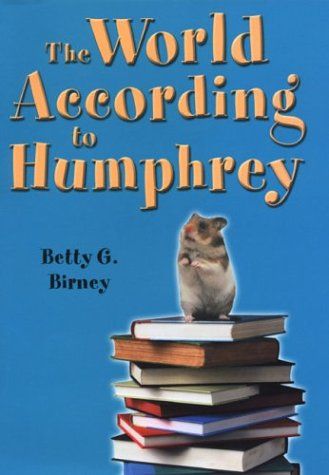
Albert Einstein: Precisely! To map the system! And that very question, that tension between watching and doing, is at the heart of a wonderful little book, 'The World According to Humphrey' by Betty G. Birney. It’s about a classroom hamster, but today, we will treat him as our 'being of higher intelligence in a box.'
mel: I love it. So we're using a children's book as a framework for a complex philosophical problem. That's exactly the kind of cross-domain connection I enjoy.
Albert Einstein: Exactly! And today we'll dive deep into this from two perspectives. First, we'll explore Humphrey's role as a detached analyst, a tiny sociologist in a cage. Then, we'll discuss his dramatic shift into an active participant, a furry agent of change, and what that tells us about our own responsibilities as observers of the world.
Deep Dive into Core Topic 1: The Observer as Analyst
SECTION
Albert Einstein: So let's begin with Humphrey the scientist. When he first arrives in Room 26, a new student just like the children, he is in a completely alien environment. So, what is his methodology?
mel: He starts by gathering data. He has to make sense of the chaos.
Albert Einstein: He does! It is quite remarkable. He cannot understand their words, so he listens to the sounds and the intentions behind them. He gives the children names based on their most observable traits. There is "LOWER-YOUR-VOICE-A. J." and "RAISE-YOUR-HAND-HEIDI." And, most tellingly, "SPEAK-UP-SAYEH." He is not judging them, you see. He is classifying them based on the available data.
mel: It’s a form of behavioral tagging. He's creating a personal taxonomy to navigate his new reality. It’s what any good analyst does when faced with a new, complex dataset. You don't try to understand everything at once; you find the key variables, the defining characteristics, and you build your model from there.
Albert Einstein: A beautiful way to put it. His model becomes truly fascinating when his "research" goes into the field. Each weekend, a different student gets to take Humphrey home. His cage is placed in the heart of these different family units, and our little scientist gets a new batch of data.
mel: He's essentially conducting a series of immersive qualitative studies. A weekend ethnography.
Albert Einstein: Yes! And the contrast is astounding. One weekend, he goes home with A. J., the boy with the loud voice. Humphrey is initially terrified. The house is a whirlwind of noise, of three brothers wrestling, of a television blaring, of a father shouting "Touchdown!" It seems like pure chaos. But then, he sees the family gathered on the couch, laughing, sharing popcorn. He observes that the loudness is not anger, it is… joy. It is connection.
mel: So he has to update his hypothesis. 'Loud' doesn't just mean 'disruptive.' In this context, 'loud' means 'alive' and 'engaged.' He's refining his definitions based on new environmental context.
Albert Einstein: Exactly. Now, contrast that with the following weekend. He goes home with Sayeh, the girl who never speaks. Her apartment is the opposite of A. J.'s house. It is silent. Spotlessly clean. Her parents are gentle and quiet. They smile at her, but they do not talk much. There is no shouting, no wrestling. There is peace, but there is also… a kind of stillness. A loneliness. Humphrey sits in his cage and observes this profound silence.
mel: And he's connecting the dots. He's seeing the system that produces the behavior he observes in the classroom. Sayeh isn't just 'quiet' as a personal choice; she comes from an entire ecosystem of quiet. He's moving from observing an individual trait to understanding a systemic influence. That's a huge analytical leap.
Albert Einstein: It is! He is learning that a person is not just a person; they are a product of their world. He sees a boy who is told to be quiet at school but is celebrated for being loud at home. He sees a girl who is told to speak up at school but is surrounded by silence at home. From his little cage, he sees the contradictions we giants live with every day.
mel: And what's so powerful about that, from an analytical perspective, is that he's doing it with a completely limited, biased dataset. His entire world is what he can see through the bars of his cage. It’s a powerful metaphor for our own work, isn't it? We always think we need more data, more information. But Humphrey shows how much insight you can derive from a deeply, carefully observed but limited data set.
Albert Einstein: He is the master of small data! He is not seeing the whole world, but he is seeing his corner of it with perfect, unbiased clarity. But this clarity, this understanding… it leads to a problem.
mel: It creates a sense of responsibility. Once you understand a problem, it becomes very difficult to ignore it.
Albert Einstein: Ah, you have jumped ahead! And that is where our thought experiment takes a fascinating turn. The observer is not content to merely observe. He decides to act. This brings us to our second point: the shift from analyst to agent.
Deep Dive into Core Topic 2: The Empathetic Interventionalist
SECTION
Albert Einstein: Humphrey has the data. He understands the systems. He sees the children's struggles. And it begins to pain him. He feels their sadness, their frustrations. His analysis has led him to empathy. And empathy, Mel, is a powerful catalyst.
mel: It's the emotional driver for action. Analysis can tell you is broken and maybe even. But empathy is what makes you feel that you fix it.
Albert Einstein: Precisely. And this is embodied in a crucial detail of his world: the lock on his cage. It is a simple twisty-thing, a "lock-that-doesn't-lock," as he calls it. He discovered long ago that he can open it himself. For a long time, this knowledge is simply a comfort. But now, it becomes a tool. A moral choice. To stay in the cage, or to leave it?
mel: The lock is his ethical boundary. It's the rule that separates observation from intervention. And he's realizing it's a boundary he can, and perhaps should, cross.
Albert Einstein: Let us return to the case of Speak-Up-Sayeh. The school is having a cultural festival, and each child is supposed to share something about their family's heritage. Humphrey watches as Sayeh stands frozen, unable to speak, even though he knows she has so much to share. He sees her parents in the audience, looking on with quiet, helpless love. He has analyzed the situation completely. He knows the problem. But now, knowing is not enough.
mel: The analyst's dilemma. You've delivered the report, you've identified the issue. Now what? Do you walk away?
Albert Einstein: Humphrey does not walk away. That night, with the school dark and quiet, he makes a decision. He twists the lock-that-doesn't-lock, squeezes out of his cage, and embarks on a perilous journey across the classroom floor. It is a vast, terrifying space for a small hamster. He is risking everything.
mel: He's accepted the risk because his analysis has led him to a conclusion with a high degree of certainty: the potential reward of intervention outweighs the personal risk of action. It's a cost-benefit analysis, but driven by empathy.
Albert Einstein: Yes! His mission is specific. He remembers seeing a small decorative item from Sayeh's presentation, a little bell, I believe, that had fallen under a desk. He pushes it with all his might out into the open. The next morning, the janitor finds it. The teacher, Mrs. Brisbane, picks it up. "Whose is this?" she asks. And after a moment of silence, a small voice says, "It's mine." It is Sayeh. She then has a reason to talk, to explain the object, to share her story. A small push, a tiny intervention, has unlocked her voice.
mel: Wow. So he didn't solve her problem for her. He didn't speak for her. He created a condition, a prompt, that enabled her to solve her own problem. That's not just intervention; that's incredibly sophisticated systems-thinking. He found the point of maximum leverage with the minimum necessary force.
Albert Einstein: Is it not brilliant? He did not change her personality. He changed her environment for a single, crucial moment, giving her an opening. He was a catalyst.
mel: This moves him beyond just being a moral agent. He's a strategist. He's a change agent. He's using his observations to design and execute micro-interventions. The 'lock-that-doesn't-lock' isn't just a plot device; it's a symbol for finding those loopholes in the rules, the small flexibilities in the system, that allow for positive change.
Albert Einstein: And he does this again and again. He helps two friends reconcile by nudging their dropped notes closer together. He helps a boy learn to be responsible by hiding his favorite toy car until he cleans his desk. Small, secret acts of helpfulness.
mel: He's essentially a secret consultant for the social-emotional health of the classroom. And his payment is simply seeing the system function better. Seeing the humans become, well, a little more humane.
Synthesis & Takeaways
SECTION
Albert Einstein: So we have a journey, do we not? A beautiful, logical progression. It begins with pure observation, which builds understanding. That understanding, when focused on the struggles of others, blossoms into empathy. And empathy, for our little hero, creates an undeniable motive for action, which ultimately changes the system for the better.
mel: And the genius of the book, framed this way, is that it argues that the most effective analysis is one that is coupled with empathy. Data without empathy is sterile; it can identify problems but offers no compelling reason to solve them. But empathy without data can be misguided; you can feel a strong urge to help but intervene in all the wrong ways. Humphrey combines both. He sees the problem analytically, but his solution is driven by a genuine, heartfelt desire to help.
Albert Einstein: He marries the head and the heart! He is a furry, squeaking embodiment of practical wisdom. He understands the world not just to know it, but to improve it.
mel: It’s a powerful model for anyone in an analytical or advisory role. Your job isn't just to find the truth and write it in a report. It's to find the truth, understand its human impact, and then find the smallest, smartest, most humane way to nudge the system toward a better outcome. It’s about finding your own 'lock-that-doesn't-lock'.
Albert Einstein: A perfect summary. And it leaves me wondering, Mel, and for our listeners too… what are the 'cages' of our own perspective? The offices, the homes, the screens that limit our view? And what small 'lock-that-doesn't-lock' could we open, if only we had the courage of a hamster, to intervene in the worlds we observe every single day?
mel: A thought experiment to take with us. A very powerful one. Thank you, Albert.
Albert Einstein: The pleasure, as always, was all mine.