

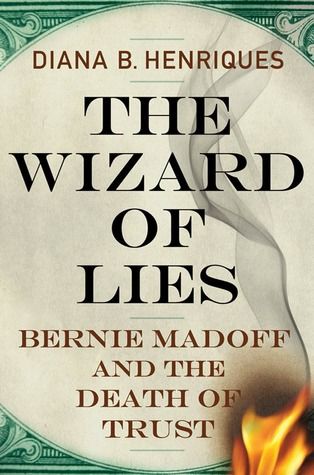
The Wizard of Lies
Bernie Madoff and the Death of Trust
Introduction: The Architect of Deception
Introduction: The Architect of Deception
Nova: Welcome to the show. Today, we are dissecting a financial crime so vast, so audacious, that its perpetrator became the very definition of white-collar villainy. Imagine a man who sat on the board of the NASDAQ, a respected philanthropist, a titan of Wall Street, who was, in reality, running the largest Ponzi scheme in history. We're talking about Bernie Madoff, and the definitive account of his downfall: Diana B. Henriques’ book, The Wizard of Lies.
Nova: : That title alone is chilling, Nova. "The Wizard of Lies." It suggests a level of performance art, not just simple fraud. What makes Henriques' book the essential text on this scandal, rather than just another true-crime recap?
Nova: That’s the crux of it. Henriques wasn't just a reporter covering the fallout; she was the lead New York Times reporter on the story from day one. Crucially, she secured interviews with Madoff himself, both before and after his arrest. This book isn't just about the victims; it’s about getting inside the head of the con artist, which is where the real magic—and the real horror—lies.
Nova: : So, we’re not just looking at spreadsheets and lost fortunes, we’re looking at psychology. I’m ready to dive into how someone builds a $65 billion house of cards. Why does this story still resonate so deeply with listeners today?
Nova: Because it’s a story about trust, or rather, the catastrophic death of it. It reminds us that the most dangerous threats often wear the most expensive suits and sit in the most legitimate offices. Let's start by setting the stage: who was the man behind the curtain before the curtain was ripped away?
Key Insight 1: The Power of Reputation
The Unassailable Façade: Madoff's Ascent to Icon Status
Nova: Before December 2008, Bernie Madoff wasn't just a successful hedge fund manager; he was an institution. He was the former chairman of NASDAQ. He was seen as a genius who somehow managed to consistently deliver steady, modest returns, rain or shine. Henriques paints this picture of an almost untouchable figure.
Nova: : That consistency is what makes a Ponzi scheme work, right? If you promise 12% every year, no matter what the S&P 500 does, people stop asking questions. It defies market logic, but it feeds the human desire for safety.
Nova: Exactly. Henriques details how Madoff cultivated this aura. He was selective about his clients, often favoring friends, family, and major charities. This created an exclusive club effect. If you were in, you were safe. If you weren't, you were envious. This exclusivity was a massive shield against scrutiny.
Nova: : It’s the ultimate social proof. People thought, 'If the Guggenheim family is investing with him, if major synagogues are trusting him, how could it possibly be a fraud?' Did Henriques find evidence that Madoff actively used his philanthropic work to deflect suspicion?
Nova: Absolutely. The book highlights his deep involvement with Jewish charities and major non-profits. This wasn't just charity; it was reputation laundering. When you are seen as a pillar of the community, regulators, and even potential investors, are far less likely to dig too deeply into your trading statements.
Nova: : And what about the actual trading? The book must cover the mechanics of his supposed investment strategy. What was the official story he sold to clients?
Nova: The official story was proprietary trading strategies, often involving complex options collars that supposedly protected capital during downturns. But Henriques reveals that Madoff’s actual investment arm—the legitimate one—was barely trading at all. The real action, the money that was paying out returns, was simply coming from new investor deposits. It was a shell game where the shell was the trading desk.
Nova: : So, the genius wasn't in the trading; the genius was in the salesmanship and the relationship management. Henriques got access to him. What was the most surprising thing she learned about his demeanor during those early interviews, when he was still trying to control the narrative?
Nova: She noted his incredible compartmentalization. He could discuss his family, his hobbies, and then pivot to discussing the market with utter conviction, all while knowing the entire foundation was rotten. Henriques suggests that for Madoff, the lie became its own reality. He wasn't just deceiving others; he was living within the deception.
Nova: : That’s terrifying. It implies a level of self-delusion that goes beyond simple greed. It suggests he truly believed he was smarter than the entire financial system.
Nova: That’s the core psychological takeaway. He saw himself as an exception, not a criminal. He felt entitled to the money because he felt he was providing a service—stability—that the market couldn't offer. It’s a classic case of the narcissist who believes the rules don't apply to them. The book really drills down on how this self-perception allowed him to sleep at night while stealing billions from thousands of people.
Key Insight 2: Regulatory Blind Spots and The Scale
The Anatomy of the $65 Billion Fraud
Nova: Let's talk numbers, because they are staggering. We are talking about an estimated $65 billion in fabricated assets. For context, that's larger than the GDP of many nations. How did a fraud of this magnitude remain invisible for so long?
Nova: : That’s the part that keeps me up at night. The FBI report mentions that Madoff’s sons told him he was running a Ponzi scheme when they found out. If his own family knew, how did the SEC miss it for years, even after multiple tips?
Nova: Henriques dedicates significant space to the regulatory failures, which she calls 'The Death of Trust' in the system itself. She points out that Madoff operated a separate, seemingly legitimate investment advisory business, which was subject to SEC oversight. But the actual Ponzi scheme was run through his broker-dealer arm, which was subject to far less rigorous checks.
Nova: : So, it was a jurisdictional shell game within his own company. A classic misdirection. What specific red flags did the SEC ignore, according to the book?
Nova: Several. One major one was the consistency of returns. As we mentioned, Madoff reported positive returns every single month for decades, even during the dot-com bust and the 2001 recession when the market was plummeting. No legitimate fund does that. Henriques details how investigators were often put off by Madoff’s polished demeanor and his insistence that his strategy was too complex for outsiders to understand.
Nova: : The 'too complex to understand' defense. That’s the oldest trick in the book for hiding incompetence or fraud. Did Henriques uncover any specific documents or internal memos that clearly showed the fraud in action?
Nova: Yes, and this is where her reporting shines. She tracked down the memo written by Harry Markopolos, the man who tried to blow the whistle for years. Markopolos provided the SEC with a detailed 17-page document outlining exactly Madoff was a fraud, years before the collapse. Henriques explores the bureaucratic inertia and perhaps even willful blindness within the SEC that allowed them to dismiss these detailed warnings.
Nova: : It sounds like the system was designed to protect the established elite, even when that elite was actively robbing people blind. What was the tipping point that finally brought the whole thing down in 2008?
Nova: The Global Financial Crisis. When the market crashed, Madoff’s investors, who were suddenly facing massive losses everywhere else, started demanding their money back from him—in record numbers. A Ponzi scheme requires a constant influx of new cash to pay the old investors. When the flow of new money dried up because everyone was hoarding cash, the scheme couldn't meet the redemption requests. It was a liquidity crisis that exposed the solvency lie.
Nova: : So, the very economic event that ruined millions of honest investors was the one thing that finally exposed the biggest liar of all. That’s a brutal irony. Henriques must have had to piece together the timeline of that final confession to his sons.
Key Insight 3: The Victims and the Betrayal
The Human Toll: Trust, Betrayal, and Ruin
Nova: While the mechanics of the fraud are fascinating from a systemic perspective, the real tragedy lies with the victims. Henriques doesn't shy away from the devastating human cost. We're talking about retirees losing their life savings, charities going bankrupt, and families being torn apart.
Nova: : The betrayal must have been multi-layered. Not only were they robbed by Madoff, but many were also robbed by people they trusted who had recommended Madoff—their friends, their financial advisors, even their own family members who were complicit or willfully ignorant.
Nova: That’s the 'Death of Trust' theme again. It wasn't just trust in the market; it was trust in personal relationships. Henriques interviews people who lost everything, including those who had invested with Madoff for decades, believing he was a surrogate father figure. The book captures the sheer disbelief when Madoff finally confessed to his sons on December 10th, 2008.
Nova: : What did Madoff actually say in that confession? Was it remorseful, or was it the same self-justifying narrative he used before?
Nova: According to Henriques’ reporting, it was a mix of cold confession and self-pity. He reportedly told his sons, Mark and Andrew, that his entire investment business was 'one big lie.' But even in that moment, the focus often seemed to drift toward how would be perceived, rather than the devastation he caused. He was more concerned with the exposure than the crime itself.
Nova: : It’s the difference between feeling guilt and feeling shame. Guilt is 'I did a bad thing.' Shame is 'I am a bad person.' It sounds like Madoff experienced shame over the exposure, not guilt over the action.
Nova: Precisely. And the book explores how this affected his family, particularly his wife, Ruth, and his sons, who were completely blindsided and then forced to deal with the legal and emotional fallout. Henriques manages to humanize the collateral damage without excusing the perpetrator.
Nova: : Were there any surprising groups of victims that the public didn't hear as much about? We often hear about the wealthy investors, but what about the smaller players?
Nova: Henriques made a point to include stories from smaller feeder funds, international investors, and even employees who were unknowingly involved in the cover-up. She found a story about a small community foundation in the Midwest that was completely wiped out. These stories ground the abstract $65 billion figure into tangible, heartbreaking reality. The book shows that Madoff’s reach was truly global and indiscriminate in its destruction.
Nova: : It’s a powerful reminder that financial crimes aren't victimless. They destroy retirements, dreams, and the very fabric of community trust. This leads us back to the author. How did Henriques manage to get Madoff to talk to her, given how guarded he was?
Key Insight 4: Access and Perspective
The Author's Edge: Interviewing the Wizard
Nova: Diana Henriques had an advantage few journalists ever get: direct access to the subject of the biggest financial scandal of the era. She interviewed Madoff multiple times while he was awaiting sentencing. What did she leverage to get him to open up?
Nova: : I imagine Madoff, being the master manipulator, would only talk if he felt he could still control the narrative. What was his motivation for speaking with a New York Times reporter?
Nova: Henriques suggests it was ego, pure and simple. Madoff, even facing decades in prison, couldn't resist the chance to shape his own legacy. He wanted to explain he did it, not just he did. He wanted to be seen as a complex figure, not just a common thief. Henriques played into this need for self-justification, allowing him to talk, while meticulously fact-checking every claim against the mountains of evidence.
Nova: : That must have been an incredibly delicate dance. How did she maintain journalistic objectivity while sitting across from the man who orchestrated such widespread ruin?
Nova: She was rigorous. The book is praised for its balance. She doesn't let Madoff off the hook for a second, but she uses his own words to illustrate his warped worldview. For example, she reports on his comments where he downplayed the harm to the wealthy, suggesting he only felt bad about hurting the smaller, less sophisticated investors. That reveals so much about his moral calculus.
Nova: : So, she used his own words as evidence against his character. Were there any moments where she felt she was being actively manipulated or led down a false path during those interviews?
Nova: Constantly. Henriques describes the interviews as exhausting, like navigating a minefield of half-truths and carefully constructed anecdotes. She had to constantly cross-reference his recollections with SEC findings, court documents, and interviews with his victims and former employees. The book is as much a testament to her relentless investigative work as it is to Madoff’s deception.
Nova: : It sounds like the book itself is a masterclass in investigative journalism—using the subject's own voice to expose the truth. If you had to distill one key lesson Henriques wants us to take away about the nature of lies from this whole saga, what would it be?
Nova: It’s that the most successful lies aren't the ones that are completely fabricated; they are the ones built on a foundation of truth. Madoff was a legitimate broker. He had legitimate clients. He was a legitimate board member. The lie was the investment returns, hidden inside a structure that looked perfectly real. Henriques shows us that the wizard’s greatest trick wasn't making money disappear; it was making the fraud look like success for thirty years.
Conclusion: Lessons from the Death of Trust
Conclusion: Lessons from the Death of Trust
Nova: We’ve covered the rise of the icon, the mechanics of the $65 billion fraud, the devastating human toll, and the unique journalistic access Diana Henriques secured. If we are to synthesize the core message of The Wizard of Lies, what are the actionable takeaways for our listeners today?
Nova: : I think the biggest takeaway is skepticism, Nova. Not cynicism, but a healthy, informed skepticism. If something seems too good to be true—especially if the returns are consistently high while the market is volatile—the first question shouldn't be 'How do I get in?' but 'How is this audited, and who is verifying the statements?'
Nova: That’s perfect. Henriques makes it clear that Madoff succeeded because he exploited the human tendency to trust authority figures and to fear missing out on guaranteed gains. The book is a permanent warning against outsourcing your critical thinking to someone in a corner office.
Nova: : And for those who feel overwhelmed by the scale of the crime, what does the book ultimately say about the future of financial trust? Can it ever be fully restored after a fraud this massive?
Nova: Henriques leaves us with a cautious optimism. The system eventually catch up. Regulatory bodies were reformed, albeit slowly. But the trust in the —the trusted advisor, the family friend—that trust is much harder to rebuild. The book suggests that true financial security comes not just from diversification of assets, but from diversification of trust; never place all your faith, or all your money, in one seemingly infallible source.
Nova: : It’s a sobering thought, but an essential one. The Wizard of Lies isn't just a history lesson; it’s a manual on how to spot the next illusionist before they vanish with your savings.
Nova: Exactly. It’s a masterwork of financial reporting that forces us to look beyond the polished surface of success. Thank you for joining us for this deep dive into the architecture of deception.
Nova: : My pleasure, Nova. Always fascinating to explore the dark side of ambition.
Nova: This is Aibrary. Congratulations on your growth!