

The 'Smartest Person in the Room' is a Trap: Why Collective Intelligence Wins.
Golden Hook & Introduction
SECTION
Nova: What if the very thing you've been striving for – being the undisputed smartest person tackling your most complex Agent system problems – is actually holding you back?
Atlas: Whoa, that's a bold claim, Nova. For anyone building cutting-edge Agent systems, there's often this unspoken pressure to be that singular genius who solves everything. It's ingrained in our perception of expertise, especially for architects. What are you hinting at here?
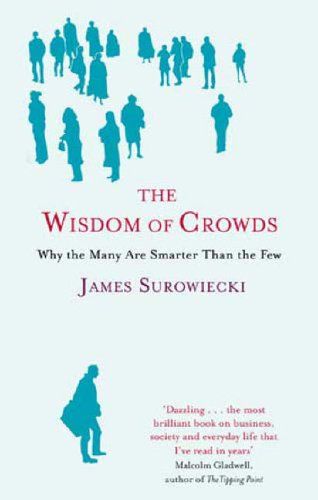
Nova: I'm hinting that it's a trap, Atlas. A comfortable, well-intentioned trap that can limit innovation and robustness in ways we often don't realize. Today, we're diving into a paradigm shift, one that moves us from the allure of individual brilliance to the undeniable power of collective intelligence. We'll be drawing insights from two seminal works: "The Wisdom of Crowds" by the brilliant financial journalist James Surowiecki, and "Team of Teams" by the legendary military leader General Stanley McChrystal. What’s truly fascinating is how these two very different authors, from such disparate fields, arrive at strikingly similar conclusions about how groups can outperform individuals.
Atlas: That makes me wonder, how does this translate into the nuts and bolts of building Agent systems? Because for architects, it’s all about practical application, stability, and creating tangible value. Are we talking about a philosophical shift, or something that fundamentally changes how we design and deploy intelligent agents?
The 'Smartest Person' Trap & The Wisdom of Crowds
SECTION
Nova: It's both, actually. Let's start with that "blind spot" I mentioned. As a skilled architect, it's incredibly easy to rely on your individual expertise, your deep domain knowledge, your years of experience. You've been conditioned to be the problem-solver, the one with the answers. But when you're building complex Agent systems, especially those designed to operate in dynamic, unpredictable environments, that individual brilliance can inadvertently become a limitation.
Atlas: I can definitely relate to that. There’s a palpable sense of ownership and responsibility when you’re architecting a system. You want to foresee every edge case, every potential failure point. But how does that individual approach actually fall short when Agent systems are, by their nature, designed to be adaptive and sometimes unpredictable?
Nova: Exactly. Your single brilliant mind, no matter how sharp, has inherent biases and blind spots. It sees the world through one lens. Imagine a single brilliant architect trying to predict every interaction, every emergent behavior in a new, adaptive multi-agent framework. It’s impossible. That's where Surowiecki's "The Wisdom of Crowds" comes in. He makes a compelling case that large groups of people are often smarter than an elite few, no matter how brilliant those few are.
Atlas: So basically, you're saying that instead of one super-brain Agent, we need a diverse of Agents, or even diverse human inputs, to make better predictions Agents? Can you give a concrete example of how diversity of opinion would actually play out in an Agent's decision-making process?
Nova: Absolutely. Think of it like this: Surowiecki famously used the example of a crowd accurately estimating the weight of an ox at a country fair. No single person got it perfectly, but the average of all the guesses was remarkably close. Now, apply that to an Agent system. Instead of one highly sophisticated, complex Agent making a critical prediction – say, about an optimal supply chain route or a complex financial market move – imagine a swarm of simpler, diverse Agents, each trained on slightly different data sets or using slightly different algorithms, all contributing their "guesses."
Atlas: Okay, so you’re suggesting the collective "guess" of a diverse set of Agents would be more reliable than the output of a single, highly optimized, but potentially brittle, super-Agent? That’s a fascinating reframe. What are the key ingredients for that collective wisdom to emerge?
Nova: Surowiecki outlines four critical ingredients: diversity of opinion, independence, decentralization, and a method for aggregation. For our Agent systems, this means ensuring your Agents aren't all clones, that they operate with some degree of autonomy, that decision-making isn't bottlenecked, and that you have robust mechanisms to synthesize their diverse outputs into a coherent, superior decision. It’s about designing for a broader, richer understanding of the problem space than any single Agent could achieve alone.
Deep Dive into 'Team of Teams' & Designing for Collective Intelligence in Agents
SECTION
Nova: And this naturally leads us to General Stanley McChrystal’s "Team of Teams," which provides a powerful blueprint for how to actually systems that leverage this collective power, especially in rapidly changing environments. McChrystal's military experience showed him that traditional, hierarchical command structures, designed for efficiency in predictable scenarios, utterly failed when faced with a rapidly evolving, decentralized enemy like Al-Qaeda in Iraq. They were too slow, too rigid.
Atlas: Hold on, "shared consciousness" and "empowered execution" – for Agents? That sounds almost philosophical. For an architect, how do we for that? Are we talking about a decentralized control plane, or something in the Agent's core logic that prioritizes collaboration over individual directives? And what are the stability implications if every Agent is 'empowered'?
Nova: Excellent questions, Atlas, and they get right to the heart of designing robust Agent systems. "Shared consciousness" for Agents means designing transparent data sharing protocols, common observational models, and readily accessible context across your Agent ecosystem. Imagine a group of Agents, each specializing in a different aspect of a complex task – say, a financial trading Agent, a news sentiment Agent, and a regulatory compliance Agent. Shared consciousness ensures they all have a unified, real-time understanding of the broader market conditions, not just their siloed data.
Atlas: So, it's about minimizing information asymmetry between intelligent components, even if they have different objectives or focuses. That makes sense for creating a more holistic view. But what about "empowered execution"? That sounds like it could lead to chaos if not managed carefully.
Nova: It’s about intelligent autonomy within clear boundaries. Empowered execution means giving individual Agents the ability to act and adapt quickly based on their shared understanding, without needing constant, top-down approval. Think of it as pushing decision-making authority down to the lowest possible level where the most relevant information resides. This requires designing Agents with robust self-correction loops, 'fail-fast' mechanisms, and a clear understanding of their delegated authority and overarching goals. A brittle, centrally controlled Agent system might crash if the central controller fails or gets overwhelmed. A resilient "team of Agents" with empowered execution can adapt, self-organize, and continue to operate effectively, even if individual components experience issues.
Atlas: That’s a great way to put it, the 'brittle vs. resilient' contrast. It makes me wonder, if we're pushing for decentralized decision-making, how do we ensure stability and prevent chaos? Architects are always looking for robust, scalable solutions. What kind of guardrails or feedback loops are crucial in these 'Team of Teams' Agent architectures?
Nova: The guardrails are crucial. They come in the form of clearly defined objectives, transparent performance metrics, and rapid feedback loops that allow Agents to learn and adjust. It’s not a free-for-all; it's a carefully orchestrated decentralization. You might have meta-Agents monitoring the collective behavior, identifying deviations, or facilitating aggregation of outputs. The goal is to design a system where the collective intelligence emerges from the interactions of empowered, informed Agents, rather than being dictated by a single, potentially bottlenecked, control point. It's about building systems that are inherently more adaptive and resilient to the inevitable complexities of the real world.
Synthesis & Takeaways
SECTION
Nova: So, when we synthesize the wisdom from Surowiecki and McChrystal, the message for Agent system architects is profound: your focus needs to fundamentally shift from trying to be the single brilliant mind solving every problem to designing systems that inherently harness the collective power of diverse inputs. This isn't just about efficiency; it's about building more robust, more innovative, and ultimately, more successful Agent solutions.
Atlas: I guess that makes sense. For our listeners who are architects and value creators, this isn't just about 'being nice' and listening to everyone. It's about a strategic advantage. It's about building Agent systems that are inherently more robust, more adaptable, and ultimately, create more business value because they better from diverse inputs. It’s about achieving those breakthroughs they're striving for, not by working harder in isolation, but by designing smarter, more collaborative systems.
Nova: Exactly, Atlas. It's about breaking those boundaries, both in your own thinking and in your system design. So, your challenge this week is to identify one area in your current Agent development process where you can intentionally inject more diverse perspectives or decentralize a key decision point. It could be how you gather feedback on an Agent's performance, how you design its objective function, or even how you define success criteria. Look for opportunities to move beyond the single expert and embrace the collective.
Atlas: That's actually really inspiring. It's not just about a technical fix, but a mindset shift that can lead to truly exceptional, future-proof Agent systems. This is Aibrary. Congratulations on your growth!