

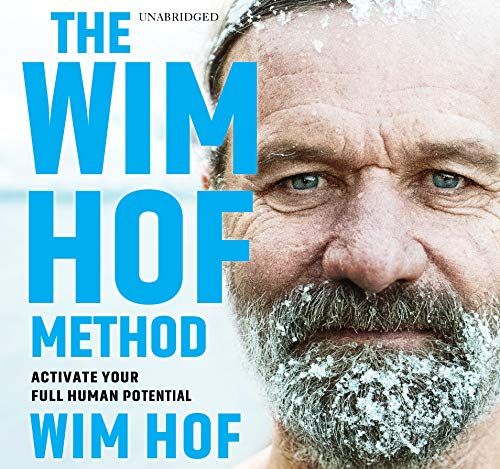
The Wim Hof Method
Activate Your Full Human Potential
Introduction
Nova: Imagine standing at the base of Mount Kilimanjaro. It is freezing, the wind is howling, and most climbers are geared up in high-tech thermal layers, heavy boots, and oxygen tanks. Then, you see a man walking past them wearing nothing but a pair of shorts and some running shoes. No shirt, no jacket, just skin against the mountain air. That man is Wim Hof, and he is not just some eccentric daredevil. He is a man who has spent decades proving that the human body is capable of things we once thought were biologically impossible.
Atlas: I have seen videos of this guy. He looks like a wizard who wandered out of a frozen forest. But honestly, Nova, when I first heard about the Iceman, I thought it was all just a freak of nature thing. Like, maybe he was born with some weird genetic mutation that makes him immune to the cold. But his book, The Wim Hof Method, claims that anyone can do what he does. That sounds like a pretty big reach, doesn't it?
Nova: It does sound like a reach, but that is exactly why his story is so compelling. Wim Hof is not claiming to be a superhero. He is claiming that we have all forgotten how to use the hardware we were born with. He argues that our modern, comfortable lives have made our internal systems weak and that by using three specific pillars, breathing, cold exposure, and mindset, we can actually hack our own biology. We are talking about things like consciously controlling our immune systems and changing our blood chemistry on command.
Atlas: Controlling the immune system? I thought that was strictly on autopilot. You can't just tell your white blood cells to wake up and get to work, right? If he is right, this changes everything we know about human health. I am ready to dive into this, even if the thought of a cold shower makes me want to hide under a blanket.
Nova: Well, grab that blanket for now, because we are going to break down exactly how Wim Hof went from a grieving father in the Netherlands to a global phenomenon who is literally rewriting the textbooks on human physiology. This is about more than just ice baths; it is about reclaiming the power of the human spirit.
Key Insight 1
The Three Pillars of the Method
Nova: To understand the book, we have to start with the foundation. Wim breaks his method down into three distinct pillars. The first is breathing, the second is cold exposure, and the third is commitment, or mindset. They all work together, but the breathing is usually where people start because it provides the most immediate, tangible shift in how you feel.
Atlas: Okay, let's talk about the breathing. We all breathe all day long. What is he doing differently? Is it just deep breathing, or is there a specific rhythm to it?
Nova: It is very specific. The core technique involves what he calls controlled hyperventilation, though he prefers the term power breathing. You take thirty to forty deep, rhythmic breaths, inhaling fully through the nose or mouth and then just letting the air go, not forcing the exhale. By the end of those forty breaths, you have essentially saturated your blood with oxygen and flushed out a massive amount of carbon dioxide.
Atlas: Wait, if you flush out all that CO2, don't you get lightheaded? I remember being told in school that you need CO2 to actually release the oxygen into your tissues.
Nova: You are exactly right. That is called the Bohr Effect. When your CO2 levels drop significantly, your blood becomes more alkaline. Your pH level actually rises. This causes your body to hold onto the oxygen more tightly. But then comes the second part of the exercise: the breath retention. After those forty breaths, you exhale and simply stop breathing. You hold your breath on empty lungs for as long as you comfortably can.
Atlas: Holding your breath on empty? That sounds terrifying. Usually, the urge to breathe is so violent because of the CO2 buildup. If you have already flushed the CO2, does that mean the urge to breathe doesn't kick in as fast?
Nova: Exactly. You can stay in that state of stillness for two, three, even five minutes sometimes. During this retention, your oxygen levels drop very low, a state called intermittent hypoxia. This sounds dangerous, but in a controlled environment, it triggers a massive survival response. Your body starts producing more red blood cells and optimizing how it uses energy. It is like a reset button for your nervous system.
Atlas: And then there is the cold. I am guessing the breathing is meant to prepare you for the ice?
Nova: It is. The cold is the second pillar. Wim calls the cold a noble teacher. He suggests starting with just thirty seconds of cold water at the end of your warm shower. The goal is to train the millions of tiny muscles in your vascular system. We have about eighty thousand miles of blood vessels in our bodies. When we are always in climate-controlled rooms, those vessels get lazy. The cold forces them to constrict and dilate, which is basically a workout for your entire circulatory system.
Atlas: So it is like a gym for your veins. I can see the logic there. But what about the third pillar? Commitment? That sounds like the typical motivational speaker stuff. Why is it a pillar on the same level as the physical stuff?
Nova: Because without the mindset, you will never get into the cold water. The commitment pillar is about focus and willpower. It is about the bridge between the conscious mind and the autonomic nervous system. Wim argues that through the breathing and the cold, you learn to stay calm in the face of extreme stress. That mental calm is what allows you to eventually influence things like your heart rate and your body temperature. It is not just about being tough; it is about being present.
Key Insight 2
The Science of the Impossible
Nova: Now, this is where the story gets really interesting. For years, scientists looked at Wim Hof and said, okay, this guy is a freak. He is an outlier. But in 2011, Wim went to Radboud University in the Netherlands and told the researchers there that he could consciously influence his innate immune system. At the time, every medical textbook said that was impossible. The autonomic nervous system and the innate immune system were thought to be completely beyond our conscious control.
Atlas: So what did the scientists do? Did they just take his word for it?
Nova: Not at all. They performed a study where they injected Wim with an endotoxin, a dead strain of E. coli. Normally, if you get injected with this, your body goes into a full-blown inflammatory response. You get fever, chills, headaches, and muscle pain for several hours while your immune system freaks out. But Wim just sat there, did his breathing, and stayed perfectly fine. He showed almost no symptoms, and his blood work showed that he had suppressed the inflammatory proteins and spiked his adrenaline levels higher than someone going for their first bungee jump.
Atlas: Okay, but again, that is just Wim. Maybe he has some weird immune system. Did they test it on anyone else?
Nova: That is the kicker. The scientists were still skeptical, so Wim told them, give me twelve random volunteers. I will train them for four days in Poland, and they will do exactly what I do. So they did. They took twelve young men, Wim trained them in the breathing and the cold exposure, and then they brought them back to the lab and injected all twelve of them with the same E. coli endotoxin.
Atlas: And? Don't tell me they all just breathed their way through a bacterial infection.
Nova: That is exactly what happened. Every single one of the twelve volunteers was able to suppress their immune response. They had significantly fewer symptoms than the control group, and their blood chemistry showed the same massive spike in epinephrine and the same decrease in pro-inflammatory cytokines. This study was published in the Proceedings of the National Academy of Sciences in 2014, and it sent shockwaves through the medical community. It proved that the autonomic nervous system isn't actually autonomic. We can reach in and turn the dials.
Atlas: That is actually mind-blowing. If we can turn down inflammation on command, think about what that means for autoimmune diseases. Things like arthritis or Crohn's disease are basically the immune system attacking the body. If Wim's method can dampen that fire, it is a game changer.
Nova: It really is. And the science explains why. When you do the breathing, you are triggering a massive release of adrenaline. Adrenaline is a natural anti-inflammatory. By flooding the system with it through the breath, you are essentially telling your immune system to stand down. You are shifting from a state of panic to a state of controlled power. It is not magic; it is biology that we just didn't know how to access.
Key Insight 3
The Cold as a Teacher
Nova: We have talked about the breathing, but we need to spend some time on the cold, because that is where people usually get the most intimidated. Wim Hof isn't just telling you to suffer for the sake of suffering. There is a very specific physiological reason for the ice baths. One of the biggest benefits he discusses in the book is the activation of brown adipose tissue, or brown fat.
Atlas: Brown fat? I thought all fat was the enemy. What makes the brown stuff different from the white stuff most of us are trying to lose?
Nova: White fat is basically just stored energy, but brown fat is metabolic tissue. It is packed with mitochondria. Its primary job is thermogenesis, which means it burns calories to create heat. Babies have a lot of it to keep them warm because they can't shiver, but as we grow up and live in warm houses, we lose most of it. Wim found that regular cold exposure can actually reactivate and grow your brown fat stores.
Atlas: So, wait, you are saying that by sitting in an ice bath, I can actually build a type of fat that helps me burn other fat and stay warm? That sounds like a metabolic cheat code.
Nova: It kind of is. But it goes deeper than just weight loss. The cold also acts as a massive reset for the vagus nerve. The vagus nerve is the main component of the parasympathetic nervous system, the rest and digest system. When you jump into cold water, your body initially has a massive stress response, but as you learn to breathe through it and stay calm, you are essentially training your vagus nerve to be more resilient. This is called increasing your vagal tone.
Atlas: And I am guessing higher vagal tone means you are better at handling stress in everyday life? Like, if I can handle a freezing lake, a stressful email from my boss isn't going to send me into a tailspin?
Nova: Exactly. You are teaching your brain that just because your body is under stress doesn't mean you have to panic. Wim often says that the cold is a mirror. It shows you how you react to fear. If you can stay calm in the ice, you can stay calm anywhere. Plus, there is the cardiovascular benefit. When you hit the cold, your peripheral blood vessels shut down to keep your core warm. When you get out, they open back up. This constant flexing of the vascular system is like a workout for your heart. It lowers your resting heart rate and improves circulation significantly.
Atlas: I am starting to see why he is so obsessed with it. But I have to ask, is it safe? I have heard stories about people passing out or getting hypothermia. If I am going to try this, I don't want to end up in the hospital.
Nova: That is a crucial point, and Wim is very clear about this in the book. You never, ever practice the breathing in water or while driving. There is a risk of something called shallow water blackout. Because you have flushed out your CO2, your body might not give you the signal to breathe before you run out of oxygen, which can cause you to lose consciousness. If that happens in a bathtub or a pool, it is fatal. You do the breathing in a safe, dry place, like your sofa or bed. And as for the cold, you build up gradually. You don't start with a twenty-minute ice bath. You start with thirty seconds of cold water at the end of a shower.
Key Insight 4
The Inner Fire and the Origin Story
Nova: To really understand why Wim Hof is so passionate about this, you have to look at where it all started. This wasn't born out of a desire for fame or world records. It was born out of deep, personal tragedy. In 1995, Wim's wife, Olaya, who struggled with severe depression and schizophrenia, took her own life. She left behind Wim and their four young children.
Atlas: I had no idea. That is devastating. How do you even begin to recover from something like that, especially with four kids to look after?
Nova: Wim was absolutely shattered. He says in the book that his mind was a whirlwind of grief and darkness. He was looking for anything to stop the pain, and he found it in the cold water of the canals in Amsterdam. He discovered that when he stepped into that freezing water, the chatter in his mind finally stopped. He had to be 100% present just to survive the cold. The cold gave him a moment of peace that nothing else could.
Atlas: So the cold was his therapy. It wasn't about being an athlete; it was about survival, mentally and emotionally.
Nova: Precisely. He realized that the cold was healing him. It was bringing him back into his body and away from the crushing weight of his thoughts. He started to realize that if the cold could help him heal from that level of trauma, it could help others too. This is where the third pillar, commitment, really comes from. It is about the inner fire. Wim believes that we all have this light inside of us, this capacity for healing and strength, but we have buried it under layers of comfort and fear.
Atlas: That adds a whole different layer to this. It is not just a fitness hack; it is a philosophy of resilience. He is basically saying that we have the tools to heal ourselves if we are willing to face the discomfort.
Nova: And he has proven it over and over. He has climbed to twenty-two thousand feet on Mount Everest in shorts. He ran a full marathon in the Namib Desert without drinking any water to show he could regulate his internal temperature. He has stood in a container filled with ice for nearly two hours. But for him, the greatest achievement isn't the records; it is the thousands of people who have used his method to overcome depression, anxiety, and chronic pain. He wants to show that we are not victims of our biology or our circumstances.
Atlas: It is a powerful message. It is about moving from a state of being a passenger in your own body to being the pilot. But I imagine there is still a lot of pushback from the traditional medical world, right? Even with the studies, it feels like a lot to swallow.
Nova: There is definitely skepticism, especially regarding some of his more extreme claims about curing diseases. But the core of the method, the breathing and the cold, is being studied more than ever. Researchers are looking into how it affects the brain's periaqueductal gray, which is the area responsible for pain suppression. They are finding that Wim's method actually activates this area, allowing the body to release its own natural painkillers. It is a fascinating bridge between ancient wisdom and modern science.
Conclusion
Nova: As we wrap up our look into The Wim Hof Method, the biggest takeaway is that you are capable of more than you think. Whether it is the breathing, the cold, or the mindset, the goal is to reconnect with your own nature. Wim's message is simple: breathe, get into the cold, and trust your body. It is about finding that inner fire that can burn through any obstacle, whether that is a physical illness or a mental hurdle.
Atlas: It is definitely a call to action. I might not be ready to climb a mountain in my underwear just yet, but I think I can handle thirty seconds of cold water tomorrow morning. If it means better focus, less stress, and a stronger immune system, it seems like a small price to pay for such a big reward. It is all about that first step into the discomfort.
Nova: That is exactly it. The method isn't about becoming the Iceman; it is about becoming the best version of yourself. Just remember the safety rules: never do the breathing in water, and always listen to your body. You are the one in control. Wim has shown us the door, but we are the ones who have to walk through it.
Atlas: I am ready to take that breath. This has been an eye-opening journey into what it really means to be human and the hidden potential we all carry inside.
Nova: Thank you for joining us on this deep dive into the world of Wim Hof. If you are looking to reclaim your health and your power, his book is a fantastic place to start. This is Aibrary. Congratulations on your growth!