

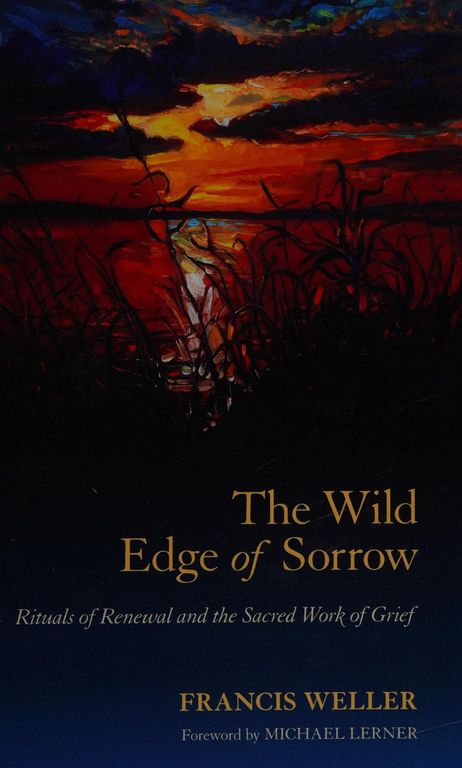
The wild edge of sorrow
Rituals of Renewal and the Sacred Wild
Introduction: The Unspoken Epidemic of Unprocessed Sorrow
Introduction: The Unspoken Epidemic of Unprocessed Sorrow
Nova: Welcome to the show. Today, we are diving into a book that suggests our modern discomfort with sadness is actually costing us our souls. We’re talking about Francis Weller’s profound work, The Wild Edge of Sorrow: Rituals of Renewal and the Sacred Work of Grief. Kai, I want to start with a startling idea from Weller: that we are living in a time of profound, unacknowledged grief.
Nova: He argues that modern Western culture has pathologized grief, turning it into a private, shameful medical issue rather than a necessary, communal rite of passage. He says we treat sorrow like a leak that needs immediate patching, when in fact, it’s a vital current that needs to be channeled. He calls this avoidance a form of spiritual starvation.
Nova: The payoff, Kai, is the soul. Weller suggests that grief is the very mechanism that breaks us open to depths of soul we couldn't otherwise access. It’s a wild alchemy. He promises that by engaging with our sorrow, we don't just heal; we become more fertile, more connected, and ultimately, more alive. It’s about moving from simply surviving loss to actively harvesting wisdom from it.
Nova: Exactly. He gives us a map, which is crucial because when we’re lost in pain, a map is everything. That map is his famous framework: The Five Gates of Grief. And that’s where we need to start our deep dive.
Key Insight 1: Beyond Bereavement
Mapping the Territory: The Five Gates of Grief
Nova: Let’s unpack those Five Gates, because they are the backbone of Weller’s work. The first gate is the most familiar: the loss of loved ones. But the others are where things get really interesting and perhaps more relevant to our daily lives.
Nova: It means grieving the loss of connection to the natural world, to wildness, to places that have been paved over, polluted, or simply forgotten. Weller is asking us to grieve the disconnection from the earth itself. Think about the ancient forest that was clear-cut—that’s a profound, collective loss that we rarely allow ourselves to mourn.
Nova: Gate Three is our collective pain—the suffering we witness globally. Wars, injustice, systemic cruelty. Weller suggests that when we ignore the suffering of others because it feels too big, that denial creates a blockage. We are meant to feel the world’s pain as a sign of our deep relatedness, not as a reason to shut down.
Nova: Precisely. And then we move to Gate Four: What We Expected and Did Not Receive. This is the grief of the unlived life. The career that never materialized, the relationship that failed to blossom, the dreams that died on the vine. It’s the grief for the self we thought we would become.
Nova: He insists we must name it. We must give it a ceremony. If we don't mourn the path not taken, we carry that phantom weight forever, which drains the energy from the path we on. It’s about honoring the integrity of that lost potential.
Nova: Absolutely. Ancestral Grief is the pain carried down through generations—the unresolved traumas, the silenced stories, the historical wounds that we inherit biologically and culturally. Weller, drawing on traditions worldwide, posits that we are often carrying burdens that aren't even ours to begin with. Acknowledging this allows us to consciously choose not to pass it on.
Nova: It transforms grief from a chaotic storm into a sacred pilgrimage. And the key takeaway from this map is that all these losses are interconnected. When you grieve one, you often touch the others. It’s all part of the same wild, beautiful tapestry of being alive.
Key Insight 2: Breaking Open to Depth
The Wild Alchemy: Sorrow as a Catalyst for Soul
Nova: It’s intense because it requires surrender. Weller says sorrow shakes us and breaks us open to depths of soul we could not imagine. Think of it like this: our ego builds strong walls to keep pain out. But grief is the solvent that dissolves those walls. When the walls come down, what rushes in isn't just pain, but raw, unmediated experience.
Nova: It’s because grief forces radical honesty. When you face the absolute reality that something precious is gone—or that a dream is dead—you are suddenly stripped bare of illusion. In that stark clarity, the things that remain, the simple fact of breath, the warmth of the sun, the memory of love—they cease to be mundane background noise. They become miracles.
Nova: Exactly. He notes that in societies where grief is honored, people are more capable of deep intimacy. When we hide our sorrow, we hide our capacity for deep feeling altogether. Weller suggests that the greatest gifts are often hidden right inside the experience of loss. It’s like the oyster creating the pearl only because of the irritation.
Nova: Weller suggests the heroic quest—the constant striving for more, better, faster—is ultimately a way to avoid the interior journey. Grief stops the quest dead in its tracks. It forces a descent. He views this descent not as failure, but as a necessary initiation. You have to go into the dark cave to find the treasure. The treasure here is the ensouled life.
Nova: It is the threshold between the known, controlled self, and the vast, untamed landscape of the soul. And the alchemy is that by walking that edge, we stop trying to control life and start participating in its mystery. We move from being consumers of experience to being active participants in the cycle of creation and dissolution.
Key Insight 3: The Antidote to Modern Isolation
Reclaiming the Commons: Ritual and Community
Nova: If the problem is modern isolation and the individualization of pain, then the solution must be communal and ritualistic. This is where Weller’s work moves from philosophy to practice. He emphasizes that grief has always been communal.
Nova: He champions accessible, heartfelt rituals. He’s not necessarily demanding we recreate ancient rites, but that we create ones that honor the specific loss. He points to practices like writing practice—coaxing the story out onto the page—singing, movement, and creating beauty in response to the pain. The ritual is the container that holds the intensity.
Nova: It is an act of defiance against despair. And crucially, these rituals must be done in community. Weller stresses that when we share our grief, we are not burdening others; we are offering them the gift of witnessing, which deepens everyone’s capacity for life. It’s a shared holding space.
Nova: Weller suggests starting small, perhaps with trusted friends or dedicated groups. He highlights the power of creating sacred space, even temporarily. The ritual itself signals to the nervous system: 'This is safe. You are held.' The structure of the ritual—the beginning, the middle where the intensity is expressed, and the closing—provides the safety net that unstructured emotion lacks.
Nova: Exactly. He sees grief work as essential soul hygiene. If we don't regularly clear out the accumulated sorrows—the things we’ve swallowed down—they calcify into shame, depression, or physical illness. The community provides the mirror and the affirmation that your pain is valid and shared.
Nova: It is. He’s calling us back to an ancient, necessary wisdom. By engaging in these practices, we don't just process our personal pain; we begin to heal the fractured relationship between humanity and the living world. We become better ancestors by tending to the grief of the present.
Conclusion: Harvesting the Gifts of the Wild Edge
Conclusion: Harvesting the Gifts of the Wild Edge
Nova: We’ve journeyed through the Five Gates, explored the alchemy of sorrow, and recognized the vital need for ritual and community. Kai, as we wrap up this discussion on The Wild Edge of Sorrow, what is the single most important takeaway you want our listeners to carry forward?
Nova: I agree. And my key takeaway is that grief is not the opposite of joy; it is the pathway deeper joy. When we stop running from the breaking, we realize that breaking open is how we become porous enough to receive the world’s beauty, even amidst its pain. It’s the ultimate integration.
Nova: A perfect, small ritual. Weller’s work is a profound invitation to stop treating our hearts like machines that need constant optimization and start treating them like sacred gardens that require tending, weeding, and sometimes, necessary fallow periods.
Nova: It is the sacred work of our time. Thank you for exploring this vital landscape with me, Kai.
Nova: This has been Aibrary. Congratulations on your growth!