

The Whole-Brain Blueprint: A Strategist's Guide to Nurturing a Resilient Mind
Golden Hook & Introduction
SECTION
Dr. Celeste Vega: Susan, as a Chief Growth Officer, your entire world is about building 0-to-1 growth strategies. You take an idea and build a complex, functioning system around it. But what about the ultimate 0-to-1 project: building a human mind? We often see a toddler’s meltdown as a behavioral problem. But what if it’s actually a data integration error? A crash between two different operating systems in the brain?
Susan: That’s a powerful way to frame it, Celeste. It immediately shifts the perspective from frustration to curiosity. As a new mom, I'm just at the beginning of this journey, and the idea of having a mental model, a framework, is incredibly appealing. In tech, we don't just react to problems; we try to understand the root cause in the system. Thinking of a tantrum as a system error… that’s a game-changer.
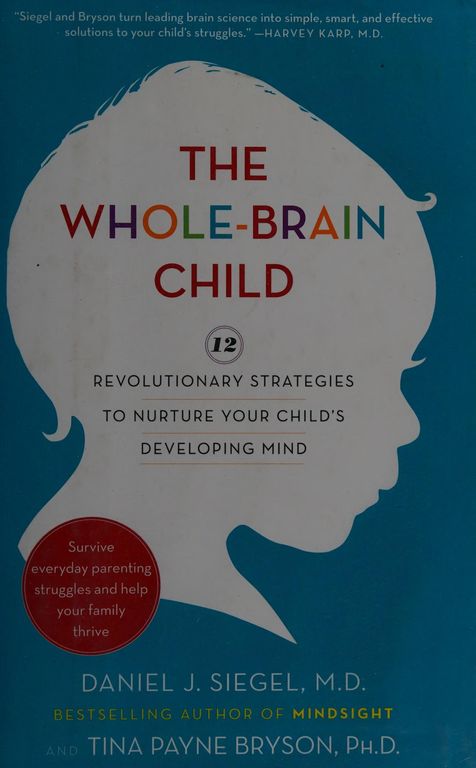
Dr. Celeste Vega: It really is. And that's the revolutionary idea at the heart of the book we're discussing today, 'The Whole-Brain Child' by Dr. Daniel Siegel. It gives parents a user manual for their child's developing brain. And I'm so thrilled to have you here, Susan, because your mind is trained to see systems and strategies, which is the perfect lens for this.
Susan: Well, I'm excited to dive in. My nine-month-old is basically a little data-generating machine right now, so any blueprint is welcome.
Dr. Celeste Vega: Fantastic. Because today we'll dive deep into this from two perspectives. First, we'll explore that daily challenge of bridging the gap between a child's logical and emotional brain. Then, we'll zoom out to discuss the long-term project of building the sophisticated 'upstairs brain' responsible for higher-order thinking and resilience. It's a blueprint for nurturing a resilient mind.
Deep Dive into Core Topic 1: Horizontal Integration
SECTION
Dr. Celeste Vega: So let's start with that 'data integration error.' The book calls this Horizontal Integration, which is all about connecting the left and right sides of the brain. Susan, even with a nine-month-old, I'm sure you're already seeing moments of pure, unfiltered emotion.
Susan: Oh, absolutely. The sudden switch from happy gurgles to full-blown, world-ending tears because a block fell over… it’s fascinating and, honestly, a little baffling. There's no logic to it.
Dr. Celeste Vega: Exactly! And that's because you're witnessing a brain hemisphere in action. The book paints a clear picture: think of the left brain as your logical, literal, linguistic side. It loves order, words, and linear thinking. The right brain is the opposite. It's emotional, non-verbal, and holistic. It deals in feelings, images, and big-picture experiences. In a young child, these two sides are not well-connected.
Susan: They’re like two siloed teams in a company that aren’t communicating. One team has all the data and spreadsheets, and the other has all the customer feelings and gut instincts. If they don't talk, the company makes bad decisions.
Dr. Celeste Vega: That is the perfect analogy. And a tantrum is what happens when the right brain completely takes over. The book gives a classic example: a four-year-old, let's call him Sam, is at a park and his favorite toy truck breaks. He just loses it. He’s screaming, crying, completely inconsolable. The parent does what we all instinctively do: they try to use logic. They say, "Honey, it's okay! It's just a small crack. We can fix it with glue when we get home. Don't cry."
Susan: Right, they’re sending a logical solution from their left brain directly to the child's overwhelmed, emotional right brain. It’s a communication mismatch. It’s like trying to debug code by shouting at the computer. The system is overwhelmed; it can't process logical commands.
Dr. Celeste Vega: Precisely. The child just gets more upset. This is what the authors call a "right-brain flood." Logic is not only ineffective; it can feel invalidating. So, the book offers a beautifully simple, two-step strategy: Connect and Redirect.
Susan: Okay, I’m listening. This sounds like a process. I like processes.
Dr. Celeste Vega: Step one is Connect. You have to connect with the right brain first. That means acknowledging the emotion. You get down on the child's level, you use a soothing tone, maybe a gentle touch, and you mirror their feelings with simple words. You say, "You are so, so sad. You loved that truck and now it's broken. I see how much that hurts." You're not fixing, you're just connecting. You're validating the right brain's reality.
Susan: That’s fascinating. In growth marketing and product management, we call this 'Acknowledge and Validate.' You can't solve a user's problem until they feel heard. If a customer is angry because a feature is broken, the first thing you do is say, "I understand you're frustrated, and you have every right to be. This is a huge inconvenience." You validate the emotion you pivot to a solution. It's a universal sequence for de-escalation.
Dr. Celeste Vega: It is! And once that connection is made, once the child feels seen and heard, their right brain starts to calm down. They might still be sad, but they're not in that chaotic, flooded state anymore. Now, and only now, can you move to step two: Redirect.
Susan: So you bring the left brain online.
Dr. Celeste Vega: Exactly. Now you can engage their logical, problem-solving hemisphere. You can ask, "I wonder... should we try to fix the truck with super-glue when we get home? Or maybe we could build a special hospital for broken toys?" You're offering choices, you're planning, you're using language. You are gently redirecting them toward a solution.
Susan: So you’re not just stopping the tantrum. You're actively building and strengthening the neural pathway—the corpus callosum—between the two hemispheres. You're teaching the brain how to feel a big emotion without being completely derailed by it, and then how to use its logical side to recover. That's not just parenting; that's developmental engineering.
Dr. Celeste Vega: That's the whole point! Every time you do this, you are physically helping to integrate your child's brain.
Deep Dive into Core Topic 2: Vertical Integration
SECTION
Dr. Celeste Vega: Exactly, it's engineering. And that brings us perfectly to our second big idea, which is less about daily communication and more about long-term architecture: Vertical Integration. This is about building the staircase from the 'downstairs' brain to the 'upstairs' brain.
Susan: Okay, another model. Downstairs and upstairs. Tell me more.
Dr. Celeste Vega: Imagine your child's brain is a house with two floors. The downstairs is the primitive part of the brain—the brainstem and the limbic system. It’s responsible for all the basic functions: breathing, blinking, and strong emotions like anger and fear. It’s where the amygdala, the brain's "guard dog," lives. It’s all about survival and reaction. Fight, flight, or freeze.
Susan: It’s the essential, core operating system. The firmware.
Dr. Celeste Vega: Perfect. Then you have the upstairs brain—the cerebral cortex. This is the sophisticated, modern part of the house. It has big windows, lots of light. This is where higher-order thinking happens: planning, decision-making, self-understanding, empathy, morality. It’s where the "wise owl" of the mind lives. But here's the catch: in a child, the upstairs brain is under construction. And the staircase connecting the two floors is wobbly at best.
Susan: So when a child "loses it," they're essentially trapped downstairs. The guard dog has taken over, and they can't get to the wise, thoughtful part of their brain.
Dr. Celeste Vega: You've got it. The authors call this "flipping your lid." The upstairs brain goes completely offline. Let's take another case. A five-year-old is watching her favorite show, and her dad says, "Okay, time to turn off the TV and get ready for bed." She screams, "No! I hate you! You're the worst dad ever!"
Susan: That's the downstairs guard dog barking. It perceives the end of screen time as a major threat.
Dr. Celeste Vega: It does! Now, the parent's downstairs-brain instinct might be to bark back. "Don't you dare talk to me like that! Go to your room right now!" This is a power struggle. It's one guard dog fighting another.
Susan: And nothing gets solved. In fact, you're probably just reinforcing the idea that when you're angry, you yell and exert power. You're modeling a downstairs-brain response.
Dr. Celeste Vega: Exactly. So the goal isn't to punish the 'guard dog' for barking. It's to calm the dog down and invite the 'wise owl' back into the conversation. This reframes the objective entirely. The strategy here is: Engage, Don't Enrage.
Susan: So instead of escalating the conflict, you appeal to the part of the brain that isn't even in the room yet. How do you do that?
Dr. Celeste Vega: You ask questions that require the upstairs brain to come online. You might say calmly, "Wow, you're really angry right now. I hear that. But using hurtful words isn't the solution. What's a better way we can solve this? What's a good plan for turning off the TV tomorrow so it doesn't feel so sudden?" You're engaging their capacity for planning and problem-solving. You're basically sending an invitation upstairs.
Susan: This is the ultimate 0-to-1 growth strategy. You're literally building the product feature by feature. It reminds me of training an AI model. At first, it can only perform very basic functions. But with the right training data—which are these moments of 'Engage, Don't Enrage'—you're helping it develop more complex capabilities like reasoning, empathy, and self-control. Every one of these difficult moments is a training opportunity to build that staircase.
Dr. Celeste Vega: It's the perfect parallel. And the book makes a crucial point: when we, as parents, "flip our own lids" and react from our downstairs brain, we're not just having a bad moment. We are actively modeling the very behavior we want to discourage. We're showing them that the staircase isn't reliable.
Susan: Right. You're showing them that when the going gets tough, the adults get trapped downstairs too. It undermines the whole construction project.
Synthesis & Takeaways
SECTION
Dr. Celeste Vega: So when you put it all together, we have these two incredibly powerful, practical frameworks. We have Horizontal Integration—using 'Connect and Redirect'—for managing those in-the-moment emotional floods. And we have Vertical Integration—using 'Engage, Don't Enrage'—for the long-term project of building a sophisticated, resilient, and thoughtful mind.
Susan: They're two sides of the same coin, really. One is about managing the flow of information in the present moment—the communication strategy. And the other is about building the brain's capacity to handle more complex information in the future—the architectural strategy. It’s a complete blueprint for building a resilient, integrated mind. It’s not just about surviving childhood; it’s about shaping a future adult.
Dr. Celeste Vega: Beautifully put. So for everyone listening, especially parents like you, Susan, who are navigating this incredible and sometimes overwhelming journey, this book offers so much hope and clarity.
Susan: It really does. I think the biggest takeaway for me is the shift in my own role. The next time I'm faced with a difficult moment with my child, whether it's in a few months or a few years, I can pause and ask myself one simple question: 'Am I talking to the left brain or the right brain? The upstairs or the downstairs?' Just asking that question changes everything. It shifts you from being a reactor to a strategist in the most important startup of all.
Dr. Celeste Vega: From reactor to strategist. I can't think of a better way to end. Susan, thank you so much for bringing your incredible insights to this.
Susan: It was my pleasure, Celeste. This was fantastic.