

Personalized Podcast
Golden Hook & Introduction
SECTION
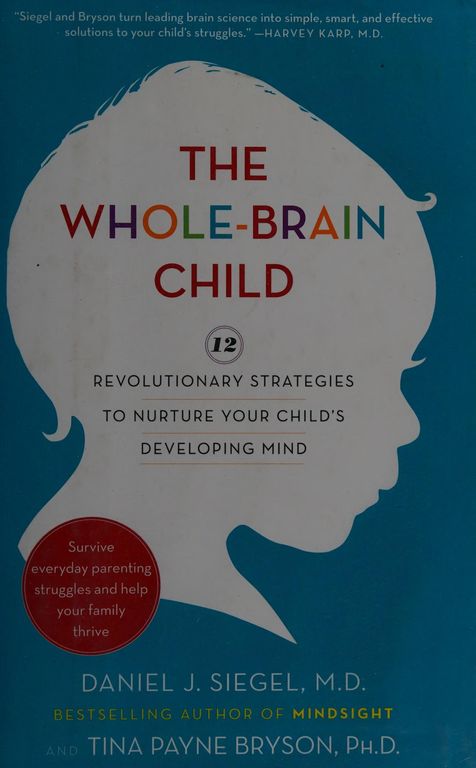
Orion: Imagine you are a ten-year-old sitting in a clinic, waiting for a painful injection or hearing a medical diagnosis that you do not fully understand. Your heart is racing, your palms are sweaty, and your mind is flooded with pure, unadulterated fear. To your brain, this clinic is not a place of healing. It is a threat zone. How do we help a young person navigate that terror? Welcome to the podcast. I am Orion, and today we are diving into Daniel J. Siegel's masterpiece, The Whole-Brain Child, to understand how simple neurobiological shifts can transform how we support young people in their darkest moments. Joining me today is Togar Woodor, a professional healthcare advocate who has spent over three years working directly with young people facing severe health challenges like HIV, tuberculosis, and malaria. Togar, it is wonderful to have you here.
Togar Woodor: Thank you, Orion. It is a pleasure to be here. This book, The Whole-Brain Child, speaks so deeply to the work I do every single day. When you are dealing with young people who are facing chronic illnesses, you quickly realize that you cannot treat the body without also addressing the mind and the nervous system. The fear, the stigma, and the sheer exhaustion of managing these conditions can completely overwhelm a young person's developing brain. I am really excited to explore how we can apply Siegel's insights to make healthcare advocacy more compassionate and effective.
Orion: Absolutely. Today, we are going to tackle this book from two distinct angles. First, we will explore the integration of the left and right brain through the Name It to Tame It technique, especially during scary medical interventions. Second, we will discuss the crucial balance between the upstairs and downstairs brain, showing how chronic stress impacts decision-making and how we can help young people regain control when they feel completely overwhelmed. Let us start with the basic architecture of the brain. Togar, in your work, you see youth who are constantly bombarded with stressful information. To understand why they react the way they do, we have to look at the division between the left and right hemispheres of the brain.
Deep Dive into Core Topic 1
SECTION
Orion: Let us define these two hemispheres clearly. The left brain loves order. It is logical, linguistic, and literal. It wants to put things in sequence and find cause-and-effect relationships. The right brain, on the other hand, is holistic and non-verbal. It cares about emotions, memories, images, and bodily sensations. It is the seat of our raw feelings. In a healthy, integrated brain, these two sides work together. But when a child experiences trauma or intense fear, the right brain takes over, flooding them with emotion, while the left brain gets temporarily knocked offline. Siegel shares a classic case study in the book about a little girl named Marianna. Marianna was in a car when the radiator exploded, releasing a terrifying cloud of steam. For months afterward, she was absolutely terrified of riding in cars. Her right brain was holding onto the raw, terrifying image of the steam and the loud noise, but she could not process it logically. Her parents helped her by using a technique Siegel calls Name It to Tame It. They had her retell the story of the accident over and over, putting words to the experience. By using the left brain to label the emotions and sequence the events, the right brain's emotional storm began to subside. Togar, how does this concept of left-right integration resonate with your experience in healthcare advocacy?
Togar Woodor: It resonates incredibly deeply, Orion. When a young person is diagnosed with a chronic illness like HIV or tuberculosis, it is often a massive, terrifying shock. Their right brain is flooded with fear, shame, and anxiety. They might experience physical symptoms of panic, or they might completely shut down. Often, healthcare providers try to address this with pure left-brain logic. They give the patient a pamphlet, explain the dosing schedule, and list the statistical benefits of adherence. But if the patient's right brain is in a state of panic, that logical information simply cannot be processed. It is like trying to write a letter in the middle of a hurricane.
Orion: That is an excellent metaphor. The logical left-brain information has nowhere to land because the emotional right brain is completely dominating the landscape.
Togar Woodor: Exactly. I remember working with a young teenager, let us call him Samuel, who had recently been diagnosed with HIV. He was completely refusing to take his antiretroviral medication. On the surface, it looked like stubbornness or non-compliance. But when I sat down with him, I realized he was terrified. The diagnosis had triggered a massive emotional flood. He kept remembering the day he found out, the cold clinic room, the look on the doctor's face, and the fear of his friends finding out. He was stuck in that right-brain emotional loop.
Orion: So, how did you apply the Name It to Tame It approach in Samuel's case?
Togar Woodor: Instead of lecturing him on why he needed the medication, which is a left-brain approach, I asked him to tell me the story of the day he got diagnosed. I wanted him to bring those right-brain emotions into the light and use his left brain to structure them. We talked about what he felt, what he saw, and what he was thinking. We literally wrote down the timeline of that day. By putting words to his fear, by naming the shame and the anxiety, Samuel was able to tame those emotions. The story became something he could look at objectively, rather than a monster living inside his head. Once the emotional storm was tamed, we could finally talk about the logic of taking his medication.
Orion: That is a beautiful application of the science. By helping Samuel construct a narrative, you allowed his left brain to step in and help regulate his right brain. Siegel emphasizes that we should not dismiss or deny the child's feelings. If we say, there is nothing to be afraid of, or just take your medicine, we invalidate their right-brain experience, which actually increases their distress. Instead, we must first connect with the right brain, and then redirect with the left.
Togar Woodor: Yes, and that connection is everything. In healthcare, we are often in such a rush to fix the problem that we skip the connection phase. We want to jump straight to the solution. But if a young person does not feel heard or understood on an emotional level, they will not trust our logical solutions. We have to meet them where they are, validate their fear, and help them tell their story. Only then can we build a bridge to logical action.
Orion: Let us break down the mechanics of that bridge. There are three clear steps to the Name It to Tame It process when applied in a clinical or advocacy setting. First, observe and validate. You notice the emotional state and name the feeling for them if they cannot. Second, facilitate the narrative. Encourage them to tell the story of what happened or what they are afraid of. Third, co-create a plan. Once the emotional intensity drops, you work together to find a logical next step. It is a structured, orderly way to bring both hemispheres back into balance.
Togar Woodor: And it works. It is not just a psychological trick. It is actual neurobiology. We are helping them build physical neural pathways that connect the left and right sides of their brain. For a young person dealing with chronic illness, those pathways are the foundation of resilience.
Deep Dive into Core Topic 2
SECTION
Orion: That brings us perfectly to our second core topic, which is the vertical integration of the brain, specifically the relationship between the upstairs and the downstairs brain. To explain this, Siegel uses a wonderful physical model, the hand model of the brain. If you fold your thumb across your palm and close your fingers over it, your hand represents your brain. Your wrist is the spinal cord. Your palm and thumb represent the downstairs brain, which includes the brainstem and the limbic system. This is the oldest, most primitive part of the brain. It is responsible for basic survival functions, like breathing, blinking, and our fight, flight, or freeze responses. The amygdala, which acts as our brain's security guard, lives here. It is constantly scanning the environment for danger. Now, your folded fingers represent the upstairs brain, specifically the prefrontal cortex. This is the highly evolved part of the brain that is responsible for decision-making, planning, emotional regulation, empathy, and self-understanding. When the upstairs brain is working properly, it monitors the downstairs brain and keeps our emotions in check. But when a young person feels threatened, highly stressed, or terrified, the amygdala sounds the alarm. It completely hijacks the system, and the fingers fly open. Siegel calls this flipping your lid. When you flip your lid, your upstairs brain is no longer in control. You are operating entirely from your survival-driven downstairs brain. Togar, in your work with youth facing chronic illnesses like TB or malaria, how often do you see this downstairs brain hijack in action?
Togar Woodor: Almost daily, Orion. Chronic illness is a constant, low-grade threat to a young person's survival. When you are dealing with a disease like tuberculosis, the treatment regimen can be incredibly harsh. The pills are large, they can cause severe nausea, and the treatment lasts for months. For a young person, every single pill can feel like a battle. I remember a young girl, Amina, who was undergoing treatment for multi-drug-resistant TB. One afternoon at the clinic, she completely flipped her lid. She was screaming, throwing things, and refusing to let the nurse near her. The clinic staff were getting frustrated, trying to reason with her, telling her that if she did not take the medicine, she would have to be hospitalized. But of course, those logical arguments were completely useless because her upstairs brain was completely offline. She was in pure fight-or-flight mode.
Orion: Exactly. When a child has flipped their lid, trying to reason with them is like trying to teach a dog algebra. The prefrontal cortex, which is required to understand the consequences of not taking medication, is simply not functioning at that moment. Siegel's advice here is crucial: Engage, don't enrage. If you respond to a downstairs brain tantrum with authority, threats, or cold logic, you only increase the perceived threat, which fuels the amygdala even more. You enrage the downstairs brain. Instead, you must engage the upstairs brain by first calming the downstairs brain. How did you handle that situation with Amina?
Togar Woodor: I knew that trying to argue with her would only make things worse. So, I asked the nurse to step back, and I sat down on the floor, a few feet away from Amina, bringing myself down to her eye level. I did not talk about the medicine or the clinic. I just focused on my own breathing, keeping my voice very calm, soft, and steady. I said, Amina, you are really angry right now, and you are tired of all of this, aren't you? I validated her downstairs brain's panic. I let her know she was safe. It took a few minutes, but as she realized she was not being threatened or forced, her breathing started to slow down. Her amygdala stopped sounding the alarm, and her fingers, metaphorically speaking, started to fold back down over her thumb. Her upstairs brain came back online.
Orion: That is a masterclass in neurobiologically informed advocacy, Togar. You used your own calm nervous system to help regulate hers, a process known as co-regulation. By changing your physical posture and your tone of voice, you signaled to her amygdala that she was safe. Once her downstairs brain felt safe, her upstairs brain could re-engage.
Togar Woodor: Yes, and once she was calm, we could actually talk. She told me that the pills made her stomach hurt so badly that she felt like she was dying. That was the real issue. It was not that she was being rebellious. She was terrified of the physical pain. Once we had her upstairs brain back in the driver's seat, we could logically problem-solve. We talked to the doctor about adjusting her medication schedule and giving her something to help with the nausea. But we could only get to that solution because we respected the neurobiology of the situation first.
Orion: This highlights a vital point that Siegel makes. The upstairs brain is under construction until a person reaches their mid-twenties. It is literally a work in progress. Young people do not have the fully developed neural hardware to regulate their emotions perfectly, especially under the massive stress of chronic illness. They rely on us, the adults, the advocates, the healthcare professionals, to act as their temporary upstairs brain.
Togar Woodor: That is such a powerful way to put it, Orion. As advocates, we are not just there to deliver services or ensure compliance. We are there to be an external prefrontal cortex for these young people when their own systems are overwhelmed. We have to help them regulate, help them process, and help them make decisions from a place of safety rather than fear.
Orion: Let us look at the long-term implications of this. When we consistently help a young person navigate these high-stress moments using whole-brain strategies, we are not just getting them through that single day. We are actually helping them build a stronger, more integrated brain for the future. Every time we help them connect the left and right hemispheres, or bridge the upstairs and downstairs brain, we are strengthening those neural pathways. We are building resilience.
Togar Woodor: And resilience is the ultimate goal. In my work with HIV and TB, we are not just looking for a cure or a completed treatment cycle. We want these young people to thrive. We want them to grow into adults who can manage their health, advocate for themselves, and navigate life's challenges with confidence. Understanding the neurobiology of trauma and stress gives us the practical tools to make that happen.
Synthesis & Takeaways
SECTION
Orion: This has been an incredibly rich discussion, Togar. Let us synthesize the core concepts we have covered today into clear, actionable takeaways. First, we discussed the integration of the left and right brain. When a young person is overwhelmed by emotional right-brain fear, we must use the Name It to Tame It technique. We help them tell the story of their experience, using left-brain language to bring order and calm to right-brain emotions. Second, we explored the vertical integration of the upstairs and downstairs brain. When a patient flips their lid and is trapped in a downstairs brain survival response, we must engage, not enrage. We do this by establishing safety and connection first, and only redirecting with logic once their upstairs brain is back online. Togar, as we wrap up, what is one final thought you would like to leave with our listeners, especially those working in healthcare or advocacy?
Togar Woodor: I would ask everyone to remember that behavior is information. When a young person is angry, non-compliant, or shut down, they are not trying to make your job difficult. Their brain is telling you that they are overwhelmed and that they feel threatened. Instead of reacting to the behavior with frustration or authority, take a step back and ask yourself: Which part of their brain is speaking right now? Is it the terrified right brain? Is it the survival-driven downstairs brain? Once you understand the neurobiology behind the behavior, you can respond with the empathy, connection, and structure they need to heal.
Orion: That is a profound and compassionate perspective, Togar. Thank you so much for sharing your expertise and your heart with us today.
Togar Woodor: Thank you, Orion. It was a pleasure.
Orion: And to our listeners, we leave you with this question to ponder: The next time you encounter someone who is reacting with intense anger or fear, how can you shift your response from trying to control their behavior to helping them integrate their brain? Until next time, keep connecting, keep learning, and keep building those whole-brain connections.