The Emotional Outburst Trap: Why Connection is Your Only Way Out.
Golden Hook & Introduction
SECTION
Nova: What if your child's most frustrating tantrum isn't a battle for control, but a desperate plea for connection? That every outburst is actually an opportunity?
Atlas: A desperate plea? Nova, for many, those moments feel like a direct challenge to parental authority. What are we missing here?
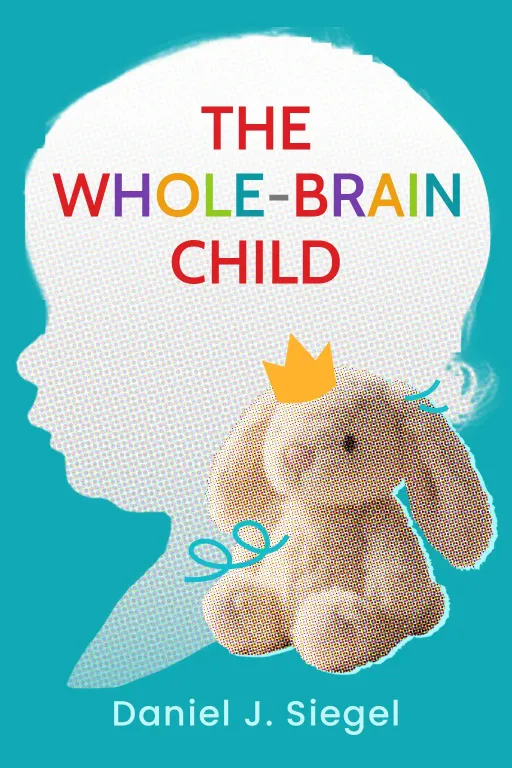
Nova: We're missing the brain science, Atlas. Today, we're diving into the groundbreaking insights from Daniel J. Siegel and Tina Payne Bryson, particularly their work in and. Siegel, a clinical professor of psychiatry at UCLA, and Bryson, a psychotherapist, have dedicated their careers to translating complex neuroscience into practical, empathetic parenting strategies. Their approach has fundamentally shifted how we think about child development, moving beyond mere behavior management to genuinely nurturing the developing brain itself.
Atlas: That's a huge shift. So, this isn't just about discipline; it's about development? For someone who seeks to understand the "why" behind actions, this sounds incredibly compelling.
Nova: Absolutely. It’s about understanding the internal world of a child, which is often far more chaotic and overwhelming than we realize.
Emotional Outbursts as Cries for Connection
SECTION
Nova: When we see a child in the throes of an emotional outburst—a full-blown meltdown over, say, a broken cookie—our immediate reaction might be frustration or even anger. We might think they’re being manipulative or deliberately defiant. But what Siegel and Bryson illuminate is that these moments are rarely about defiance. They are, at their core, cries for connection and, crucially, for regulation.
Atlas: So, when my kid is screaming about a purple cup instead of a blue one, they're not trying to push my buttons, they're genuinely overloaded? That runs counter to so much conventional thinking.
Nova: Exactly. Imagine a small child trying to lift a ridiculously heavy weight alone. They’re straining, they’re crying, they’re collapsing under the effort. We wouldn’t scold them for being weak; we’d rush to help. An emotional outburst is often the brain equivalent of that struggle. Siegel and Bryson introduce us to the 'upstairs brain'—that’s our logical, decision-making, emotional-regulating center—and the 'downstairs brain,' which is our primal, reactive, emotional core. In a meltdown, the downstairs brain has completely hijacked the system.
Atlas: Ah, the classic "fight or flight" response, but for a missing blue cup. It makes you realize how powerful those early emotional centers are.
Nova: Precisely. The child isn't capable of rational thought or emotional control in that moment. Their upstairs brain is effectively offline. So, when a child is inconsolable because their cookie broke, it's not about the cookie. It’s about the sudden, overwhelming surge of sadness or frustration that their developing brain simply cannot process or regulate by itself. Their tiny nervous system is flooded.
Atlas: And our response to that raw, unfiltered emotion often dictates whether they learn to cope or just get more overwhelmed. But how do you avoid just giving in then? Isn't validating their feeling different from condoning the behavior?
Nova: That’s a brilliant distinction, Atlas, and it leads us perfectly into the solution. It’s not about giving in; it’s about recognizing the underlying need. When you approach that screaming child, instead of saying, "Stop crying, it's just a cookie!" you might kneel down, make eye contact, and say, "You are so incredibly sad about that cookie, aren't you?" You’re acknowledging their internal experience without necessarily agreeing with their reaction or allowing inappropriate behavior.
Atlas: That simple validation sounds like it could diffuse a lot of tension right there. It’s like saying, "I see you, and I hear you," even if I don't fully understand the magnitude of the cookie crisis.
Nova: That's the power of it. That moment of connection, that empathy, is the first step in helping their downstairs brain calm down enough for the upstairs brain to slowly come back online. It’s co-regulation in action, and it’s foundational to building emotional intelligence. It’s a profound insight from their books that profoundly changes the dynamic from a battle to a partnership.
The 'Connect Before Correct' Paradigm and Brain Integration
SECTION
Nova: Exactly, Atlas, and that's where the 'connect before correct' paradigm comes in, which is the cornerstone of Siegel and Bryson's work on 'whole-brain integration.' They argue that a well-integrated brain is one where all its various parts—emotional and logical, memory and sensation—work together harmoniously. Outbursts are a clear signal that this integration has temporarily broken down.
Atlas: So, it's about helping them build those neural pathways themselves, rather than just forcing compliance? For our listeners who are navigating these intense moments with children, this sounds like a long-term investment, not a quick fix.
Nova: It is absolutely a long-term investment, and it’s one of the most valuable you can make. Think of the brain as an orchestra. When a child is having an outburst, the emotional section—the drums and trumpets—are playing so loudly, so chaotically, that the conductor, the logical part of the brain, can’t hear itself think, let alone guide the music. "Connecting" is like stepping onto the stage, tuning into the overwhelmed instrument, acknowledging its sound, and then gently guiding it back into the harmony of the whole orchestra.
Atlas: That’s a fantastic analogy. It takes the blame out of the equation and puts the focus on restoration and teaching.
Nova: Precisely. Their book really lays out the practical steps. When a child hits another, for instance, a common reaction might be immediate punishment: "Go to your room!" But that often just further dysregulates the child and teaches them to fear consequences, not to understand empathy or self-control.
Atlas: Which just reinforces the downstairs brain's power, keeping the upstairs brain offline.
Nova: Exactly. Instead, the 'connect before correct' approach would first involve connecting: "You seem really angry right now. Your face looks like you were very upset. What happened?" After the child feels heard and seen, and their emotional state begins to calm, then you can move to correction. "Hitting hurts. We don't hit. What could you do instead when you feel that angry?" This process helps them build empathy, problem-solving skills, and, crucially, those integrated neural connections that allow for better self-regulation in the future.
Atlas: But what about the practicalities? When you're in the thick of it, exhausted, how do you even remember to 'connect'? It sounds simple in theory, but in practice, it feels like a monumental task.
Nova: That's why Siegel and Bryson emphasize it's a practice, not perfection. It’s about tiny steps. The first step is awareness: recognizing the outburst as a signal, not a challenge. The second is pausing your own emotional reaction. It's incredibly hard, especially when your own downstairs brain is activated! But even imperfect attempts at connection are more effective than purely punitive reactions. The cumulative effect of these small moments of connection is what builds a more resilient, integrated brain over time. It’s about moving from a reactive brain state to a responsive one, for both the child and the adult.
Synthesis & Takeaways
SECTION
Nova: What we've discussed today, Atlas, is such a powerful reframe. By understanding that emotional outbursts are cries for connection and regulation, and by adopting a 'connect before correct' approach, we fundamentally shift from seeing these moments as behavioral problems to viewing them as profound opportunities for growth. We're not just managing tantrums; we're actively shaping a child's capacity for emotional intelligence, resilience, and strong relationships down the line. It's literally building a more integrated, capable brain.
Atlas: That's such a powerful reframe, Nova. It sounds like we're not just teaching them to behave, but how to understand and manage their own internal world, giving them tools for life. It makes me wonder what kind of world we'd live in if more of us approached conflict and big emotions this way, whether in children or adults.
Nova: It’s a profound thought, isn't it? Siegel and Bryson’s work offers a roadmap not just for parenting, but for understanding human connection at its most fundamental level. For anyone wanting to take a practical step this week, it's simple but profound: next time a child has an outburst, pause. Before you address the behavior, try to connect with their feeling first. Acknowledge the emotion. "You seem really frustrated." "You're so angry right now." That simple validation is the key that unlocks connection and regulation.
Atlas: That’s a game-changer. We'd love to hear how this resonates with you. Share your own experiences or "aha!" moments with us online. What's one feeling you're going to try to connect with this week, either in a child or even in yourself?
Nova: This is Aibrary. Congratulations on your growth!