

Climate Science: From Patterns to Prediction
Golden Hook & Introduction
SECTION
Nova: Did you know that a single daily weather forecast for the entire globe involves processing over 10 calculations? That’s 10 with 15 zeroes after it! It’s an almost unimaginable feat of data collection, physics, and sheer computational power.
Atlas: Whoa, that's mind-boggling. It makes me think about how much we take for granted when we just glance at our phone for tomorrow's temperature. But that level of complexity also highlights how much we need to understand the forces shaping our world, right?
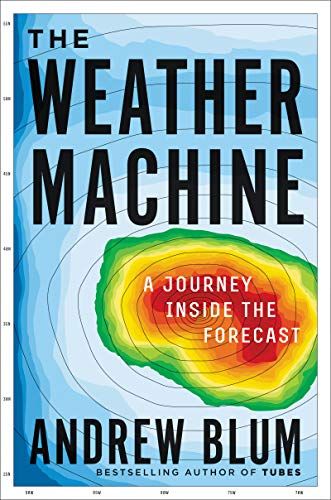
Nova: Absolutely, Atlas. And that incredible complexity is precisely what we're diving into today. We're exploring the science of our atmosphere, not just for tomorrow's rain, but for our planet's future. We’re drawing insights from three fascinating books that take us on this journey. First, Andrew Blum’s, which is this incredible deep dive into the hidden infrastructure that makes modern weather forecasting possible. Blum actually traveled the world, visiting radar stations, data centers, and satellite launch sites, almost like a detective uncovering the nervous system of our planet’s climate.
Atlas: That’s a unique angle, getting into the nuts and bolts.
Nova: Exactly. Then, we confront the urgent realities laid out in David Wallace-Wells’ critically acclaimed, a book that received both praise and controversy for its stark depiction of climate change’s potential future impacts. Finally, we pivot to Tim Flannery’s more optimistic, which offers solutions and pathways forward. Together, they give us a holistic view of climate science, from how we predict to what we face, and crucially, what we can do. It’s about being a curious explorer, an earth steward, and a future architect, all at once.
The Intricate Dance of Weather & Climate Forecasting
SECTION
Nova: So, let’s start with that "weather machine." When you think about forecasting, what usually comes to mind?
Atlas: Well, satellites, maybe some radar. Honestly, mostly just my phone app telling me if I need an umbrella.
Nova: Right? But it's so much more. Blum really pulls back the curtain on this intricate, globally interconnected network. Imagine millions of sensors—on buoys in the ocean, weather balloons, ground stations, and those satellites you mentioned—all constantly collecting data on temperature, pressure, humidity, wind speed. This isn't just a few data points; it's a continuous, enormous torrent of information about every aspect of our atmosphere.
Atlas: Oh, I see. So it's not just a snapshot, it's like a live, flowing data river. But how do we make sense of all that? That sounds like pure chaos.
Nova: That’s where the supercomputers come in. They take all that raw data and feed it into incredibly complex mathematical models. These models are essentially digital representations of Earth's atmosphere and oceans, based on fundamental laws of physics. They simulate how everything interacts, how heat moves, how moisture condenses, how winds blow. It’s like creating a digital twin of our planet, constantly running simulations into the future.
Atlas: So you're saying they're essentially playing out millions of "what if" scenarios based on current conditions? I’m curious, what’s the biggest challenge in making those predictions accurate, especially long-term?
Nova: That’s a great question, and it brings us to the concept of "deterministic chaos." Even tiny, unmeasurable variations in initial conditions can lead to vastly different outcomes over time. Think of it like a butterfly flapping its wings in Brazil eventually causing a tornado in Texas. That's why short-term weather forecasts are so accurate—we have good initial data. But beyond about ten days, those tiny errors compound, and weather forecasts become much less reliable.
Atlas: Hold on, so if weather is so chaotic, how can we even talk about prediction, which is about decades or centuries? Isn’t that just an even bigger butterfly effect?
Nova: That’s the key distinction, Atlas, and it’s a crucial one. Weather is about specific events: what’s the temperature? Climate is about and over long periods. Think of it this way: you can’t predict the exact path of a single leaf falling from a tree, but you can predict that in autumn, all the leaves will fall. Climate models aren't trying to predict the exact hurricane in 2050; they're predicting the and of hurricanes in general, or the average global temperature. They look at the big drivers: greenhouse gas concentrations, solar radiation, ocean currents.
Atlas: That makes sense. So, it's less about the individual flutter and more about the overall direction of the wind. I’ve been thinking about the "Tiny Step" from our notes, which suggests exploring a climate model. How does someone even begin to visualize what these complex models are telling us?
Nova: Excellent point. There are many reputable climate data visualization tools available online from organizations like NASA or the IPCC. You can actually see how different emission scenarios lead to different temperature increases or sea level rises. It’s a powerful way to translate abstract numbers into visual, understandable impacts. It really highlights the sheer power of human ingenuity, building these complex systems to understand Earth's future.
Confronting the Uninhabitable Earth & Atmosphere of Hope
SECTION
Nova: So, once we have these incredibly sophisticated tools to predict the broad strokes of our climate future, what do those predictions actually tell us? This is where David Wallace-Wells’ really comes into play. It’s a book that doesn't pull any punches, laying out a stark vision of what unchecked warming could mean for human civilization.
Atlas: That sounds intense. I mean, we hear so much about rising temperatures, but what does "uninhabitable" really look like? It can be easy to push that to the back of your mind.
Nova: That’s exactly the challenge Wallace-Wells confronts. He details potential scenarios that go far beyond just warmer weather – think about things like widespread famine due to crop failures, mass migrations from coastal cities submerged by rising seas, or even "wet-bulb" temperatures so high that the human body can’t cool itself, making certain regions literally unlivable for part of the year. He doesn’t shy away from the potential for profound societal disruption and even conflict. The book was both lauded for its urgency and criticized by some for being too alarmist, but its core message is about understanding the full spectrum of risk.
Atlas: Wow, that’s kind of heartbreaking. Given these complexities, and the potential for such overwhelming despair, how do we best communicate climate science to inspire effective action without just shutting people down? That’s directly our "Deep Question" for today.
Nova: It’s the million-dollar question, Atlas. Wallace-Wells’ approach was to be unflinchingly honest about the stakes. But the other side of that coin is the need for solutions, which brings us beautifully to Tim Flannery’s. Flannery, a renowned paleontologist and climate scientist, offers a more optimistic, solution-oriented perspective. He says, "The climate crisis is not a problem that we face, but a future that we choose."
Atlas: That’s a much more empowering framing. So, what kind of hope does Flannery offer? Are we talking about some magic bullet technology?
Nova: Not a single magic bullet, but rather a diverse arsenal of innovative approaches. He details everything from advancements in renewable energy, like solar and wind power becoming cheaper than fossil fuels, to groundbreaking carbon capture technologies that pull CO2 directly from the air. But he also highlights things like regenerative agriculture, which can sequester carbon in soil, and even geoengineering concepts, though those come with their own debates.
Atlas: That’s actually really inspiring. I can see how that would resonate with someone who cares deeply about our planet and wants to shape a better future. So, these solutions aren't just theoretical; they're tangible things we can implement?
Nova: Absolutely. Take renewable energy, for example. The cost of solar power has plummeted by over 80% in the last decade, making it economically viable in more places than ever. Or consider the work being done in urban planning innovations—designing cities that are more energy-efficient, with better public transport and green spaces, which also improves quality of life. These are not just scientific breakthroughs; they're societal shifts, driven by human ingenuity and collective will. It's about translating scientific understanding into actionable strategies.
Synthesis & Takeaways
SECTION
Nova: So, we’ve journeyed from the intricate global network that predicts our atmospheric future, through the stark realities of potential climate impacts, and finally, landed on a landscape rich with innovative solutions. What’s the biggest takeaway for you, Atlas, from seeing these three perspectives intertwined?
Atlas: For me, it's the profound interconnectedness of everything. It’s not just about the science of prediction, it's about how that science informs our responsibility as stewards of this planet. Understanding the patterns, even the alarming ones, gives us the power to architect a different future. It underscores that our curiosity and our drive for understanding are actually tools for survival and flourishing.
Nova: Beautifully put. The science isn't just about data; it's about insight that empowers decision-making, both individually and collectively. It reminds us that while the challenges are immense, so too is our capacity for innovation and adaptation. The future isn't predetermined; it's being written now, by our choices and our actions, informed by the very science we've discussed today.
Atlas: It’s a powerful combination of urgency and agency. We have the knowledge, and we have the tools. It’s about leveraging that to create a truly sustainable future.
Nova: Exactly. And that’s a journey we’re all on together.
Nova: This is Aibrary. Congratulations on your growth!