

Storytelling as Survival: The Enduring Power of Oral Traditions
Golden Hook & Introduction
SECTION
Nova: What if the most important history of humanity isn't locked away in dusty books, but lives and breathes in the spoken word, shaping identity and defining an entire people?
Atlas: Wait, so you're suggesting our entire understanding of history might be incomplete if we only look at written records? That sounds a bit out there for someone who spends a lot of time sifting through documents.
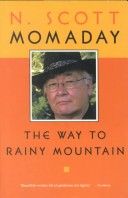
Nova: Exactly, Atlas. It's a profound blind spot we often have in our print-centric world. We tend to forget the sheer, enduring power of spoken stories. They're not just entertainment; they're living histories, laws, philosophies. They build identity and ensure cultural survival. And no book illustrates this more beautifully than N. Scott Momaday's "The Way to Rainy Mountain."
Atlas: Oh, I love that book. It's one of those rare texts that feels like it's telling you something ancient and incredibly personal at the same time.
Nova: It truly is. Momaday’s work was groundbreaking when it was published, uniquely blending his personal memoir with historical accounts and the sacred Kiowa legends passed down through his family. It was a pivotal moment for indigenous voices in American literature, showing how deeply intertwined personal narrative is with ancestral knowledge. It really is a bridge to the past, brought to life through the power of oral tradition.
Oral Traditions as Living History and Identity Weavers
SECTION
Nova: And that's where we start, Atlas. Momaday’s book isn't just a history the Kiowa people; it's a demonstration of how the Kiowa’s history through their stories. He traces his ancestors' journey from their origins in the Yellowstone area down to Rainy Mountain in Oklahoma, and with every step, he weaves in a legend, a personal memory, or a historical detail.
Atlas: So it's not just retelling a historical event, but actively reliving and embodying that history through the story? Like, the story itself the history, not just a record of it?
Nova: Precisely. Take the story of Tai-me, for example. Tai-me is the sacred Sun Dance doll, the most revered object of the Kiowa people, believed to embody the spirit of the sun itself. Momaday recounts how the Kiowa believed their fortune was bound to Tai-me, and that their very existence as a people was tied to their annual Sun Dance and the reverence for this sacred object. It’s not just a myth; it’s a living truth that shaped their migrations, their battles, their entire worldview.
Atlas: Wow. So the story isn't just about an object; it's about their identity, their connection to the divine, their purpose. How does hearing these stories shape someone's identity differently than reading a history textbook?
Nova: It's an entirely different experience. When Momaday tells us about his grandmother, Aho, and her deep connection to these stories, you realize it's an immersive, participatory tradition. She didn't just the stories; she part of their continuity. Her voice, her intonation, her pauses—all conveyed emotional weight and meaning far beyond the mere words on a page. These stories aren't static facts; they're dynamic vessels of ethical frameworks, social norms, and a profound sense of belonging. The listener isn't just an observer; they're an inheritor, a participant in a living memory. You become part of that story, part of that lineage.
Atlas: That's incredible. It sounds like a much more profound connection than just 'knowing' facts. It's about connected. It's like the story is actively shaping your internal landscape, not just filling it with information.
Oral Traditions as Dynamic Forces for Cultural Continuity and Knowledge Transmission
SECTION
Nova: And that profound connection isn't just about individual identity; it's the very lifeblood of cultural survival. This is beautifully illustrated in Clifford E. Trafzer's "Native America, Native American," a collection that compiles diverse indigenous voices and narratives.
Atlas: I’m curious, what does Trafzer's work reveal about how these stories function beyond just history?
Nova: Trafzer's collection highlights how oral narratives transmit knowledge, values, and ceremonies. These aren't quaint folktales; they're sophisticated systems for conveying everything from ecological wisdom about local plants and animals to complex social protocols, legal precedents, and spiritual beliefs. For instance, a creation myth might not just explain the origin of the world, but also embed crucial lessons about humanity's relationship with nature, the importance of balance, and the consequences of disrespecting the land. These stories are living encyclopedias for an entire way of life.
Atlas: So these aren't just quaint folktales; they're like living encyclopedias for an entire way of life? But how do they adapt then, if they're passed down orally? Don't things get lost or changed, or even misinterpreted over generations without a fixed written text?
Nova: That's a great question, and it gets to the core of their dynamism. Unlike a static written text, which can become brittle and irrelevant if its context is lost, oral traditions are inherently adaptive. They aren't rigid dogma. While their core truths and functions remain, the way they are told can shift slightly with each storyteller, each generation, each new context. This adaptation is actually a strength; it allows for continuity and relevance rather than fossilization. The community plays a vital role in validating and carrying these stories, ensuring their integrity while allowing for a living evolution. It's a collective memory, constantly being re-engaged and re-affirmed.
Atlas: Wow. So it's a living, breathing archive that constantly renews itself. That's a completely different paradigm for knowledge preservation than what most of us grew up with. It makes you wonder what kind of wisdom might be lost when cultures shift entirely to written forms.
Synthesis & Takeaways
SECTION
Nova: It truly does. Both Momaday and Trafzer show us that stories are not just words. They are profound containers of wisdom that shape entire worldviews and ensure their survival. They provide a foundational understanding of who we are, where we come from, and how we should live in the world.
Atlas: It makes me think about that profound question from our research: How might a story we know well, if passed down orally for generations, deepen its meaning?
Nova: That's the crux of it, isn't it? If a story like, say, Cinderella, were passed down orally for generations, it wouldn't just be a fairy tale. It would accumulate layers of communal experience, personal interpretation, and emotional weight from every grandmother who whispered it to her grandchild, every elder who shared its moral. It would become richer, more nuanced, and deeply ingrained in the collective psyche, far more impactful than a static written text. It would be a shared inheritance, a living part of a culture's fabric.
Atlas: That's a powerful thought. It suggests we're missing so much by relying solely on the written word. It's not just about understanding; it's about feeling and belonging, about a profound connection to something larger than ourselves. It really challenges us to reconsider how we value and transmit knowledge.
Nova: Absolutely. It invites us to listen more closely not just to the words, but to the echoes of generations within them. What oral traditions, spoken memories, or family stories live in your own life? How do they shape who you are?
Atlas: That's a fantastic question to leave our listeners with.
Nova: This is Aibrary. Congratulations on your growth!