

Beyond Inspiration: How to Build Lasting Creative Habits.
Golden Hook & Introduction
SECTION
Nova: Forget the 'aha!' moments and the muse whispering in your ear. What if I told you true, consistent creativity has almost nothing to do with inspiration?
Atlas: Wait, what? So all those movies about artists staring at blank canvases, waiting for some divine spark, were lying to me? My entire understanding of genius is a lie?
Nova: Well, maybe not a lie, but definitely an oversimplification. Today, we're diving into "Beyond Inspiration: How to Build Lasting Creative Habits," a brilliant synthesis of insights from authors who champion deliberate practice over fleeting fancy. These thinkers are known for their intensely practical, no-nonsense approaches, focusing on rather than or.
Atlas: Hmm, 'doing the work' versus 'waiting for inspiration.' That actually resonates. It sounds less like a magical gift and more like... a skill. But is this just about grinding through it, or is there something deeper we're missing?
Nova: It's absolutely deeper, and it begins with understanding how our most profound creative breakthroughs actually happen.
The Power of Deep Work for Creative Breakthroughs
SECTION
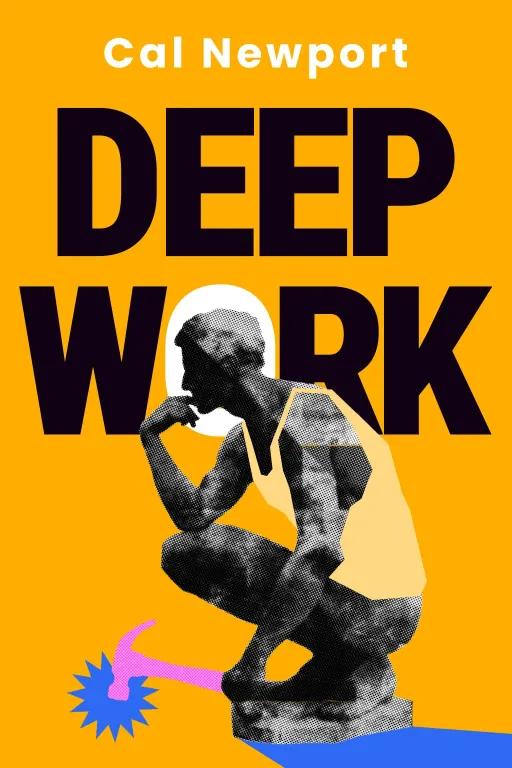
Nova: The first crucial concept comes from Cal Newport, and it's what he calls "Deep Work." This isn't just about focusing; it's about sustained, distraction-free concentration on a single, cognitively demanding task. It’s the kind of focus that pushes your cognitive capabilities to their limit, leading to new value, improving your skill, and being very hard to replicate.
Atlas: Hold on, 'distraction-free concentration' sounds like a mythical creature in today's world. In a role where I'm juggling multiple creative projects and urgent messages are flying in constantly, how is that even remotely possible? It feels like a luxury I can't afford.
Nova: I hear you, Atlas, and you're not alone. But that's exactly why it's so powerful. Think of a novelist, for example. Many successful authors don't wait for inspiration; they schedule their writing hours. Newport cites examples of writers who would block out four hours every morning, turning off their internet, their phones, retreating to a dedicated space. They weren't just writing; they were entering a flow state, a deep cognitive immersion. The cause was intentional blocking of distractions and ritualizing their work. The process was intense, focused concentration. And the outcome? High-quality, original creative output that simply couldn't be achieved with constant interruptions. They'd emerge from those sessions with thousands of words, not just typed, but truly.
Atlas: Wow. So it’s like building a muscle. You can't expect to lift heavy if you're constantly stopping to check your phone between reps. But what's the first rep? How do you even begin to carve out that kind of focus when your brain, and let's be honest, the digital world, is wired for quick hits and constant novelty?
Nova: Exactly, it's a muscle you have to train. Newport suggests starting small. Schedule your deep work. Even 60 minutes. Treat it like a non-negotiable appointment. You might not hit that flow state immediately, but you're teaching your brain to sustain focus. It's about ritualizing the process, creating triggers that tell your brain, "Okay, it's deep work time now." And crucially, it means saying "no" to the endless stream of "shallow work"—those easy, non-cognitively demanding tasks that feel productive but don't actually move the needle creatively.
Atlas: That makes sense. It’s a deliberate choice, then, to guard your creative energy. Like putting up a velvet rope around your brain.
Overcoming Resistance: The Internal Battle for Creative Consistency
SECTION
Nova: And speaking of guarding your creative energy, there's often an invisible force trying to stop us from even getting to the velvet rope. That brings us to another powerful idea: Steven Pressfield's concept of "Resistance."
Atlas: Resistance? Like, my brain just refusing to cooperate? Or the laundry pile suddenly looking incredibly appealing when I'm supposed to write that podcast script? Because I know that feeling all too well.
Nova: Absolutely! Pressfield defines Resistance as this universal, insidious force that manifests as procrastination, self-doubt, fear, rationalization – anything that prevents us from doing our true creative work. It's not just laziness; it's an active, internal enemy that specifically targets our most important, most meaningful endeavors. It's the reason we check email for the tenth time when we should be brainstorming, or suddenly decide our desk needs to be perfectly organized before we can start writing.
Atlas: Okay, so it's not just a lack of discipline, it's an actual working against us. That sounds a bit daunting, even mystical. What does fighting Resistance like in practice? Is it just 'suck it up and do it,' or is there a more strategic approach?
Nova: It's far more strategic. Pressfield argues that the only way to beat Resistance is to show up, consistently, and do the work. He calls it "turning pro." He shares the story of a painter who felt utterly overwhelmed by a blank canvas, paralyzed by the enormity of her vision. But she committed to showing up to her studio for just 15 minutes each day, regardless of how she felt or if inspiration struck. The cause was this internal, paralyzing fear and self-doubt. The process was simply showing up, day after day, treating her creative work like a non-negotiable job. And the outcome? Eventually, the act of showing up, the sheer professionalism, broke the spell of Resistance. She started making marks, then brushstrokes, and eventually, the full vision emerged. It’s about recognizing that Resistance will always be there, but we choose to act in spite of it.
Atlas: That’s a powerful example. So, it's about treating your creativity like a job you can't fire yourself from. It changes the whole mindset from 'waiting for inspiration' to 'I have a job to do here, and I'm going to do it.' It's less about feeling like doing it, and more about just it.
Synthesis & Takeaways
SECTION
Nova: Precisely. Ultimately, Deep Work gives us the 'how'—the focused environment and mental state—and overcoming Resistance gives us the 'why'—the ability to show up consistently, even when we don't feel like it. They're two sides of the same creative coin. Creativity isn't this ethereal gift; it's a muscle that strengthens with deliberate practice and protection from constant interruptions.
Atlas: So, for someone who wants to start building these lasting habits, especially when juggling a demanding professional life and personal creative projects, what's one tiny, practical step they can take tomorrow? Something genuinely actionable?
Nova: Here's the tiny step from "Beyond Inspiration": Block out just 30 minutes tomorrow for focused, single-task creative work. Turn off notifications – phone, email, social media. See what happens when you give your creative brain that dedicated, uninterrupted space. It's a small experiment, but the results can be profound.
Atlas: Just 30 minutes, no pings, no distractions. It's not about grand gestures, it's about micro-commitments. That's actually really inspiring because it feels achievable. It shifts the entire paradigm from hoping for inspiration to actively cultivating it. Thank you for that, Nova.
Nova: And remember, the most brilliant ideas don't just appear; they are forged in the quiet intensity of consistent effort.
Atlas: A powerful truth to end on.
Nova: This is Aibrary. Congratulations on your growth!









