

The Fabric of Reality: Exploring Consciousness Beyond the Brain
Golden Hook & Introduction
SECTION
Nova: Atlas, I was today years old when I realized that my entire perception of reality might just be a very convincing, beautifully designed user interface. And honestly, it's messing with my brain in the best possible way.
Atlas: Oh, I love that! So you're saying we’re all just interacting with a highly sophisticated operating system, and what we call "consciousness" is just the desktop icon? That’s a bit out there, but I’m intrigued.
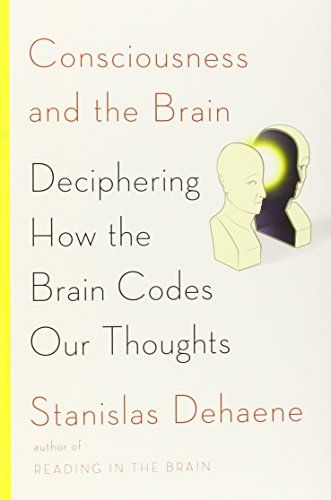
Nova: Precisely! And it's all thanks to this fascinating book we're diving into today: "The Fabric of Reality: Exploring Consciousness Beyond the Brain." It's not a single book, actually, but a deep dive into some profound ideas, particularly drawing from Stanislas Dehaene’s "Consciousness and the Brain" and Tor Nørretranders’ "The User Illusion."
Atlas: Ah, Nørretranders! Wasn't he known for his provocative, almost philosophical takes on science? I remember hearing about "The User Illusion" when it came out – it definitely stirred up some intellectual debate. He's that Danish science writer who really challenged conventional thinking about perception, right?
Nova: Absolutely. Nørretranders is a master at taking complex scientific concepts and turning them into accessible, thought-provoking philosophical arguments. He has this knack for making you question everything you thought you knew, which is why his work on the 'user illusion' is so compelling. It's not just a scientific theory; it’s a re-framing of our entire existence. And when you pair that with Dehaene, a leading neuroscientist, exploring the neural correlates of consciousness, you get this incredibly rich, multi-layered perspective.
Atlas: Okay, so we're talking about two heavyweights here – one from the philosophical science writing side, and one from hardcore neuroscience. That sounds like a powerful combination for anyone who seeks mastery and truly wants to integrate knowledge for personal understanding. So, where do we even begin to unpack this 'user illusion' and the brain's coding of thought?
The Brain's Code and the User Illusion
SECTION
Nova: Let's start with Dehaene, because he lays some crucial groundwork. In "Consciousness and the Brain," he dives into the neural correlates of consciousness. He's essentially trying to find where in the brain our subjective experience, our "inner light," actually resides.
Atlas: So he’s looking for the physical switch, the biological mechanism that flips us from unconscious processing to conscious awareness? What exactly did he find?
Nova: He proposes what he calls the "global neuronal workspace theory." Imagine your brain as a massive, bustling office building. Most of the work—the sensory input, motor control, memory retrieval—happens in specialized departments, often unconsciously. But then, he suggests there's this central "workspace" or a "global broadcasting system" that can take certain pieces of information and make them available to the entire brain.
Atlas: Like an internal company-wide email that suddenly puts a specific project in front of all departments? So, consciousness isn't just one department, but the act of information across the whole network?
Nova: Exactly! It’s the moment a piece of information becomes globally accessible, allowing different parts of your brain to process it, react to it, and even talk about it. Think of it as a spotlight. Information under that spotlight becomes conscious, allowing for deliberate thought, planning, and reporting. Everything else remains in the shadows, processed automatically, but not consciously experienced.
Atlas: That makes sense. It explains why we can drive a car, breathe, and process visual data all at once without consciously thinking about every single action. But then, if Dehaene is showing us the brain does it, where does Nørretranders come in with this 'user illusion'?
Nova: This is where it gets really mind-bending. Nørretranders, in "The User Illusion," takes Dehaene's biological framework and adds a philosophical twist. He argues that our conscious experience isn't a direct mirror of reality. Instead, it's a vastly simplified, highly edited version—a "user interface" designed by our brain to help us navigate the world efficiently.
Atlas: Hold on. So, my conscious experience, the very thing I call "me" and "my reality," is just a simplified representation? Like an app icon is a simplified representation of complex code? That sounds a bit… disempowering.
Nova: Not necessarily disempowering, but certainly a radical re-framing. Nørretranders uses the analogy of a computer desktop. When you click on an icon, you're not interacting directly with the complex code, the transistors, the electrical signals. You're interacting with a simplified, intuitive representation that allows you to get things done without being overwhelmed by the underlying complexity. Our consciousness, he argues, is that desktop.
Atlas: So, my brain is processing an enormous amount of data—sensory input, memories, calculations—but only a tiny fraction of that ever makes it to my conscious awareness. The rest is just running in the background, making decisions, interpreting, shaping my world without me even knowing it?
Nova: Precisely. He points out that our senses alone take in billions of bits of information per second, but our conscious mind can only handle about 40 bits. That's a staggering difference! The brain to filter, to create a simplified model, otherwise, we'd be paralyzed by information overload. This 'user illusion' is not a flaw; it's an evolutionary advantage. It allows us to focus on what's immediately relevant for survival and action.
Atlas: Wow. That's actually really inspiring. It suggests there's so much more happening within us, beneath the surface of our conscious thought. For our listeners who are continuously challenging themselves and seeking personal wisdom, this idea of a deeper, unconscious reality being processed by our brains is a profound thought. But what are the practical implications of this 'user illusion'?
Implications for Agency and Objective Reality
SECTION
Nova: That's the deep question, isn't it? If our conscious experience is a 'user illusion,' how might this alter our perception of personal agency or the nature of objective reality? It challenges the very core of what we consider "free will" and our direct perception of the world.
Atlas: I can see that. If what I perceive isn't the full, raw data of reality, but a filtered, interpreted version, then my decisions, my sense of self, my entire perspective is built on this "interface." It makes me wonder how much of what I think I control is actually being guided by those unconscious processes.
Nova: Exactly. Nørretranders suggests that much of what we attribute to conscious choice might actually be the result of incredibly sophisticated unconscious processing that then presents itself to our "user interface" as a decision we've made. It's not that agency is entirely absent, but its nature changes. It becomes less about a singular, all-knowing conscious controller, and more about the interplay between conscious focus and vast unconscious machinery.
Atlas: So, it’s not that we make choices, but perhaps the "why" behind those choices is far more complex than we consciously understand. It's like my computer presenting me with a 'save' button, and I click it, but I don't fully comprehend the thousands of lines of code working behind that simple action.
Nova: A perfect analogy! And it extends to objective reality too. If our senses are filters, and our brain is an interpreter, then what we call "objective reality" is always, to some extent, a subjective construction. It's an intersubjective reality, a shared user interface that we've all agreed upon. But the "thing-in-itself," the raw, unfiltered reality, remains largely inaccessible to our conscious minds.
Atlas: That gives me chills. So the "threads of human experience" we seek to understand, as our listeners often do, are woven within this shared, yet individually experienced, 'user illusion'. It’s a powerful idea for anyone dedicated to continuous challenge and deep intellectual curiosity. It makes you realize that even our most fundamental perceptions are a product of incredible biological and evolutionary design.
Nova: It highlights the sheer elegance and efficiency of the brain. The 'user illusion' isn't about deception; it's about optimization. It's the brain doing its best to provide us with a functional, coherent narrative of the world, even if that narrative is a simplified version of the underlying truth. It invites us to embrace the journey of discovery, understanding that every question about consciousness leads to a new horizon.
Synthesis & Takeaways
SECTION
Nova: So, bringing it all together, what Dehaene and Nørretranders offer us is a profound shift in how we view consciousness. It’s not a simple, monolithic entity, but a dynamic process—a global neuronal broadcast that then gets translated into a 'user interface' for efficient interaction with a complex world.
Atlas: It’s a powerful thought, really. It moves us beyond a simplistic understanding of "mind" and "brain" and into a realm where our conscious experience is a powerful, yet limited, tool. For anyone who strives for inner peace and personal wisdom, recognizing the 'user illusion' could be incredibly liberating. It frees us from the burden of having to consciously control every single thought or action, allowing for a deeper trust in our own unconscious processes.
Nova: Exactly. It's about recognizing that there's a vast, unconscious intelligence at work, constantly shaping our perceptions and guiding our actions. Our conscious mind is the brilliant navigator, but the ship itself is powered by something far deeper. It encourages us to dedicate specific time each day for focused exploration, letting curiosity be our guide, not just into the external world, but into the internal mechanics of our own minds.
Atlas: And it means that the "objective reality" we perceive is a communal construction, a shared interface that allows for communication and collaboration. This understanding can deepen empathy, as we realize that everyone is operating within their own uniquely filtered version of reality, yet still sharing a common, simplified platform. It's a testament to the incredible complexity and adaptability of the human mind.
Nova: It truly is. This is Aibrary. Congratulations on your growth!