

The One-Person UX Revolution: A Founder's Playbook for Impact
Golden Hook & Introduction
SECTION
Dr. Warren Reed: Cloud, as an early-stage founder, you live in a world of scarce resources. Time, money, people—they're all at a premium. But the single biggest risk isn't running out of cash; it's building a product that, despite being brilliant on paper, users find confusing or frustrating. The question is, how do you build a world-class user experience when you are, for all intents and purposes, the 'user experience team of one'?
Cloud Gao: That's the central tension of every startup, right there. You're constantly pulled between coding the next feature, talking to investors, and trying to do marketing. But you know, deep down, that if a user's first five minutes with your product are a disaster, none of the other work matters. They'll just leave and never come back.
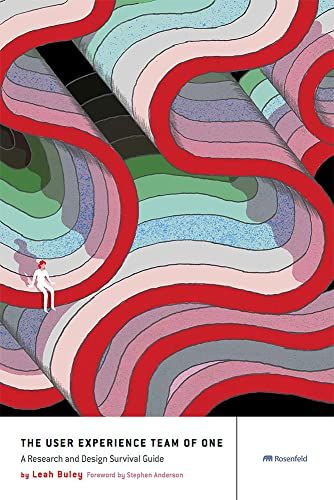
Dr. Warren Reed: Exactly. And that's why I wanted to talk about Leah Buley's book, "The User Experience Team of One." It's not just a book; it's a survival guide and a playbook for founders and product managers just like you. It argues that one person can, and must, kickstart a user-centric culture.
Cloud Gao: I love that framing. It's not about limitations; it's about leverage.
Dr. Warren Reed: Precisely. And today we'll dive deep into this from two perspectives. First, we'll explore the strategic mindset shift required—from being a lone doer to becoming a powerful UX evangelist. Then, we'll get super tactical and discuss the 'guerrilla' methods from the book that you can use to get powerful results with almost no budget.
Deep Dive into Core Topic 1: The UX Evangelist
SECTION
Dr. Warren Reed: So let's start with that mindset shift. Buley's first, and most important, point is that if you're a team of one, your job isn't just to UX work. Your primary job is to the value of UX to everyone else. You have to become an evangelist.
Cloud Gao: That's a huge insight. Most people in a technical or product role think their job is to produce artifacts—wireframes, specs, code. But you're saying the real work is communication and influence.
Dr. Warren Reed: It's everything. Because as a team of one, you can't possibly be in every meeting or review every design. Your only path to scale is to get others to think like you. To care about the user. Buley tells this great story, a classic archetype really. Imagine a single designer in a mid-size tech company. She's overwhelmed with requests. Engineers are just building what's in the spec, and marketing is making promises the product can't keep. She's the quality-control bottleneck.
Cloud Gao: I know that person. I've that person. You feel like you're the only one who sees the problems.
Dr. Warren Reed: Right. So, instead of just working harder and delivering more mockups, she tries a new tactic. She starts a 15-minute, optional meeting every Friday called "User Wow & Woe." The agenda is simple: she plays one 60-second video clip of a user expressing pure delight with a feature, the "wow." And then she plays one 60-second clip of a user getting completely stuck and frustrated, the "woe."
Cloud Gao: Oh, that's brilliant. It's not a report; it's a story. It's emotional.
Dr. Warren Reed: It's pure emotion. And what happens? At first, only a couple of people show up. But then, an engineer sees the "woe" clip of a user failing to log in because of an error message he wrote. It's no longer an abstract bug report; it's a real person's frustration. The next week, he brings his whole team to the meeting. Soon, the product manager starts using the "wow" clips in her presentations to leadership.
Cloud Gao: And the evangelism begins. She's not pushing her agenda anymore; she's created. People are coming to her. That's not a design activity; that's a leadership activity. As a founder, that's my job. I need to be the chief evangelist for the user.
Dr. Warren Reed: That's the core of it. The goal is to make user-centricity a shared value, not a department. For a founder, this is about setting the company's DNA from day one.
Cloud Gao: You know, it completely reframes internal debates. It's no longer my opinion as the founder versus my co-founder's opinion. It becomes, 'Okay, we both just watched a video of a user failing. How do we, together, solve problem?' It removes the ego from the room. That's how you build an aligned team that can move fast.
Dr. Warren Reed: And that alignment is the foundation. But to get those video clips, to have those stories to tell, you need to actually get in front of users. Which is a perfect transition to our second topic.
Deep Dive into Core Topic 2: Guerrilla Tactics for Product Founders
SECTION
Dr. Warren Reed: So, you've started to win hearts and minds. People are listening. Now you need to deliver quick, visible wins to build momentum. This is where Buley's 'guerrilla' methods come in. This is the tactical toolkit for the team of one.
Cloud Gao: This is what I need. The stuff I can do on a Tuesday afternoon between a pitch meeting and a code review. Actionable, not academic.
Dr. Warren Reed: Exactly. Let's talk about two of the most powerful ones. The first is the. Forget the six-month, data-heavy research project to define your user. You don't have time for that. Instead, you grab your co-founder or your first hire, a whiteboard, and for one hour, you sketch out your best guess of who your primary user is.
Cloud Gao: Based on your current assumptions.
Dr. Warren Reed: Purely on assumptions. Give them a name. Sarah, the busy project manager. What are her goals? What are her biggest pain points that your product solves? What are her frustrations with current solutions? You're not claiming it's the absolute truth. You're creating a stake in the ground. You're creating a simple tool to help you make decisions. Now, every time you debate a feature, you can ask, "What would Sarah do? Does this help Sarah achieve her goal?"
Cloud Gao: I love that. It's a focusing lens. It makes 'the user' a tangible person in the room for every single decision. It's not a research project; it's a decision-making framework you can create this afternoon. It forces alignment between me and my team on who we are actually building for. That alone is incredibly valuable.
Dr. Warren Reed: It's a simple tool for empathy and focus. Now, the second guerrilla tactic:. This is my favorite. Buley champions the idea that you don't need a formal lab. You just need a hallway. Or a coffee shop. You grab someone who is not on your immediate team—an employee from another department, your spouse, a stranger you offer to buy coffee for.
Cloud Gao: Someone with fresh eyes.
Dr. Warren Reed: Fresh eyes are key. You give them your phone or laptop with your prototype or product on it, and you give them one, single, critical task to perform. "Imagine you just heard about this app. Try to sign up." Or "Find a way to add a new project to your dashboard." And then—this is the most important part—you shut up. You just watch. You take notes on where they tap, where they hesitate, what they say out loud.
Cloud Gao: The urge to jump in and say "No, no, the button is over there!" must be immense.
Dr. Warren Reed: It's almost unbearable! But you have to resist. The data is in their confusion. And the magic number Buley cites from classic research is five. Testing with just five users will typically uncover about 85% of the major usability problems in an interface.
Cloud Gao: That's an incredible ROI. As a product manager, that's exactly what I'm looking for. We're not aiming for statistical significance in a peer-reviewed paper. We're looking for a quick, sometimes painful, and always necessary dose of reality to stop us from wasting weeks building the wrong thing or polishing the wrong feature. It's about de-risking the entire product roadmap.
Dr. Warren Reed: It's maximum insight for minimum effort. And the output isn't a 50-page report. It's a list of bullet points. Or even better, it's that 60-second video clip of a user struggling that you can show in your next team meeting.
Cloud Gao: And that brings it all full circle. The guerrilla tactics give you the raw material—the stories, the evidence, the emotional clips—to fuel your evangelism. It's a flywheel.
Synthesis & Takeaways
SECTION
Dr. Warren Reed: That's the perfect word for it. It's a flywheel. It's a two-pronged attack that reinforces itself. The soft power of evangelism creates the political will and cultural space for UX, and the hard-hitting, fast results of guerrilla tactics provide the undeniable evidence that this work matters.
Cloud Gao: It's a system. And for an ENTJ personality, for a founder, building a system is everything. You're not just fixing one-off bugs; you're building a machine that continuously surfaces and solves user problems. That's how you build a great product and a great company.
Dr. Warren Reed: So, to bring this home for our listeners, many of whom are founders and product leaders in the same boat as you. What's the one thing they should take away from this?
Cloud Gao: I think the big takeaway is that you have more power than you think. You don't need permission, a budget, or a team to start. You just need a little courage and a laptop. My challenge to any founder or PM listening would be this: block out two hours on your calendar this week. In the first hour, create a proto-persona with your team. In the second hour, go find three to five people—just three is fine—buy them a coffee, and watch them use your product to complete one critical task.
Dr. Warren Reed: Don't guide them.
Cloud Gao: Don't say a word. Just watch and listen. I promise you, the insights you get in that one hour will be worth more than the entire feature you might have spent the next two weeks building. It's the highest-leverage activity a founder can do. It's not a distraction from building; it the most important part of building.
Dr. Warren Reed: Start the flywheel. Cloud, this has been incredibly insightful. Thank you.
Cloud Gao: My pleasure. This was great.