Resilience in the Shadows
Golden Hook & Introduction
SECTION
Nova: We often talk about resilience as if it’s a muscle you just flex whenever life gets difficult. We treat it like a simple endurance test. But there is a massive gap in how we understand that word. True resilience isn't just standing there while the storm hits you. It is the active, sometimes exhausting, process of rebuilding the architecture of your own life while the storm is still raging.
Atlas: That is a heavy way to start, but it hits the mark. Most people view resilience as a static trait, like having a high pain tolerance. But what we are really talking about is the ability to maintain your sense of self when the environment is actively trying to erase it.
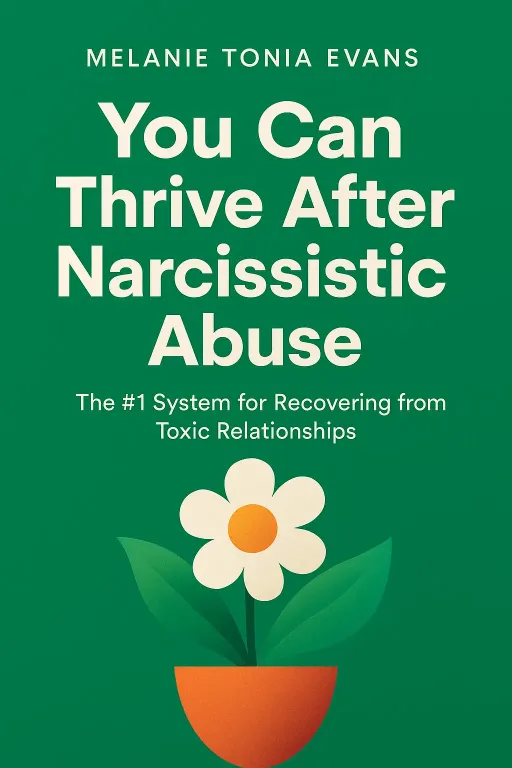
Nova: Exactly. Today we are looking at two very different, yet fundamentally connected, explorations of that idea. We are diving into Melanie Tonia Evans’ work, You Can Thrive After Narcissistic Abuse, and Karla Cornejo Villavicencio’s powerful narrative, The Undocumented Americans.
Atlas: It is an interesting pairing. One book focuses on the internal, deeply personal psychological landscape of recovering from a toxic relationship, and the other looks at the external, systemic struggle of people living in the shadows of American society. I am curious to see how you connect these two, because on the surface, they feel like they belong in different worlds.
Nova: They do, but the core of our conversation today is the reclamation of sovereignty. Melanie Tonia Evans brings a background in somatic healing to the table. She argues that we cannot think our way out of trauma, especially the kind of trauma that stems from narcissistic abuse, where the self is systematically dismantled. She focuses on the body as the primary site of healing.
Atlas: And Villavicencio? Her approach is journalistic, but it is deeply personal. She spent years interviewing undocumented people in various cities, and what she uncovered wasn't just a political story. It was a story about the psychological fortitude required to exist when your very presence is considered a liability.
Nova: Precisely. Villavicencio’s work is vital because it moves past the statistics and the political rhetoric. She documents the physical toll of living with constant, low-level terror, and the incredible, often invisible labor that sustains the country. Both authors are essentially asking the same question: How do you maintain your humanity and your agency when your environment is designed to make you feel powerless?
The Anatomy of Hidden Resilience
SECTION
Atlas: Let’s start with that idea of powerlessness. When I look at Evans’ work on narcissistic abuse, the narrative is often about being gaslit into believing that your reality is wrong. You lose touch with your own compass. For our listeners who are managing high-pressure environments or navigating complex team dynamics, that feeling of losing your grip on your own narrative is incredibly relatable. How does she suggest people find their footing again?
Nova: Evans’ approach is rooted in what she calls Quanta Freedom Healing. She posits that the reason traditional talk therapy often fails in these specific cases is that the trauma is stored in the body. When you are in a relationship with a narcissist, or even a highly toxic professional environment, your nervous system is constantly in a state of hyper-vigilance. You are always waiting for the next attack.
Atlas: That makes sense. It is like being in a constant state of fight-or-flight. If your nervous system is occupied with survival, you cannot build, you cannot strategize, and you cannot think clearly. You are just reacting.
Nova: Exactly. And that is where the parallel with Villavicencio’s subjects comes in. The undocumented individuals she profiles are living in a state of chronic, systemic hyper-vigilance. They are performing essential work, often in dangerous conditions, while constantly monitoring their surroundings for the threat of deportation. It is a form of trauma that is not just personal; it is environmental.
Atlas: That is such a sharp connection. It is the difference between a specific, acute stressor and a chronic, atmospheric one. If you are living in that state, how do you even begin to talk about resilience? It sounds like both authors are suggesting that resilience is actually a form of physiological regulation.
Nova: That is the breakthrough insight. Resilience, in this context, is the ability to return to a state of calm, even when the external threat remains. Evans suggests that the moment you stop trying to change the narcissist and start focusing on your own internal state, the power dynamic shifts. You are no longer looking for validation from a source that is incapable of giving it.
Atlas: I can see how that applies to the workplace. If you are dealing with a toxic leader, you might be spending all your energy trying to win them over or prove your worth. But what you are describing is a pivot. Instead of trying to fix the external, you focus on your own stability.
Nova: Yes. It is about sovereignty. Evans writes about identifying the energetic cords that bind you to the abuser. It sounds esoteric, but in practical terms, it means stop asking for permission to exist or to be right. In the context of Villavicencio’s work, the resilience is found in the community. She documents the way undocumented families create their own systems of support, their own "shadow" infrastructure, to care for each other.
Atlas: So, for the individual, it is about somatic regulation and internal boundaries. For the community, it is about creating a parallel system of support.
Nova: Precisely. They are both strategies for maintaining a sense of self in a system that does not recognize you.
The Architecture of Sovereignty
SECTION
Atlas: Let's dig deeper into the "how." If I am a listener who feels disempowered—maybe I am in a position where I feel like I have no agency, whether that is a bad job or a difficult personal situation—where do I start? Evans talks about boundaries. But boundaries are often misunderstood. People think boundaries are walls.
Nova: They are not walls. Walls keep everyone out. Boundaries are more like the membrane of a cell. They determine what comes in and what stays out. They are about defining where you end and the rest of the world begins. Evans suggests that the first step is actually acknowledging the pain without trying to fix it immediately.
Atlas: That sounds counterintuitive. Most people want to fix the problem as fast as possible.
Nova: But if you fix the problem from a place of fear or desperation, you often end up recreating the same dynamic. You have to heal the underlying wound first. For the undocumented individuals in Villavicencio’s book, there is no "fixing" the systemic issue of their status in the short term. So, they focus on the dignity of their daily actions. They focus on the work, the family, the small, tangible moments of life.
Atlas: That is a profound distinction. It is the difference between controlling the outcome and controlling your own actions. If you cannot control the system, you control your behavior within it.
Nova: Exactly. And that is where the strategic mindset comes in. When you are in a position of low power, you have to be incredibly discerning about where you spend your energy. Every time you engage in an argument you cannot win, or try to prove your worth to someone who is committed to misunderstanding you, you are leaking energy.
Atlas: I have seen this in corporate environments. You see talented people burning themselves out trying to "win" a political game that is rigged against them. They are leaking energy everywhere. They think that by working harder, they will eventually be recognized or valued.
Nova: But the reality is that sometimes the game is designed to keep you in that exact loop. Evans points out that the narcissist needs your reaction. If you stop reacting, the supply is cut off. In a corporate or systemic sense, if you stop playing by the rules that are designed to diminish you, you reclaim your agency.
Atlas: What does that look like in practice? If I am in that situation, what is the first move?
Nova: The first move is radical honesty about your own participation. You have to ask yourself, "Why am I still here?" and "What am I getting out of this dynamic?" It is not about blaming yourself; it is about recognizing your own power to leave or to change the terms of engagement.
Atlas: That is tough to hear. It is much easier to blame the external factor—the boss, the system, the partner. But you are saying that the ultimate sovereignty comes from taking responsibility for your own presence in that space.
Nova: It is the only way to be free. Villavicencio’s book is a masterclass in this. Her subjects are living in a precarious reality, but they are not passive victims. They are active agents in their own lives. They are working, they are raising families, they are building communities. They are asserting their humanity in a system that often treats them as invisible labor.
Atlas: That is the pivot point. It is moving from "I am being done to" to "I am doing." It is a shift in language and a shift in focus.
The Strategy of Integration
SECTION
Nova: Let’s talk about the long game. The Strategist and the Builder in our audience are always thinking about the legacy. How do these insights help someone build something that lasts?
Atlas: If I am thinking about building a legacy, the biggest risk is burnout. And both of these books, in their own way, are about burnout—personal and societal. If you are building something, you need to be able to sustain your own energy. You cannot build a legacy if you are constantly being drained by toxic dynamics or if you are living in a state of perpetual anxiety.
Nova: That is a great point. Resilience is the foundation of sustainability. If you want to build something impactful, you have to be able to withstand the pressure. And the only way to withstand pressure is to have a strong internal foundation.
Atlas: So, the takeaway for our listeners isn't just about surviving a tough time. It is about using those tough times as a crucible to build a more robust sense of self.
Nova: Yes. Think about the concept of "Ethical Influence." If you are a leader, you influence others. But if your own foundation is shaky—if you are operating from a place of insecurity or a need for external validation—your influence will be distorted. You will attract the wrong people, or you will create a culture that rewards the wrong behaviors.
Atlas: That is a powerful framing. If you haven't done the work to reclaim your own sovereignty, you are essentially projecting your unresolved issues onto your team or your project. You become the source of the toxicity you are trying to avoid.
Nova: Exactly. And that is why the work Evans describes is so important for leaders. It is not just therapy; it is leadership development. When you heal your own somatic imprints—when you learn to regulate your own nervous system—you become a more stable, more centered leader. You become a container for other people's stress, rather than a conductor of it.
Atlas: I like that image. A container rather than a conductor. That is a leadership shift. Instead of passing the anxiety down the line, you absorb it, process it, and release it in a way that doesn't damage the team.
Nova: And look at the lesson from Villavicencio. Her subjects are masters of this. They are operating in a high-stakes, high-pressure environment, yet they maintain a profound sense of dignity and care for one another. They are not just surviving; they are building community in the margins.
Atlas: It really changes the way I think about resilience. It is not about being a lone wolf. It is about being part of a system that supports you.
Nova: Precisely. We are not designed to be islands. We are relational beings. Our resilience is inextricably linked to the quality of our connections.
Synthesis & Takeaways
SECTION
Atlas: We have covered a lot of ground here. We started with the idea of trauma and the somatic body, moved through the systemic reality of living on the margins, and landed on the necessity of internal sovereignty for any kind of sustainable building or leadership. If I had to distill this into one actionable insight for our listeners, what would it be?
Nova: It comes back to the "Tiny Step" we mentioned earlier. Identify one area in your life where you feel disempowered. It could be a conversation you are avoiding, a project that is draining you, or a dynamic that feels off. And then, write down a single, boundaries-first action you can take today.
Atlas: Just one. Not a complete life overhaul. Just one action.
Nova: Yes. Maybe it is saying "no" to a request that doesn't align with your goals. Maybe it is taking 15 minutes to sit in silence and check in with your own body instead of scrolling through emails. Maybe it is having the direct conversation you have been putting off.
Atlas: I think that is the key. Sovereignty is not a destination you reach; it is a practice you maintain. It is the accumulation of these small, boundary-setting decisions that eventually build the architecture of a resilient life.
Nova: And remember, the goal is not to be invulnerable. The goal is to be whole. Villavicencio’s subjects show us that even in the most precarious circumstances, you can hold onto your humanity. Evans shows us that even after the deepest betrayal of self, you can return to your center.
Atlas: That is a hopeful note to end on. It implies that no matter where you are starting from, you have the capacity to reclaim your narrative.
Nova: You do. And the moment you start, you are already building something different. You are moving from a state of reacting to the world, to a state of creating your own reality within it. That is the essence of true resilience.
Atlas: This has been a fascinating deep dive. I feel like we have moved from the abstract to the deeply practical. Thank you for walking through this with me.
Nova: It has been a pleasure. For our listeners, take that 15 minutes today. Reflect on where you are giving away your power, and reclaim it. One boundary at a time.
Atlas: Absolutely. This is Aibrary. Congratulations on your growth!