

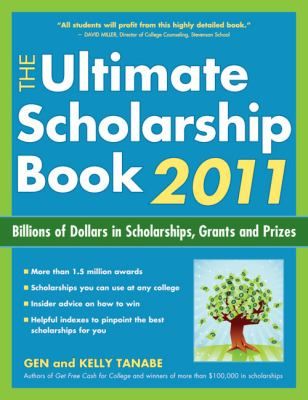
The Ultimate Scholarship Book Ultimate Scholarship Book Billions of Dollars in Scholarships
Introduction
Nova: Picture this: two students get accepted to every single Ivy League school, win over $100,000 in merit-based scholarships, and graduate from Harvard completely debt-free. That's not a fictional story. That's the real-life experience of Gen and Kelly Tanabe, the sibling duo behind today's topic: The Ultimate Scholarship Book.
Atlas: Okay, Nova, I have to stop you right there. Accepted to all the Ivies and a hundred grand in scholarships? That sounds like one of those too-good-to-be-true success stories you see online.
Nova: I hear the skepticism, and honestly, that's exactly why their book matters. Gen and Kelly Tanabe didn't just get lucky. They cracked a code, and they've spent the last twenty-plus years sharing it with millions of students. The Ultimate Scholarship Book is now in its 19th edition, covering more than 2,300 verified awards worth over a billion dollars, with access to a directory of 1.5 million scholarships, grants, and prizes.
Atlas: A billion dollars? So this is a massive directory. But here's what I want to know: why does the world need a physical book for scholarships when every student just Googles "free money for college"?
Nova: That is the perfect question, and the Tanabes have a surprising answer. They argue that a book actually beats the internet for finding scholarships that truly match you. Scholarship websites use rigid questionnaires and algorithms. A book lets you browse, discover categories you never knew existed, and find hidden gems that a search engine would never surface.
Atlas: Alright, I'm intrigued. Let's dig into what makes this book different and why the Tanabes' approach might just change how we think about paying for college.
Why a Physical Directory Outperforms Search Engines
The Book Beats the Internet
Nova: Let's start with one of the most counterintuitive claims in the book: a physical scholarship directory can be more effective than any website. Gen and Kelly Tanabe point out that scholarship websites often provide outdated information and rely on generalized data that may not match individual student profiles. They also have a habit of inflating the number of scholarship offerings to look more attractive.
Atlas: Wait, seriously? Websites inflate their numbers? How does that work?
Nova: They'll list scholarships that only apply to students at one specific college or in one tiny town, making their database look enormous when really most of those awards are useless to you. The Ultimate Scholarship Book filters that noise out. It only lists awards that most students are actually eligible for, organized into easy-to-browse categories like humanities, social science, science, and a beloved general category for awards with almost no restrictions.
Atlas: So it's curated rather than just scraped from the internet.
Nova: Exactly. And here's the really practical angle. The Tanabes argue you can carry a scholarship book anywhere and use downtime, like waiting in line, during breaks, or on the bus, to browse opportunities. Those five-minute gaps become productive scholarship-hunting sessions instead of doom-scrolling moments.
Atlas: That's actually clever. But doesn't the information go stale quickly? Scholarships change every year, right?
Nova: That's why they release a new edition annually. The 2027 edition is the 19th version. Each update verifies that every listed scholarship still exists, updates deadlines and award amounts, and adds new opportunities. And here's a wild stat that puts the whole scholarship landscape in perspective: only about 11 percent of college students receive a private scholarship each year. Over 100 billion dollars in total grant and scholarship money is awarded annually from all sources, but an estimated 100 million dollars in private scholarships goes unclaimed simply because nobody applies.
Atlas: A hundred million dollars just sitting there? That's mind-boggling. It's like walking past stacks of cash on the sidewalk.
Nova: Right. And part of the problem is that students don't know these opportunities exist. A book organized by categories you can actually flip through helps solve that discovery problem in a way a search bar never could.
Local Scholarships and Unlikely Sources
Where the Real Money Hides
Nova: One of the biggest revelations in The Ultimate Scholarship Book is that local scholarships are the unsung heroes of college funding. National scholarships get all the attention, all the applicants, and all the rejection letters. But local awards from civic groups, businesses, and community organizations often have dramatically less competition.
Atlas: So you're saying the Rotary Club scholarship in my hometown might actually be a better bet than some huge corporate award everyone in the country applies for?
Nova: A thousand times yes. The Tanabes break this down with a compelling math argument. Say you find a local five-hundred-dollar scholarship that takes three hours to apply for. If you win, that's an hourly rate of over 166 dollars. And here's the kicker: many local scholarships are renewable. A five-hundred-dollar award that renews every year is actually worth two thousand dollars across four years. The return on time invested explodes.
Atlas: That reframes everything. I always assumed chasing small scholarships was a waste of time. But where do you even find these local opportunities?
Nova: The book lays out sources most students never consider. Local civic groups like the Lions Club, Elks Club, and Rotary. Your parents' employers. Local businesses. Professional associations. Your high school counseling office, which often has a binder of local awards that nobody bothers to look at. The Tanabes also recommend forming a scholarship group with friends where you share leads. Collaboration beats competition when you're all looking at different corners of the landscape.
Atlas: I love that. Turn the search into a team sport. But speaking of competition, what about scholarship scams? I've seen those emails promising guaranteed awards for a small processing fee.
Nova: The Tanabes devote serious attention to this. Their red flags include: any scholarship that asks for a fee to apply, guarantees you'll win, claims to do all the work for you, or uses high-pressure tactics like limited-time offers. A legitimate scholarship never charges an application fee. The book also warns against the myth that billions of dollars go completely unclaimed. That's been debunked by financial aid experts. Money does go unclaimed, but not billions. The real problem is that students don't apply, not that nobody wants the money.
Atlas: Good to separate myth from reality. So you've found your scholarships. Now what?
Essays, Resumes, and the Strategy Most Students Miss
The Art of Actually Winning
Nova: This is where the Tanabes' personal story becomes incredibly instructive. Kelly Tanabe, despite having stellar grades and test scores, lost a scholarship early on. She assumed her academic record would speak for itself. The winner, however, had strategically showcased how his strengths aligned with the scholarship's specific purpose. Kelly learned the hard way that preparation and positioning matter more than raw credentials.
Atlas: So it's not just about being impressive. It's about being impressive in the right direction.
Nova: Exactly. The book breaks this into several layers. First, understand each scholarship's purpose. Why does this organization give away money? A scholarship from a teachers' association wants to see passion for education. An award from a veterans' group wants to see service and leadership. Tailor every application to that specific mission.
Atlas: That sounds obvious but I imagine most students just copy and paste the same application everywhere.
Nova: They absolutely do, and that's why they lose. The Tanabes advocate for quality over quantity. Prioritize scholarships where you're genuinely a strong fit rather than spraying applications everywhere. They recommend creating a prioritized list based on how well you match each award's criteria and working down from the top.
Atlas: Let's talk about the essay, because that's the part that terrifies everyone.
Nova: The essay chapter is arguably the heart of the book. The Tanabes say that while your application form might get you to the semifinals, the essay is what makes judges say yes. Most scholarship essay prompts boil down to one question: why do you deserve to win? And the worst answer is I need the money.
Atlas: Even if that's the truth?
Nova: Even then. Everyone needs the money. What makes you different is your story. The Tanabes offer specific techniques: start with a vivid moment, not a generic introduction. Share a slice of life rather than summarizing your entire biography. Show growth. Judges want to see how you've developed through challenges, not just that you faced them. A sob story without evidence of resilience won't win.
Atlas: So it's about framing hardship as fuel rather than just hardship.
Nova: Perfectly put. They also emphasize getting feedback. Have multiple people read your essay. If a reader can't explain what makes you special after reading it, rewrite it. And on the scholarship resume front, the Tanabes say it should differ from a job resume. Focus on academic achievements, leadership roles, and activities that match the scholarship's mission. Use action verbs. Quantify impact where possible. And never exaggerate. Judges can spot inflation.
Atlas: What about interviews? Do many scholarships even require those?
Nova: The more competitive ones do, and the Tanabes dedicate a full section to it. Their key advice: research the organization thoroughly beforehand, prepare stories that illustrate your qualities rather than just listing them, and always send a thank-you note afterward. Small courtesies leave an outsized impression when most applicants disappear the moment the interview ends.
What Students Get Wrong and How to Get It Right
Myths, Mindset, and the Long Game
Nova: Let's tackle some of the biggest myths the Tanabes debunk. Myth number one: you need a perfect GPA or financial hardship to win scholarships. The book emphasizes there are plenty of awards with neither requirement. Scholarships exist for community service, artistic talent, athletic ability, religious affiliation, ethnicity, career goals, even quirky personal interests.
Atlas: Like what? Give me a weird one.
Nova: The book's directory includes scholarships for duck calling, for tall people, for fans of specific candy brands, for students who excel at making prom outfits out of duct tape. The point is: if you have any distinguishing characteristic, there's probably a scholarship aligned with it.
Atlas: That's both hilarious and encouraging. What's myth number two?
Nova: That scholarships are only for high school seniors. The book covers awards for graduate students, adult learners returning to education, and even current college students who never applied as freshmen. The search doesn't end when you enroll.
Atlas: And myth number three?
Nova: That if you qualify for financial aid, you don't need scholarships. Wrong. Scholarships are free money that never needs to be repaid. Financial aid packages often include loans. Every scholarship dollar reduces what you might need to borrow. The Tanabes are emphatic: pursue both tracks simultaneously.
Atlas: So what's the mindset shift the book is really after?
Nova: I think it's this: treat scholarship hunting like a part-time job, not a lottery ticket. The students who win big aren't the ones who apply to three scholarships and hope for the best. They treat it systematically. The book recommends setting weekly application goals, tracking deadlines in a calendar, and steadily chipping away. Three to seven applications per week is a pace the Tanabes suggest. At the end of a semester, that might be fifty to a hundred applications.
Atlas: That's intense. But the math makes sense. Even a 10 percent win rate on 50 applications is five scholarships.
Nova: And those five could easily add up to thousands of dollars. Remember, most scholarships are small. Ninety-seven percent of private scholarship recipients get awards of 2,500 dollars or less. Only about 0.2 percent of students get awards of 25,000 or more. The path to significant funding is volume plus consistency.
Atlas: That's actually freeing. You don't need to land one giant, life-changing scholarship. You just need to win a bunch of small ones.
Nova: That might be the most important lesson in the entire book.
Conclusion
Nova: So let's bring this together. The Ultimate Scholarship Book by Gen and Kelly Tanabe isn't just a directory. It's a battle-tested system built by two people who lived the dream: graduating from Harvard debt-free on merit-based scholarships they hunted down themselves. The book's core philosophy is that winning scholarships is a skill, not a lottery. Anyone can learn it.
Atlas: And the key takeaways are refreshingly practical. First, a curated book beats algorithm-driven websites for discovering scholarships that actually fit you. Second, local scholarships are the highest-return opportunities most students ignore. Third, winning is about strategic positioning: understanding each scholarship's purpose and tailoring your application, especially your essay, to match it.
Nova: Fourth, treat scholarship hunting like a part-time job with a calendar, weekly goals, and consistent effort. Small awards add up. Fifth, don't let myths hold you back. You don't need perfect grades, you don't need to be broke, and you don't need to be a high school senior. There's probably a scholarship out there with your name on it, hiding in a category you never thought to look at.
Atlas: What I find most moving is that the Tanabes didn't just write this book as businesspeople spotting a market. They wrote it because they remember what it felt like to face the staggering cost of college and wonder if they could make it work. They proved it was possible, and then they built a career helping others do the same, even funding their own scholarship program that awards money to students every year.
Nova: The book's closing message is about gratitude and responsibility too. When you win, thank the donors. Use the money wisely. Recognize that someone invested in your future, and the best repayment is making the most of that investment.
Atlas: If you're a student staring down tuition bills, or a parent trying to help your kid navigate the maze, The Ultimate Scholarship Book offers something genuinely valuable: a map. Not a guarantee, but a map. And sometimes, that's all you need to start the journey.
Nova: This is Aibrary. Congratulations on your growth!