

The Iron Cage: Why Great Powers Can't Escape the Tragedy of Politics
Golden Hook & Introduction
SECTION
Socrates: What if the greatest efforts of our diplomats, the most carefully crafted treaties, and the noblest intentions of world leaders are ultimately... irrelevant? What if nations are caught in an iron cage, a structural trap they can't escape, where the only rational choice is to prepare for war, even if you desperately want peace?
Antonio: That's a deeply unsettling thought. It suggests that the agency of leaders and the potential for genuine cooperation are fundamentally limited.
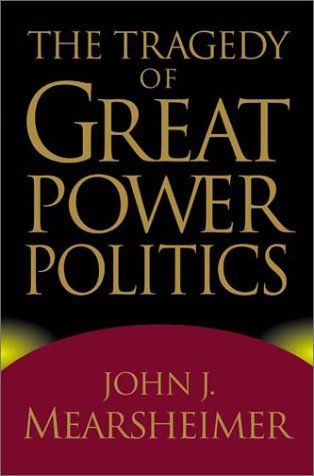
Socrates: Exactly. And that is the chilling, tragic argument at the heart of John Mearsheimer's 'The Tragedy of Great Power Politics.' It suggests that the international system itself is the villain. I’m Socrates, and with me is Antonio, a political science student and educator in government, who spends his days thinking about these very systems. Antonio, welcome.
Antonio: Thanks for having me. It's a book that every student in my field has to wrestle with. It's impossible to ignore.
Socrates: And wrestle we shall. Today we'll dive deep into this from two perspectives. First, we'll unpack the fundamental logic of fear that Mearsheimer argues is hardwired into the international system. Then, we'll explore the surprising limits of power and how geography itself dictates the ultimate goals of even the most powerful nations, and what that means for the very idea of diplomacy.
Deep Dive into Core Topic 1: The Anarchic Trap
SECTION
Socrates: So, Antonio, as a student of politics, you're taught about ideologies, leaders, and national interests. But Mearsheimer starts somewhere more fundamental. He argues it all begins with five simple, almost undeniable, facts about the world. Shall we walk through them?
Antonio: Please. It's the foundation of the entire theory. Getting this right is critical.
Socrates: Alright. First, the international system is anarchic. This doesn't mean chaos and violence, necessarily. It simply means there's no central authority, no world government, no 9-1-1 to call if you're a state in trouble.
Antonio: Right. It’s a self-help system. Every state is ultimately on its own.
Socrates: Precisely. Second, all great powers possess some offensive military capability. They have the means to hurt each other. Third, and this is crucial, states can never be certain about other states' intentions. A weapon that a neighbor claims is for defense could easily be used for offense.
Antonio: This is the 'problem of other minds' scaled up to the international level. You can see their capabilities—their tanks, their ships—but you can never truly know their intent, now or in the future. A friendly government today could be a hostile one tomorrow.
Socrates: You've hit the nail on the head. The fourth assumption is that the primary goal of any great power is survival. Before anything else—prosperity, ideology, human rights—a state must ensure it continues to exist. And fifth, states are rational actors. They think strategically about how to survive in this dangerous environment.
Antonio: So, let me see if I can synthesize this. We have a world with no higher authority, where everyone has a weapon, no one can trust anyone else's intentions, and survival is the only thing that matters. That... sounds like a recipe for constant fear.
Socrates: It is the perfect recipe for fear. And Mearsheimer argues this fear leads to a simple, logical, and tragic conclusion: the only way to guarantee your survival is to be the most powerful state in the system. Not just powerful enough to defend yourself, but powerful enough that no one would even think of attacking you. You must maximize your power. Let's make this concrete with a story. Picture the world around the year 1900.
Antonio: Okay. Britain is the dominant naval power, the global hegemon of the seas. Germany is the rising industrial and military power on the continent.
Socrates: Exactly. Now, Imperial Germany, under Kaiser Wilhelm II, decides it needs a world-class navy, a "High Seas Fleet." The stated reason? To protect its growing colonial empire and its maritime trade routes. It seems perfectly reasonable, right?
Antonio: From their perspective, yes. A great power needs a great navy. It's a status symbol and a tool of commerce.
Socrates: But now, put yourself in the Admiralty in London. You are an island nation. Your survival depends entirely on controlling the seas. For a century, you've had no peer. Suddenly, the most powerful army in Europe is building a fleet of battleships in the North Sea. They say it's for defense, but you look at the design of those ships. They are not long-range cruisers for protecting colonies; they are short-range battleships, perfect for a decisive battle against... your fleet.
Antonio: You can't afford to believe their stated intentions. The risk is too high. If you assume they're peaceful and you're wrong, Britain ceases to exist as an independent power. If you assume they're hostile and you're wrong, you've just spent a lot of money on new ships. The rational choice is clear.
Socrates: The only choice. So Britain embarks on a massive shipbuilding program of its own, launching the revolutionary HMS Dreadnought, a ship so powerful it makes all previous battleships obsolete overnight. This, of course, terrifies the Germans, who see it as proof of Britain's aggressive intent to keep them down. So they build more ships.
Antonio: And you get a vicious cycle. A naval arms race fueled not by malice or a desire for war, but by mutual fear, rooted in the structure of the system. This is the security dilemma in its purest form. Mearsheimer's point is that no amount of diplomacy or royal family ties—and the leaders of Britain and Germany were cousins—could have stopped it. The logic of the trap was absolute.
Socrates: It's not a bug, it's a feature. The tragedy is that even if both sides were led by pacifists, the rational course of action would be the same.
Deep Dive into Core Topic 2: The Limits of Power
SECTION
Socrates: So this creates a world where everyone wants more power to feel safe. But that leads to a paradox. If the drive for power is infinite, why hasn't one state, like the U. S., just taken over the world? Mearsheimer has a fascinatingly simple answer: water.
Antonio: The stopping power of water. It's one of his most famous and, I think, most compelling concepts. The idea that large bodies of water are the ultimate defensive barrier.
Socrates: Explain that. Why is it so powerful?
Antonio: Well, projecting power across a continent is one thing. You can use railways, roads, live off the land. But projecting and sustaining a massive land army across an ocean is a logistical nightmare of a different order. You need to control the sea lanes, transport millions of tons of supplies, and face a defender who is on their home turf. Mearsheimer argues it's practically impossible for any country to achieve what he calls global hegemony.
Socrates: Correct. Think of the D-Day landings in Normandy. It was the largest amphibious invasion in history, requiring almost total air and sea supremacy, and it was still an incredibly close-run thing against a German army that was already being bled dry on the Eastern Front. Now imagine trying to do that against a healthy, undivided great power.
Antonio: It's unthinkable. So, if global hegemony is impossible, what's the goal? The drive for power can't just switch off.
Socrates: The goal changes. The smartest thing a state can do, Mearsheimer argues, is to become a regional hegemon. To become so powerful in your own geographic neighborhood that no one can challenge you. And once you've achieved that, your grand strategy has one single, overriding goal.
Antonio: To make sure no other state achieves regional hegemony in its own neighborhood. You want to be the only king on the block, globally.
Socrates: Precisely. And which country is the perfect example of this?
Antonio: The United States. It's the only true regional hegemon in modern history. In the 19th century, through policies like the Monroe Doctrine and the Mexican-American War, it systematically removed or dominated any potential rival in the Western Hemisphere. And ever since, its foreign policy has been laser-focused on other regions.
Socrates: Think about it. Why did the U. S. enter World War I? To stop Imperial Germany from dominating Europe. Why did it enter World War II? To stop Nazi Germany and Imperial Japan from dominating Europe and Asia. Why did it fight the Cold War? To stop the Soviet Union from dominating Eurasia. It's the same pattern, over and over. The U. S. acts as an "offshore balancer."
Antonio: And this brings us to the present day with China. From a Mearsheimerian perspective, the rise of China is the single greatest threat to U. S. interests. Not because of communism or human rights, but because China has the potential to become a regional hegemon in Asia.
Socrates: So when you hear U. S. diplomats talking about a "free and open Indo-Pacific" or strengthening alliances with Japan, Australia, and India, what are you really hearing?
Antonio: You're hearing the language of offshore balancing. The U. S. is using its allies to build a coalition to check China's power and prevent it from kicking America out of Asia. The diplomacy, the negotiations, the talk of a "rules-based order"—it's all a tactic. It's the velvet glove on the iron fist of a power-maximizing strategy. The goal isn't a harmonious world; the goal is to maintain American primacy.
Socrates: And the tragedy, from China's perspective, is that its own drive for security—to create a buffer zone of friendly states, to secure its sea lanes—is rationally interpreted by the United States as a bid for hegemony that must be stopped. The same trap, just on a different continent.
Synthesis & Takeaways
SECTION
Socrates: So, let's pull these threads together. We have this tragic logic. The anarchic system creates fear. Fear drives a rational quest for power. But geography, specifically the stopping power of water, limits that quest, making the ultimate goal regional, not global, hegemony. The result is a perpetual security competition with no finish line.
Antonio: It's a deeply pessimistic worldview. It discounts the role of international institutions, economic interdependence, and shared norms. For Mearsheimer, those are all secondary. They are phenomena that exist on top of the deep structure of power, and when push comes to shove, that structure always wins.
Socrates: It's a powerful and coherent theory. As we close, Antonio, for someone like you, studying these systems and potentially working within them, what is the practical takeaway from grappling with Mearsheimer's tragedy?
Antonio: I think it's a crucial intellectual tool, even if you don't agree with all of it. It's a powerful antidote to naive idealism. It forces you to look past the public rhetoric of politicians and diplomats and ask a different set of questions. Instead of asking, "Is this policy good or moral?", you ask, "What are the structural imperatives driving this action? How does this move affect the balance of power?"
Socrates: A different lens for analysis.
Antonio: Exactly. It provides a baseline, a sort of worst-case analysis of state motivation. And it leads to a truly sobering final thought. The real tragedy of great power politics, in Mearsheimer's view, isn't that leaders sometimes make bad or evil choices. It's that the structure of the world they inhabit often means they don't have any good ones.
Socrates: A grim but powerful place to end. Antonio, thank you for wrestling with these ideas with us.
Antonio: My pleasure. It was a great discussion.