

Beyond Borders: How Power Dynamics Actually Work
Golden Hook & Introduction
SECTION
Nova: What if I told you that most of what we think drives international relations—ideals, shared values, global cooperation—is actually a dangerous illusion? That beneath the surface, it's all about raw power?
Atlas: Whoa, Nova. That's a pretty bold claim to start a Monday morning. Dangerous illusion? So you're saying all those diplomatic handshakes and calls for unity are just a facade?
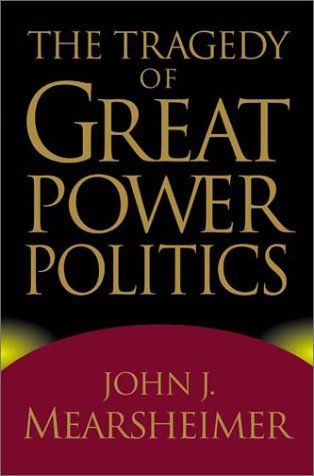
Nova: Precisely, Atlas. And it’s not just me saying it. Today, we're diving into the stark realities laid out by two giants in the field: John J. Mearsheimer's "The Tragedy of Great Power Politics" and Henry Kissinger's seminal work, "Diplomacy." Mearsheimer, a highly influential and often controversial political scientist, fundamentally reshaped how we understand state behavior, arguing that great powers are condemned to an endless security competition.
Atlas: Right. And Kissinger, a Nobel Peace Prize laureate and former Secretary of State, wasn't just observing history; he was making it. His perspective offers an unparalleled insider's view of statecraft. It sounds like they both pull back the curtain on how the world really works, which, for anyone trying to make sense of global events, is incredibly valuable.
Nova: Absolutely. Together, their insights provide a robust framework for analyzing the true drivers behind international actions, moving us beyond superficial explanations and into the pragmatic, often ruthless, decisions that shape our world.
The Illusion of Ideals & The Blind Spot
SECTION
Nova: So let's start with what Mearsheimer calls "The Blind Spot." We often assume international relations are driven by ideals—democracy, human rights, global peace. But the harsh reality of power politics often dictates outcomes. Ignoring this leads to incredibly naive interpretations of global events and the true motivations of states. It's like watching a chess game where the players are smiling and complimenting each other, but you know deep down, they're both plotting checkmate.
Atlas: Okay, but how does this "blind spot" actually manifest in the real world? Like, I hear leaders talk about humanitarian aid or shared values all the time. Are you saying that's never the primary driver?
Nova: Not never, but rarely the driver. Think about a past humanitarian intervention that was framed as saving lives, but in hindsight, it secured vital resources or strategic geopolitical positions for the intervening powers. Or a trade deal presented as mutual benefit, but which heavily favored one nation, allowing it to exert economic dominance. Leaders speak in ideals; it's how they gain domestic support and international legitimacy. But their actions are often rooted in a deeper, more self-interested calculus.
Atlas: That sounds rough. So is genuine cooperation just a myth then? Is there no room for states to actually work together for a common good, or is it always just this cynical power grab?
Nova: It's not that cooperation is impossible, but it's always fragile and often conditional. It exists within a framework dictated by existing power balances. Nations cooperate when it serves their individual interests, or when the cost of not cooperating is too high. Understanding this doesn't mean we abandon our ideals, but it means approaching global challenges with clear eyes, knowing the inherent competitive pressures at play.
Offensive Realism and Inherent Competition
SECTION
Nova: And that naturally leads us to the second key idea we need to talk about, which often acts as a counterpoint to what we just discussed: Mearsheimer's concept of offensive realism. His core argument is that states aren't just seeking security; they're constantly seeking to maximize their power, to become the hegemon, the dominant player. It's not just about building a tall fence to protect your home; it's about having the tallest fence, the biggest guard dog, and the most imposing presence in the entire neighborhood, so no one even about messing with you.
Atlas: Wow. So it's not just about defending yourself, it's about being the biggest, baddest kid on the block, always? Why does Mearsheimer believe states are so relentlessly aggressive in their pursuit of power? What's the fundamental logic behind that?
Nova: He outlines five core assumptions that drive this. First, the international system is anarchic – there's no global government to enforce rules. Second, all states possess some offensive military capability. Third, states can never be certain of other states' intentions. Fourth, the primary goal of states is survival. And finally, states are rational actors. Combine these, and you have a recipe for constant competition. Every state, logically, tries to gain as much power as it can to ensure its survival, because it can never fully trust another state's intentions. Think of the Cold War arms race: both sides were building up their arsenals, not necessarily to attack, but to deter. But in doing so, they fueled a constant cycle of insecurity—the security dilemma.
Atlas: But what about global institutions, though? The UN, NATO, international treaties? Aren't those designed to this constant power grab, to create some kind of order and cooperation among nations? For many of us who are civic-minded, these institutions represent a hope for a more peaceful future.
Nova: From an offensive realist perspective, institutions are largely reflections of great power interests, not independent actors that can fundamentally alter state behavior. They're tools that powerful states use to further their own agendas, or to manage competition in ways that benefit them. They don't erase the underlying drive for power; they just provide a different arena for it to play out.
The Art of Statecraft, Pragmatism & Power
SECTION
Nova: If Mearsheimer gives us the 'what'—the underlying, often brutal, logic of international relations—Kissinger, through "Diplomacy," gives us the 'how.' He explores the art of statecraft, showing how leaders throughout history have navigated these complex power struggles. Kissinger’s work is a masterclass in pragmatic decision-making, often prioritizing stability and national interest over pure morality, revealing the ruthless calculations behind historical breakthroughs.
Atlas: So, Kissinger is essentially the ultimate practitioner, the grand master of this power game? What kind of decisions are we talking about that might seem 'ruthless' but were deemed necessary? Can you give us an example that really illustrates that tension?
Nova: Absolutely. Consider Kissinger’s strategic opening to China in the 1970s. From an ideological standpoint, it was a dramatic shift – engaging with a communist adversary. But from a realpolitik perspective, it was a brilliant move to create a counterweight to the Soviet Union and shift the global balance of power in America’s favor. It wasn't about shared values with China; it was a pragmatic calculation of national interest, leveraging one adversary against another to enhance US security. It was controversial, but it undeniably reshaped the geopolitical landscape.
Atlas: It sounds like a lonely, high-stakes job. How do these leaders balance the immediate national interest with any long-term vision for peace or cooperation, especially when it involves making such morally ambiguous choices? It makes you wonder about the personal toll, too.
Nova: For figures like Kissinger, long-term peace often from a stable balance of power, not from idealism alone. The goal isn't necessarily to eliminate competition, which he saw as inherent, but to manage it. It's about achieving a stable international order where no single power can dominate, and where states understand the consequences of disrupting that balance. It’s a constant, delicate negotiation, where the ideal is often sacrificed for the achievable.
Synthesis & Takeaways
SECTION
Nova: So, bringing it all together, understanding Mearsheimer and Kissinger isn't about becoming cynical. It's about becoming clear-eyed. It’s about gaining a robust framework for assessing global events beyond superficial explanations, seeing the underlying currents of power and self-interest.
Atlas: Precisely. And that leads us to the deep question from the book content: if states are primarily driven by self-interest and power, what does that imply for the future of global cooperation? It feels like a pretty bleak outlook if we take these ideas to their logical conclusion.
Nova: It implies that global cooperation isn't dead, but it's always conditional and often strategic. It means that genuine cooperation requires a clear understanding of underlying power dynamics and mutual self-interest, rather than relying solely on shared values or altruism. When cooperation happens, it’s because it aligns with the strategic interests of the powerful states involved. It's a constant negotiation, a provisional arrangement, not a permanent state of harmony. It’s a challenging lens, but one that makes the world make a lot more sense, and empowers us to be far more informed citizens.
Atlas: It's a challenging lens, but one that makes the world make a lot more sense, and empowers us to be far more informed citizens. It makes you realize that the headlines are just the surface, and a much deeper game is always being played.
Nova: Exactly. And the more we understand that game, the better equipped we are to navigate our own civic engagement and understanding of geopolitics.
Nova: This is Aibrary. Congratulations on your growth!