

Stop Reactive Fixes, Start Proactive Flow: The Guide to Supply Chain Resilience.
Golden Hook & Introduction
SECTION
Nova: Atlas, I’ve got a quick one for you. What’s the one thing that almost every single major company, from tech giants to tiny startups, is almost certainly doing wrong right now, without even realizing it?
Atlas: Oh, Nova, that’s a loaded question! Are we talking about a universal blind spot? My gut says it has something to do with… maybe underestimating the speed of change? Or perhaps over-optimizing for the short term?
Nova: You're circling it, but it's even more fundamental. It's about how they problems. Most companies are stuck in a cycle of reactive firefighting, constantly patching up leaks as they appear, instead of designing a system that prevents the leaks from happening in the first place.
Atlas: Oh, I like that. So, we're talking about the difference between being a perpetual emergency room doctor versus being an architect for robust health. That resonates with anyone who's ever felt like they're just running on a hamster wheel, constantly putting out fires instead of making real progress.
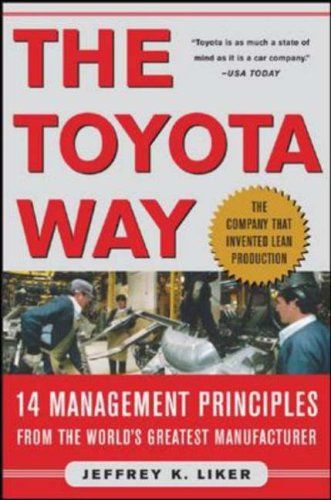
Nova: Exactly! And that's precisely what we're dissecting today, inspired by some foundational texts that completely redefined operational excellence. We're talking about the profound insights from “The Toyota Way” by Jeffrey K. Liker, and the gripping narrative of “The Goal” by Eliyahu M. Goldratt.
Atlas: Ah, Goldratt! The man who made industrial engineering feel like a thriller novel. What's fascinating about 'The Goal' is that Goldratt, a physicist by training, brought a completely different lens to manufacturing and operations, essentially pioneering the Theory of Constraints through a story that reads like a detective mystery. It’s not your typical dry business book, which I think is why it captured so many imaginations and sparked a whole new way of thinking about efficiency.
Nova: Absolutely. And Liker, with 'The Toyota Way,' distilled decades of Toyota’s unparalleled success into accessible principles. These aren't just academic theories; they're battle-tested philosophies that have built some of the most resilient and efficient organizations on the planet. And today, we're going to unpack how their wisdom can transform your supply chain from a series of dams into a free-flowing river.
The Proactive Shift: Designing Systems that Prevent Problems
SECTION
Nova: So, let's dive into that first big idea: the proactive shift. The core message from both these works is that building truly robust, future-proof operations isn't about getting better at patching problems; it's about designing systems that prevent them from occurring. Think of it like this: are you constantly bailing water out of a leaky boat, or are you building a boat that doesn't leak in the first place?
Atlas: That’s a powerful distinction. I imagine a lot of our listeners, especially those managing complex logistical networks, feel like they're constantly in "bail-out" mode. They're praised for their ability to react quickly, to heroically fix the latest crisis. But you're saying that heroics might actually mask a deeper systemic issue.
Nova: Precisely. And 'The Toyota Way' is the masterclass in this. Liker explains that Toyota’s production system isn't just a set of tools; it’s a philosophy centered on 'Jidoka,' or 'automation with a human touch,' and 'Just-in-Time.' It means quality and efficiency are built into every single step, not inspected in at the end. They empower every single team member to stop the production line if they spot a defect.
Atlas: Wait, stop the entire line? That sounds counterintuitive to maximizing output. Most companies would push through, hoping to fix it later, or just accept a certain percentage of defects. Isn't stopping the line a huge hit to productivity?
Nova: It seems that way on the surface, doesn't it? But here’s the genius: by stopping the line immediately, they themselves to find the root cause of the problem right then and there. It's a system designed to expose weaknesses, not hide them. This prevents a small defect from becoming a massive, costly recall down the line. It's about prioritizing quality and systemic health over short-term throughput.
Atlas: That's a profound shift in mindset. It’s like saying, "We'd rather take a small, controlled pause now to truly understand what went wrong, than let a bad process continue to crank out more bad product, only to discover the problem when it's too late and far more expensive to fix." For someone building for the future, this is critical. It moves from managing symptoms to curing the disease.
Nova: Exactly. And this isn't just about manufacturing. Imagine applying this to a software development team, or even a service delivery process. If you find a bug, do you push it through to the customer and then patch it, or do you stop, understand the bug occurred, and fix the process that allowed it to happen? The proactive approach builds resilience.
Unlocking Throughput: The Power of Identifying and Managing Bottlenecks
SECTION
Nova: And that naturally leads us to the second key idea, which often acts as a counterpoint to what we just discussed, but is equally vital for resilience: unlocking throughput by identifying and managing bottlenecks. This is where Goldratt’s ‘The Goal’ shines brightest. Through the story of Alex Rogo, a plant manager on the brink of losing his job, Goldratt introduces the Theory of Constraints.
Atlas: The Theory of Constraints. I’ve heard it mentioned, but what exactly does it mean for someone trying to optimize their operations? Is it just about finding the slowest part of a process?
Nova: It's more nuanced than that, but yes, it starts with identifying the single bottleneck, the constraint, that limits the entire system's output. Goldratt's revelation is that a chain is only as strong as its weakest link, and focusing improvement efforts anywhere that weakest link is often a wasted effort.
Atlas: So, if I have a five-step process, and step three is the slowest, improving step one or two won't help me produce more, because step three is still holding everything back?
Nova: Precisely. In the book, Alex Rogo dramatically illustrates this with a Boy Scout hike. The whole group can only move as fast as the slowest boy, Herbie. If you push the faster boys ahead, they just get further away and wait, while Herbie still dictates the pace of the group. To speed up the hike, you have to focus on Herbie – lighten his load, help him along, or even put him at the front to set the pace.
Atlas: That’s such a clear analogy! So, the breakthrough isn't just finding Herbie, but understanding that other parts of the system need to be subservient to Herbie's pace. You don't try to make the fast kids run faster; you make sure Herbie isn’t struggling alone. That’s a huge insight for systems thinkers, because it simplifies where to focus your energy.
Nova: Exactly. Goldratt’s theory then outlines five focusing steps: identify the constraint, exploit it, subordinate everything else to it, elevate it, and then, once that constraint is broken, go back to step one because a new one will emerge. It's a continuous cycle of improvement, always targeting the limiting factor.
Atlas: I can see how that would dramatically increase overall throughput and profitability. It's about optimizing the, not just individual parts. For our listeners who are constantly trying to improve efficiency, this gives them a laser focus. It tells them where to put their precious resources for maximum impact, rather than spreading them thin across every single process. It’s about systemic leverage.
Empowering Teams & Continuous Improvement: The Human Element of Resilience
SECTION
Nova: And this brings us to the third critical element, one that bridges both Liker and Goldratt: the indispensable human element of continuous improvement and team empowerment. Both authors, in their own ways, emphasize that true efficiency and resilience don't just come from perfect processes or identifying bottlenecks, but from understanding system dynamics empowering teams to solve problems at their source.
Atlas: This is where the 'respect for people' tenet of 'The Toyota Way' really comes into play, isn't it? It’s not just about stopping the line; it's about trusting the person on the line to know to stop it and to contribute to the solution.
Nova: Absolutely. Toyota's philosophy of 'Kaizen,' or continuous improvement, isn't some top-down directive. It's an ingrained culture where everyone, from the factory floor to upper management, is expected to constantly look for ways to improve processes, eliminate waste, and solve problems. They literally train their employees not just to do their job, but to their job.
Atlas: That sounds like a dream for any leader who wants to inspire transformative change. It’s about giving people ownership and agency. Instead of just being cogs in a machine, they become problem-solvers, innovators. I imagine that fosters incredible loyalty and engagement, because people feel valued for their intelligence, not just their labor.
Nova: It fundamentally shifts the power dynamic. Instead of problems being escalated up a chain of command, they're often solved at the lowest possible level, by the people closest to the work. This not only makes the solutions more effective but also builds a highly skilled, adaptable, and motivated workforce. They're not waiting for a hero; they the heroes, collectively.
Atlas: And this ties back to the idea of building for the future. If your team is constantly improving, constantly looking for how to make things better, your system itself becomes inherently more resilient. It's not a static design; it's a living, evolving entity. That's a huge shift from simply reacting to market demands. It means you're proactively shaping your ability to adapt.
Synthesis & Takeaways
SECTION
Nova: So, whether we're talking about Toyota's relentless pursuit of built-in quality and respect for people, or Goldratt's laser focus on the single limiting constraint, the message is clear: stop reactive fixes, start proactive flow. Your supply chain, your operations, your entire business, needs to flow like a river, not a series of dams, to adapt effectively.
Atlas: The key takeaway for me is that true efficiency isn't about getting faster at fixing things, but about designing systems that prevent problems, identifying the absolute critical leverage points, and then empowering the people closest to the work to drive continuous improvement. It's about trusting your vision and lighting the way for your team.
Nova: It’s about moving beyond the superficial and understanding the deep, systemic dynamics at play. It's about recognizing that every single component, and every single person, has a role in creating a truly resilient and future-proof operation. It's about impact and meaningful progress, not just activity.
Atlas: And for anyone listening who feels overwhelmed by the complexity of their own systems, that tiny step from our reading today is a perfect starting point: identify just one recurring bottleneck in your current logistics process, and then map its upstream and downstream impacts. Just one. That single insight can unravel an entire knot of inefficiency.
Nova: That's a powerful and actionable step. It's about starting small but thinking big, trusting that even a tiny adjustment at the right point can create a ripple effect throughout the entire system.
Atlas: It empowers you to be the architect, not just the firefighter. It's about building for resilience.
Nova: This is Aibrary. Congratulations on your growth!