

The Network Advantage: Leveraging Connections for Impact
Golden Hook & Introduction
SECTION
Nova: What if I told you that the choices you make today – from what you eat for breakfast to who you vote for – aren't entirely yours? That an invisible web of connections is subtly, powerfully pulling your strings?
Atlas: Whoa, Nova. That's a bold claim right out of the gate. Are you saying my free will is just a well-played illusion? Because I’m pretty sure I chose this coffee.
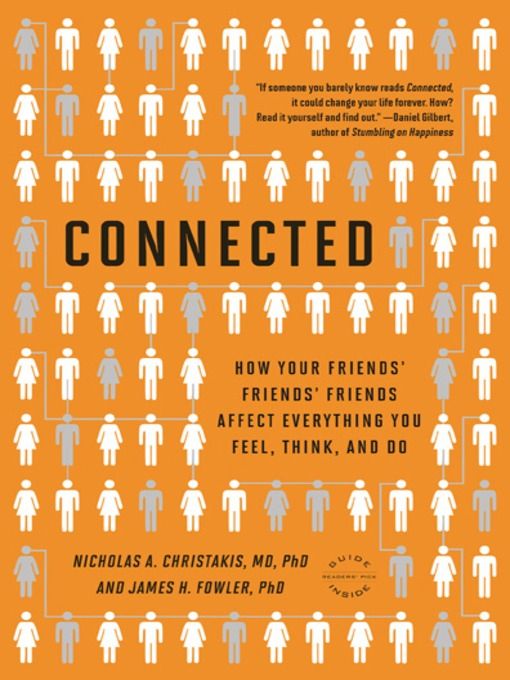
Nova: Well, Atlas, you you chose that coffee. But today, we're unraveling that invisible web, drawing insights from groundbreaking work like by Nicholas Christakis and James Fowler, and Malcolm Gladwell's classic,. These aren't just theories; they're meticulously researched blueprints for understanding the social architecture of our lives.
Atlas: That makes me wonder, for anyone building systems or trying to create real impact, understanding these blueprints sounds… foundational.
Nova: Absolutely. These books reveal a cold, hard fact: our actions and beliefs are not entirely our own; they are deeply influenced by the networks we are part of. And understanding these social networks is crucial for driving change and predicting behavior.
The Invisible Threads: How Social Networks Shape Our Reality
SECTION
Nova: So, let's dive into those invisible threads. Christakis and Fowler, in, show us how our social networks shape our health, our wealth, and even our happiness. And often, in ways we don't even realize. They found what they call the 'three degrees of influence.'
Atlas: Three degrees of influence? So, not just my friends, but my friends' friends' friends? That’s kind of wild. How does that even work in practice?
Nova: It's fascinating, right? Think about it this way: if your friend gains weight, you're more likely to gain weight. If your friend's friend's friend gets happy, your chances of being happy also increase. It's not just direct contact; it's a ripple effect through the social fabric. They traced these patterns through incredibly detailed studies, showing how things like smoking cessation, voting behavior, and even divorce can be 'contagious' across these three degrees.
Atlas: That's incredible. So, if my friend's friend's friend suddenly decides to take up interpretive dance, I might find myself inexplicably drawn to a leotard?
Nova: Possibly! The mechanisms are complex, but it often comes down to social norms, shared information, and even emotional contagion. We subconsciously adjust our behaviors and perceptions based on what those around us – and those connected to them – are doing. For someone focused on building systems or products for people, it’s a powerful insight: you're not just designing for an individual; you're designing for a node in a vast, interconnected web.
Atlas: This feels a bit like social determinism, though. Are you saying my choices aren't my own? This feels a bit like I'm just a puppet on a string, and my network is the puppet master. That's going to resonate with anyone who feels like they're constantly fighting upstream against external forces.
Nova: It’s a fair point, and it can feel disquieting. But the insight isn't that we have agency, rather that our agency is deeply. It's about understanding the environment in which we make our choices. Think of it like this: knowing the currents in a river doesn't mean you can't paddle, but it helps you paddle more effectively, or even choose a different path. The point is, your network is an undeniable force, whether you acknowledge it or not.
Triggering Tipping Points: Leveraging Network Structure for Impact and Change
SECTION
Nova: But here's where it gets even more interesting, Atlas. Once we see these invisible threads, once we understand these currents, we can start to weave them ourselves. This is where Malcolm Gladwell's comes in. It explores how ideas, trends, and social behaviors spread like epidemics.
Atlas: Right, like how a small spark can ignite a massive wildfire. So, how do we light that spark? What are the key elements?
Nova: Gladwell identifies three types of people crucial for igniting these cascades: Connectors, Mavens, and Salesmen. Think of Connectors as people with vast social networks, who know everyone across different groups. Mavens are information specialists; they accumulate knowledge and love to share it. And Salesmen are the persuaders, the charismatic individuals who can "sell" an idea or product with infectious enthusiasm.
Atlas: So, it's not just about having a great idea or a great product; it's about getting the right people to spread it. How do you even these Connectors or Mavens in your own network? For someone who builds systems, making sure a new product or idea gains traction is everything.
Nova: Exactly. Let's take the example of the resurgence of Hush Puppies shoes in the mid-90s. They were a dying brand. But a few Connectors – cool kids in New York – started wearing them simply because they were cheap and unique. Mavens then identified them as an emerging trend, and Salesmen helped spread the word and make them desirable. It wasn’t a marketing campaign; it was a social cascade triggered by these key individuals. To find them, you need to observe. Who is the person in your office who seems to know everyone? Who is the one constantly sharing fascinating articles or new tools? Who can always convince others to try something new?
Atlas: That makes me wonder, though, how do you ensure this kind of influence is used for positive, meaningful change, and not just for superficial trends or even manipulation? The user profile we're thinking of is driven by impact, by building something sustainable.
Nova: That's a critical question, and it speaks to Nova's Take: effective influence isn't just about individual persuasion; it's about understanding and strategically engaging the underlying network structure with. If you want to build a sustainable system, you need to embed your ideas within the network through these key individuals. Mavens ensure the idea has substance, Connectors ensure it reaches wide, and Salesmen ensure it's adopted. It’s about building a robust, resilient network around your idea, rather than just shouting it from the rooftops.
Synthesis & Takeaways
SECTION
Nova: So, what we've really explored today is the dual nature of networks: they passively shape us, but they also offer powerful levers for intentional, positive change. Understanding those invisible threads – the three degrees of influence – helps us understand our own context. And identifying the Connectors, Mavens, and Salesmen empowers us to become architects of impact.
Atlas: That's actually really inspiring. It shifts from feeling like a victim of circumstance to feeling like an agent of change. I imagine a lot of our listeners, who are always looking for ways to create meaningful systems, are thinking: 'Okay, where do I start?'
Nova: The tiny step, the most crucial first step, is to map out your own professional network. Who are the Connectors, the Mavens, and the Salesmen within your sphere? How do they currently impact your goals, and how could you strategically engage them to amplify your message or initiative? It's about seeing your relationships not just as individual bonds, but as a dynamic, interconnected system waiting to be understood and leveraged.
Atlas: That's a concrete, actionable challenge. So, for everyone listening, take a moment this week to really look at your network. Who are those key players? We'd love to hear what you discover! Share your insights with us.
Nova: Absolutely. It's a journey of discovery, and the insights you gain can profoundly shift how you approach everything from team building to product launch.
Atlas: This is Aibrary. Congratulations on your growth!