

Beyond Bricks and Mortar: The Psychology of Creating Enduring Structures
Golden Hook & Introduction
SECTION
Nova: What if I told you the strongest, most enduring structures aren't built from the toughest steel or the most advanced concrete, but from something far more intangible?
Atlas: Hold on, Nova. Are you implying my meticulously engineered, earthquake-proof skyscraper might actually be… fragile? That sounds like heresy to anyone who’s ever poured a foundation.
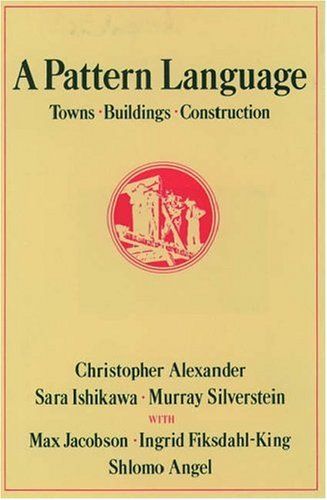
Nova: Well, Atlas, it's a concept deeply explored by Christopher Alexander, a brilliant mind who started his career as a mathematician before revolutionizing architectural theory. His work, especially "A Pattern Language" and "The Timeless Way of Building," challenges us to look beyond the blueprints.
Atlas: A mathematician turned architect? That's an interesting pivot. You don't usually hear of those two fields crossing over in such a profound way. What did he bring from the world of numbers to the world of bricks and mortar?
Nova: He brought a rigorous, almost scientific approach to understanding certain places feel good and others don't. He saw that many builders, despite their best intentions and technical prowess, were missing a crucial element. They had a blind spot.
The Blind Spot: Beyond Materials and Methods
SECTION
Nova: Exactly. Imagine a brand-new, cutting-edge office park. It's got the latest energy-efficient glass, state-of-the-art HVAC, ergonomic furniture, and every technical specification met to perfection. On paper, it's a marvel of modern engineering.
Atlas: Sounds like a dream for any strategic leader focused on efficiency and cost. What’s the catch?
Nova: The catch is, when people actually it, they feel… nothing. Or worse, they feel alienated. The hallways are too wide, making chance encounters awkward. The public spaces are vast and empty, discouraging lingering. The perfect climate control feels artificial, and the sterile aesthetic leaves everyone feeling a bit cold. It's technically flawless, but it's emotionally barren.
Atlas: So you're saying that despite all the engineering and material science, it fails at its most fundamental purpose: serving the human experience? That’s a stark contrast to what many would consider success in building.
Nova: Precisely. It's a structure, yes, but it doesn't evoke a sense of belonging, comfort, or inspiration. It doesn't foster life. It's a monument to specification, not spirit. The blind spot is this intense focus on the and the – the materials and methods – without truly grappling with the – the deeper human needs and the psychology of space.
Atlas: I can definitely relate to that. I’ve walked into buildings that are technically impressive but just… don’t feel right. Like they were built for robots, not people. But if efficiency and technical specifications aren't the ultimate goal, what? What are people missing?
Nova: They're missing the qualitative aspects, Atlas. The subtle nuances that make a place feel "alive." It's the difference between a house and a home, a building and a beloved landmark. This isn’t about sacrificing technical excellence; it’s about integrating human experience that excellence from the very beginning.
The Timeless Way: Integrating Human Experience and Natural Patterns
SECTION
Nova: So, if that's the blind spot, how do we fix it? That's where Alexander's "timeless way" comes in, and his most famous work, "A Pattern Language." Think of it like this: imagine building a complex dish, not with a rigid recipe, but with a collection of proven culinary "patterns."
Atlas: Okay, so instead of a step-by-step instruction manual for one specific dish, it's a library of techniques and flavor combinations that you can mix and match to create something new and delicious every time?
Nova: Exactly! Alexander and his co-authors, Sara Ishikawa and Murray Silverstein, identified 253 such "patterns" in building. These aren't styles or arbitrary rules; they're solutions to common design problems that have emerged organically over time, because they consistently make people feel good. Things like "Window Place," which suggests a window should have a seat next to it, creating a cozy nook. Or "Public Outdoor Room," describing how an outdoor space can feel as enclosed and inviting as an indoor room.
Atlas: Whoa. So it’s not just about what looks good, but about how the space for the human psyche? That’s a profound shift. I’m curious, how does a modern builder, not working with ancient villages, actually these 'patterns'?
Nova: It’s a process. "The Timeless Way of Building", the philosophical companion to "A Pattern Language," argues for an intuitive, organic approach. It’s about letting the design grow naturally, responding to the specific site, the people who will use it, and the patterns that feel right for that context. It’s about prioritizing natural growth and human well-being over rigid, abstract designs imposed from above.
Atlas: So it’s less about a grand pre-conceived vision and more about a responsive, evolving dialogue with the space and its future inhabitants?
Nova: Precisely. Think of a beloved old town square, one that has evolved over centuries. It wasn't designed by a single architect with a master plan. It grew, organically, as people added buildings, paths, benches, and trees in ways that felt natural and useful. Those spaces often embody many of Alexander's patterns without anyone explicitly naming them. They just right. They foster community, allow for quiet reflection, and adapt to changing needs.
Atlas: That makes sense. I’ve seen those kinds of places, and they have a certain magic. They feel lived-in, authentic. But for a master builder, someone who needs tangible results, how does this translate from a feeling to actual construction? Are we talking about aesthetics, or something deeper that influences how people in these spaces?
Nova: It's far deeper than aesthetics. It's about empowering people to participate in the creation of their own environment, making it adaptable and responsive. When structures are built this way, they gain a kind of resilience and an enduring quality that purely technical structures often lack. They become loved, cared for, and truly integrated into people's lives for generations. It’s about building in a way that respects the deeper patterns of life itself.
Synthesis & Takeaways
SECTION
Nova: So, what Alexander is really asking us to do is shift our mindset from merely constructing a physical object to actively creating an environment that fosters life, connection, and well-being. It’s about understanding that true mastery in building isn't just about the strength of your materials, but the strength of the human spirit it nurtures.
Atlas: That’s a powerful reframing. It moves building from a purely technical craft to an art form deeply rooted in human psychology and sociology. It’s about building with lasting impact, not just lasting materials. So for someone who wants to build something truly lasting, something with real enduring influence, where do they even begin with this mindset shift?
Nova: Start small. Look at a space you inhabit daily – your home, your office, even your garden. What "patterns" feel right? What feels wrong? Is there a window that begs for a seat, or a path that feels awkward? Begin to cultivate that intuitive sense, that inner compass, that guides you toward spaces that truly feel alive. It's about listening to the silent language of a place.
Atlas: That's a practical and profound first step. It's about connecting with the human element in every single detail.
Nova: Absolutely. It's about building with soul.
Atlas: This is Aibrary. Congratulations on your growth!