

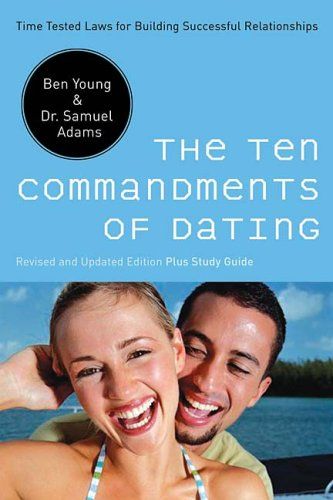
** Nourishing the Heart: The Emotional Diet of Healthy Dating
Golden Hook & Introduction
SECTION
Socrates: Why do we crave what hurts us? In nutrition, we call it junk food—engineered to taste amazing in the moment, but ultimately leaving us empty, sluggish, and depleted. In dating, it’s the thrill of the chase, the toxic mind games, the partner we know deep down isn't right for us, but we stay anyway because we're hungry for connection. Today, we’re looking at Ben Young’s through a completely fresh, analytical lens. Joining me is Büşra Bayıroğlu, a dietitian and healthcare professional who understands the deep connection between what we consume—physically and emotionally—and how we thrive. Büşra, welcome.
Büşra Bayıroğlu: Thank you, Socrates. It’s wonderful to be here. You know, when I first read Ben Young's book, I couldn't help but see the striking parallels between physical nutrition and emotional health. In my work, I see how people turn to quick-fix diets or comfort foods when they are starving for something deeper. The same thing happens in our romantic lives. We settle for relational 'empty calories' because we don't know how to nourish our souls.
Socrates: A relational empty calorie. That is a striking image. Today, we're going to tackle this book from two distinct angles. First, we'll explore the relational 'junk food' we must avoid—specifically, the traps of playing games and settling out of fear. Then, we'll discuss the 'boundary diet'—how guarding your heart and pacing yourself creates the ultimate environment for love to thrive. Büşra, where does this hunger for toxic patterns begin?
Büşra Bayıroğlu: It begins with a lack of self-awareness, Socrates. Just like someone who skips meals all day and then binges on whatever is closest, a person who is emotionally starved will accept any attention, even if it's toxic. Young's book lays down these 'commandments' not to restrict us, but to protect our emotional metabolism.
Deep Dive into Core Topic 1
SECTION
Socrates: Let us look at this idea of emotional starvation. In, Young talks about the commandment: 'Thou shalt not play games.' He tells the story of Sarah and Mark. Sarah was a young woman who desperately wanted a committed relationship. Mark was charismatic but highly inconsistent. He would call her constantly for a week, then disappear for ten days. Sarah found herself constantly checking her phone, analyzing every text, and waiting by the door. When Mark finally did call, she experienced this massive rush of relief and excitement. But it never lasted. She was trapped in a cycle. Büşra, as an analytical thinker, how do you diagnose Sarah's situation?
Büşra Bayıroğlu: Oh, Sarah was addicted to the emotional sugar rush. In dietetics, we talk about how simple carbohydrates cause a rapid spike in blood glucose, followed by a massive crash that leaves you hungrier than before. Mark’s hot-and-cold behavior was doing the exact same thing to Sarah’s brain. The intermittent validation was the sugar spike. The silence was the crash.
Socrates: And why do we mistake this crash-and-spike cycle for passion? Why do we convince ourselves that this anxiety is actually love?
Büşra Bayıroğlu: Because we confuse drama with depth. When you are starving, even a rotten apple looks like a feast. Sarah was terrified of being alone—what I would call emotional starvation. When you are in that state, your critical thinking shuts down. You ignore the red flags. You tell yourself, 'Oh, he's just busy,' or 'He's just scared of commitment, but I can fix him.' We settle for these crumbs because we don't believe we deserve a full, nourishing meal.
Socrates: Young’s commandment 'Thou shalt not settle' speaks directly to this. He argues that settling is a slow death for the soul. But how does one cultivate the discipline to walk away from the junk food when they are starving? It is easy to say 'don't eat the donut,' but when you haven't eaten in days, the donut is all you can think about.
Büşra Bayıroğlu: Exactly! And that’s where preventative care comes in. You can't start a healthy diet when you are already in a state of extreme deprivation; you have to build healthy habits daily. In relationships, this means cultivating a rich life outside of dating. Your friends, your career, your hobbies, your self-care—these are your daily meals. If your life is already full of nourishing elements, you won't be desperate enough to settle for someone who treats you like an option. You'll look at Mark's inconsistent behavior and say, 'No thanks, that doesn't fit my nutritional plan.'
Socrates: So, self-worth is the baseline nutrition that prevents us from binging on toxic partners?
Büşra Bayıroğlu: Precisely. If you don't know your own value, you let other people define your price tag. In the book, Young emphasizes that dating should be an addition to an already complete life, not a desperate search for a missing piece. If you enter a relationship looking for someone to save you, you are setting yourself up for a highly dysfunctional dynamic.
Socrates: It seems we often use other people to self-medicate our own loneliness. But what happens when the initial rush of the game wears off? What is the long-term cost of consuming this relational junk food?
Büşra Bayıroğlu: It erodes your emotional lining, Socrates. Over time, you develop a kind of emotional insulin resistance. You become numb to healthy, stable partners because they don't give you that chaotic high. You start to think peace is boring. I’ve seen people who have spent years in toxic relationships, and when they finally meet someone kind and consistent, they say, 'There’s no spark.' But that 'spark' they are looking for is actually just anxiety.
Deep Dive into Core Topic 2
SECTION
Socrates: That is a profound insight—mistaking peace for boredom because our emotional palates have been ruined by chaos. This brings us naturally to our second core topic: the 'boundary diet.' Young writes extensively about guarding your heart and pacing the relationship. He shares another case study: David and Jessica. They met at a mutual friend's party and felt an instant, overwhelming connection. Within two weeks, they were spending every single day together. They shared their deepest childhood traumas, their darkest secrets, and began planning their wedding. It was a whirlwind. But by month two, the pressure was suffocating. David felt crowded; Jessica felt abandoned when he asked for space. The relationship imploded as quickly as it began. Büşra, how do we analyze this through the lens of pacing and boundaries?
Büşra Bayıroğlu: This is the classic 'crash diet' of romance. David and Jessica tried to lose fifty pounds of loneliness in two weeks. They bypassed the natural, slow process of building trust and intimacy. In nutrition, if you starve yourself on a crash diet, your metabolism slows down, your body goes into panic mode, and eventually, you rebound and gain all the weight back, often ending up unhealthier than before. David and Jessica experienced emotional burnout because they consumed too much intimacy, too fast, without the structural support of time and proven character.
Socrates: Why do we rush? What is the hurry to reveal everything, to merge lives so quickly?
Büşra Bayıroğlu: It’s the illusion of safety. We think that if we share our deepest secrets immediately, we can bypass the scary, vulnerable phase of getting to know someone. It’s a shortcut. But there are no shortcuts to genuine trust. Trust is built in drops, but lost in buckets. When you pour your entire heart out to someone you barely know, you are giving them a map of your vulnerabilities before they have proven they won't use it against you.
Socrates: Young’s commandment is 'Thou shalt guard your heart.' To some, this sounds defensive, as if we are building high walls to keep everyone out. How do we distinguish between a healthy boundary and a wall of isolation?
Büşra Bayıroğlu: I love this question, Socrates. Think of boundaries not as a brick wall, but as a cell membrane. In biology, a cell membrane is selectively permeable. It is highly active. It lets in the nutrients, the oxygen, the things that keep the cell alive, but it blocks the toxins and waste. A brick wall keeps everything out, which means the cell starves. A lack of boundaries lets everything in, which poisons the cell. A healthy boundary means you are open to love, but you pace the entry. You observe how a person handles your small boundaries before you trust them with your big ones.
Socrates: How does that look in practice? Can you give me an example of a 'small boundary' in the early stages of dating?
Büşra Bayıroğlu: Absolutely. A small boundary could be as simple as saying, 'I can't make it tonight, I have plans with my friends,' or 'I’d prefer to take things a bit slower before we talk about our past relationships.' How the other person responds to that is incredibly telling. If they respect your space and your timeline, that’s a healthy sign. If they get defensive, guilt-trip you, or push past your boundary, they are showing you that they don't respect your autonomy. That is a major red flag.
Socrates: It is a diagnostic tool. By setting a small limit, you test the safety of the environment.
Büşra Bayıroğlu: Exactly! It’s like testing the water temperature before you dive in. If you just jump in headfirst without checking, you might hit rocks. Pacing yourself allows you to observe the other person's character over time and in different seasons. How do they handle anger? How do they treat service staff? How do they react when things don't go their way? You can't learn these things in a two-week whirlwind.
Socrates: It requires patience, which is perhaps the rarest ingredient in modern dating. We live in an era of instant gratification. We swipe, we order, we consume. How do we cultivate the patience required for this 'boundary diet' in a culture that demands instant results?
Büşra Bayıroğlu: We have to shift our focus from the destination to the process. In my field, I tell clients that sustainable weight loss isn't about reaching a magic number on the scale; it's about falling in love with a healthy lifestyle. In dating, we need to stop looking at every first date as a potential spouse and start looking at it as an opportunity to practice our boundaries, to learn about ourselves, and to connect with another human being. When you take the pressure off the outcome, you naturally slow down.
Synthesis & Takeaways
SECTION
Socrates: We have covered a vast landscape today, Büşra. We have looked at how the chaos of dating games acts as a toxic sugar rush, and how settling is the result of emotional starvation. We have also explored how boundaries act as a healthy cell membrane, protecting us while allowing genuine love to enter at a sustainable pace. If you were to synthesize this 'relationship recipe' for our listeners, what would be the core message?
Büşra Bayıroğlu: The core message is that healthy relationships require the same discipline, self-respect, and patience as a healthy body. You cannot build a strong, vibrant life on a diet of emotional junk food and crash-and-burn intimacy. You have to value yourself enough to set boundaries, and you have to trust the process enough to let love grow slowly.
Socrates: And for our listeners who are currently feeling 'hungry'—perhaps they are lonely, or caught in a cycle of toxic dating—what is one actionable step they can take today to begin their emotional detox?
Büşra Bayıroğlu: I would recommend keeping an 'Emotional Food Diary.' For the next week, pay close attention to how your interactions make you feel. When you text that person who plays games, does it leave you feeling energized or anxious? When you spend time with your friends, do you feel nourished or drained? Start tracking what you are consuming emotionally. Once you become aware of the 'empty calories' you are letting into your life, you can make the conscious choice to start choosing foods—and relationships—that actually feed your soul.
Socrates: An Emotional Food Diary. A simple, yet incredibly powerful tool to bring awareness to our relational habits. Büşra, thank you for sharing your unique perspective with us today. You have given us a beautiful, practical framework for understanding how to nourish our hearts.
Büşra Bayıroğlu: Thank you, Socrates. It was an absolute pleasure. Remember, everyone deserves to be nourished, not just fed.
Socrates: Indeed. To our listeners, as you go about your week, ask yourself: Are you feeding your heart real sustenance, or are you just settling for the quick fix? Until next time, stay curious, and guard your heart.