

Personalized Podcast
Golden Hook & Introduction
SECTION
Socrates: Noragbai, let me ask you a question. What if the most damaging person in your organization isn't the cynic, but the relentless optimist? The leader who insists everything is always 'great' and we're always 'crushing it'?
Noragbai P Naimah: That's a provocative question, Socrates. It cuts right against the grain of modern corporate culture, which often demands that 'positive vibes only' attitude. But I see the danger. It's a culture that can breed denial, where bad news is buried until it's a crisis. It feels good in the short term, but it's ultimately fragile.
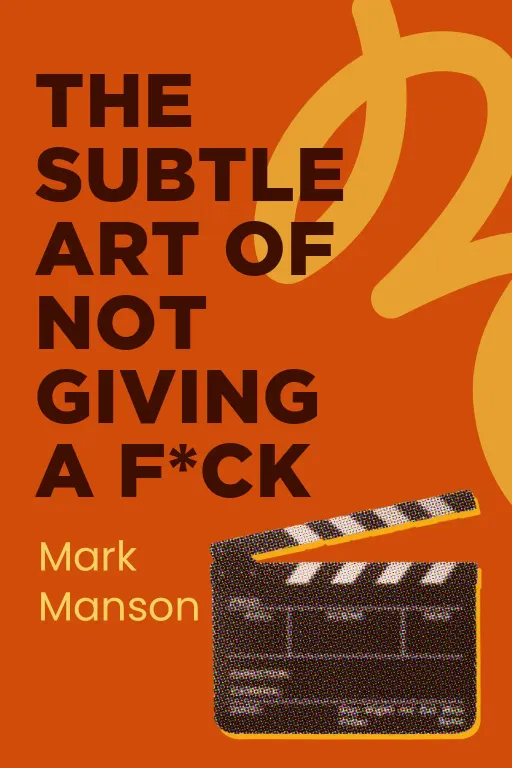
Socrates: Exactly. And that's the territory we're exploring today through the lens of a book that's practically a hand grenade thrown into the self-help section: Mark Manson's 'The Subtle Art of Not Giving a F*ck.' It’s not about being indifferent; it’s about choosing what to care about. Today we'll dive deep into this from three perspectives. First, we'll explore why that relentless pursuit of positivity can be toxic for a team. Then, we'll discuss how true strategy is about choosing which problems are worth solving. And finally, we'll focus on why saying 'no' is one of the most powerful tools a leader has.
Noragbai P Naimah: I'm ready. It sounds like a much-needed dose of reality for the world of leadership.
Deep Dive into Core Topic 1: The Problem with Positivity
SECTION
Socrates: So let's start there. Why is this constant positivity so dangerous? Manson calls it the "Feedback Loop from Hell." It’s this bizarre, modern anxiety where you feel bad... for feeling bad. You get anxious, then you get anxious about being anxious. You feel angry, then you get angry at yourself for feeling angry. It’s a spiral.
Noragbai P Naimah: And in a leadership context, that translates to a team feeling stressed about not being happy enough or successful enough. A leader who only projects success creates an environment where team members feel like they're failing if they encounter a setback. They become afraid to bring up problems.
Socrates: Precisely. And Manson has this fantastic, darkly humorous story to illustrate the antidote. He imagines a superhero called "Disappointment Panda." This isn't your typical hero. He doesn't tell you that you can be anything you want to be. Instead, he waddles up to your door and tells you the harsh truths you need to hear.
Noragbai P Naimah: I love that. What kind of truths?
Socrates: Well, he might tell someone, "Sure, making more money is nice, but it won't make your kids love you." Or, "That 'friendship' you're so proud of? It's really just a constant attempt to impress people." The point Manson makes is that pain and negative feedback are biologically useful. They are nature's way of inspiring change. To illustrate this, he tells a parable about a young panda named Pip who is obsessed with finding constant happiness.
Noragbai P Naimah: Okay, I'm listening.
Socrates: Pip believes if he can just find the perfect bamboo shoot, the perfect napping spot, he'll be happy forever. So he finds the most delicious bamboo imaginable, and for a moment, it's bliss. But the pleasure fades. He's left feeling empty. So he tries meditating for hours, but his mind is just filled with thoughts about how he be feeling happier. He's caught in that Feedback Loop from Hell.
Noragbai P Naimah: He's anxious about not being happy enough.
Socrates: Exactly. Finally, an old, wise panda tells him, "Happiness isn't something you chase. It arises from solving problems." The wise panda suggests Pip focus on helping other pandas and protecting the forest. So Pip starts cleaning up the forest and teaching younger pandas to climb. And in doing that work, in solving those problems, he finds a deep sense of purpose and fulfillment he never got from chasing pleasure. He realizes happiness isn't about feeling good all the time; it's a byproduct of living a meaningful life.
Noragbai P Naimah: That's a powerful shift in perspective. So, in a business context, the 'Disappointment Panda' is the leader who isn't afraid to be the wise old panda. The one who says, "This project is off-track, and here's why," or "These quarterly numbers are not good enough, and we need to confront that." They deliver the pain that forces adaptation. They reframe the team's purpose not as 'let's all feel great,' but as 'let's solve this meaningful problem together.'
Socrates: You've hit the nail on the head. The leader's job isn't to be a cheerleader for a happiness that doesn't exist; it's to be a Chief Problem Solver. To make the struggle meaningful.
Noragbai P Naimah: And to create a culture where problems are seen as opportunities for that meaningful work, not as signs of personal failure. That's a huge shift.
Deep Dive into Core Topic 2: Strategy as Pain Selection
SECTION
Socrates: Exactly. And if pain and problems are inevitable, Manson's next big idea is that the leader's most critical job is to them. This brings us to our second point: strategy as pain selection. Everyone wants the reward, the success. But Manson asks a better question: "What pain do you want to sustain? What are you willing to struggle for?" Because that choice determines everything.
Noragbai P Naimah: That reframes strategy completely. It's not about finding the path of least resistance. It's about choosing a mountain worth climbing, knowing full well that the climb will be hard.
Socrates: And the metric you use to define "worth climbing" is your value. He tells this brilliant story comparing two musicians who got kicked out of their bands right before they became massive. The first is Pete Best, the original drummer for The Beatles. The second is Dave Mustaine, the original guitarist for Metallica.
Noragbai P Naimah: Two brutal career moments.
Socrates: Absolutely. Now, Pete Best was devastated. He fell into a depression. But eventually, he met his wife, started a family, and got a steady job. Years later, in an interview, he said, "I'm happier than I would have been with the Beatles." His values shifted. He chose family and stability over fame and fortune. He found a struggle he was happy with.
Noragbai P Naimah: Okay, so he redefined his metric for a good life.
Socrates: Now contrast that with Dave Mustaine. After getting kicked out of Metallica, he was consumed by revenge. He formed his own band, Megadeth, which became a huge, multi-platinum success. By any objective measure, he was a rock god. But in a 2003 interview, he was nearly in tears, confessing he still considered himself a failure. Why? Because Metallica was still bigger.
Noragbai P Naimah: Wow. So his metric for success was "be more successful than Metallica." A value that was external and completely outside of his control.
Socrates: You got it. He chose a shitty value, in Manson's terms. And it made him miserable despite his incredible success. Pete Best chose a good value—one that was internal and controllable—and found peace. Manson argues that this is the core of life. We are defined by the problems we're willing to solve.
Noragbai P Naimah: This is a fantastic lens for analyzing corporate strategy. A company's strategy is its chosen value. Is our core value to "crush the competition," like Mustaine? That's an uncontrollable, external metric that leads to burnout and reactive decisions. Or is our value to "build the most elegant and user-friendly product in our industry"? That's an internal, process-oriented value. It's a struggle you can control and find joy in.
Socrates: So you're saying a leader's job is to define the company's "Pete Best" value, not its "Dave Mustaine" value?
Noragbai P Naimah: Precisely. A leader must ask: What is the "good problem" we, as an organization, are uniquely suited to solve? What struggle will give our work meaning, regardless of what our competitors are doing? Manson is essentially giving us a filter to distinguish between good and bad corporate values, and by extension, good and bad strategies.
Deep Dive into Core Topic 3: The Freedom of Focus
SECTION
Socrates: And choosing those values, as you said, means rejecting others. It means saying 'no.' This is where Manson's argument about commitment comes in, which is our final point: the freedom of focus. He argues that in our modern world, we're paralyzed by options. We want to keep all our doors open. But this "absolute freedom" is actually meaningless.
Noragbai P Naimah: The paradox of choice. More options lead to less satisfaction.
Socrates: Exactly. He tells his own story to illustrate this. For about five years, he lived as a digital nomad, traveling to over 55 countries. He had ultimate freedom. He could go anywhere, do anything, meet anyone. But he describes it as a period of deep, underlying meaninglessness. The relationships were superficial, the experiences fleeting. There was no depth because there was no commitment.
Noragbai P Naimah: He was breadth-rich but depth-poor.
Socrates: A perfect way to put it. He eventually realized that meaning comes from rejecting alternatives. It comes from choosing one place, one person, one project, and investing yourself in it. He moved back to the US, met his wife, and found that the commitment, the narrowing of his options, actually gave him more freedom because it focused his energy and eliminated the constant, low-level anxiety of "what am I missing out on?"
Noragbai P Naimah: This is so applicable to leadership and organizational design. An organization with no commitments, that says 'yes' to every shiny new opportunity, is like that traveler. It's busy, it's exploring, but it has no real identity. It's just reacting.
Socrates: It's rudderless.
Noragbai P Naimah: Exactly. A strong leader creates identity by saying 'no.' They commit. They say, "We are going to enter that market, even though it looks tempting." "We are pursuing that customer segment, because it's not our core." That act of rejection is what defines the mission. It's what gives the team's 'yes' its true power and focus. It builds a culture where people know what mountain they are climbing.
Socrates: So commitment isn't a cage; it's a focusing lens.
Noragbai P Naimah: It's the ultimate focusing lens. It tells everyone in the organization what to give a fuck about, and, just as importantly, what to. That clarity is liberating. It allows people to dedicate their best work to the struggle the leader has chosen, without being distracted by a thousand other possibilities.
Synthesis & Takeaways
SECTION
Socrates: This has been a fascinating deconstruction, Noragbai. So, if we were to boil down Manson's philosophy for a leader, it seems to come down to three counterintuitive truths. First, embrace problems; don't run from them. Be the Disappointment Panda.
Noragbai P Naimah: Second, recognize that your strategy is your choice of struggle. Pick a good problem to solve, one based on internal, controllable values, not external validation.
Socrates: And third, understand that commitment creates freedom. Use the power of 'no' to reject distractions and forge a strong, focused identity for your team. It's not about indifference; it's about radical, intentional focus.
Noragbai P Naimah: It's a framework for building resilience, purpose, and authenticity. Things that are desperately needed in leadership today.
Socrates: I couldn't agree more. So, to leave our listeners with something to chew on, for every leader listening: What uncomfortable truth does your team need to hear from you this week? And what are you willing to say 'no' to, in order to give your 'yes' its true power?
Noragbai P Naimah: Powerful questions. They force you to choose what truly matters.
Socrates: And that, according to Mark Manson, is the whole point. Noragbai, thank you for this incredibly insightful conversation.
Noragbai P Naimah: The pleasure was all mine, Socrates. Thank you.









