Debugging Life: Why the Best Code (and Lives) Embrace the Bugs
Golden Hook & Introduction
SECTION
Nova: Imagine you are running a program, and it hits a minor error. But instead of handling it, the system panics. It triggers another error, which triggers another error, spinning faster and faster until—boom—stack overflow. Your computer freezes. Well, as it turns out, our brains do the exact same thing. Mark Manson calls this the Feedback Loop from Hell, and it is the silent engine behind so much of our modern anxiety. We feel anxious, and then we get anxious about the fact that we are anxious. We get angry about being angry. It is a total system crash! Today, we are debugging this mental software. I am Nova, and joining me is Charity, a software engineer who knows a thing or two about handling system crashes. Charity, welcome!
Charity: Thanks, Nova! I am so excited to be here. And honestly, when I first read about the Feedback Loop from Hell, I immediately thought, oh, that is just infinite recursion without a base case! It is a classic programming bug, but we run it in our heads every single day.
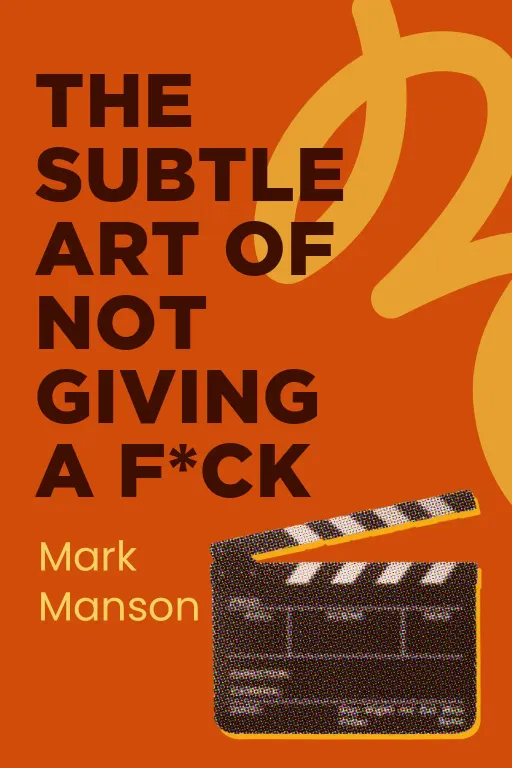
Nova: Oh, I love that! An infinite recursion bug. That is exactly what it is! Today, we are going to tackle Mark Manson's brilliant, counterintuitive book, ck*, from three distinct angles. First, we will look at how to break that infinite loop of anxiety by learning the art of not trying. Second, we will talk about refactoring our personal metrics using the wild, contrasting stories of two legendary rock stars. And finally, we will explore the Do Something principle to help us overcome paralysis and start compiling our lives through action. Ready to dive in, Charity?
Charity: Let's do it. Let's look at the source code.
Deep Dive into Core Topic 1
SECTION
Nova: Awesome. So, let's start with Chapter One, which has this incredibly jarring title: Don't Try. Manson opens the book with the story of Charles Bukowski. Now, Bukowski was a writer who spent decades being rejected. He was an alcoholic, a gambler, a self-proclaimed loser. He worked as a letter-filer at a post office, earning pennies, and most of his life was a complete mess. But when he finally got a break at age fifty, he didn't pretend to be some reformed, perfect citizen. He wrote honestly about his flaws, his dirtiness, his failures. And his books sold millions! When he died, his tombstone was engraved with just two words: Don't try. Charity, when you hear "don't try," especially in a high-pressure industry like tech, how does that land with you?
Charity: You know, at first, it sounds completely wrong. In tech, we are told to constantly optimize, upskill, and grind. But when you look closer, Bukowski's success didn't come from a lack of effort. It came from his complete comfort with his own limitations. He didn't waste energy trying to successful or perfect. He accepted his baseline. In software engineering, we have this concept of "imposter syndrome," which is incredibly common, especially in your first couple of years. You spend so much energy trying to hide the fact that you don't know everything. You are anxious about being anxious. But "don't try" means accepting that you are a junior, you are going to write buggy code, and you don't know everything. Once you accept that error state, the anxiety clears up, and you can actually focus on learning.
Nova: That is so profound! Accepting the error state. Because Manson talks about how our culture is obsessed with positive expectations. We are bombarded with messages to be happier, healthier, richer, more popular. But Manson argues that this constant focus on the positive only highlights what we. It is the "backwards law" from philosopher Alan Watts: the desire for a more positive experience is itself a negative experience, whereas the acceptance of one's negative experience is itself a positive experience.
Charity: It is so true. It is like trying to force a failing test to pass by just changing the assertion, rather than fixing the underlying logic. You are just masking the bug! Manson actually introduces this hilarious character to illustrate this—the Disappointment Panda. Imagine a superhero who wears a cheesy mask and goes door-to-door, telling people harsh truths they don't want to hear. Like, "Hey, your business idea is actually terrible," or "You are only friends with them to make yourself look good."
Nova: Oh, I would love a visit from the Disappointment Panda! Well, maybe not it, but we all need it, right? He is like the ultimate debugger. He doesn't care about making you feel good in the moment; he cares about the truth. Because pain and struggle are biologically useful. If you stub your toe, that physical pain is a signal telling you to watch where you are walking. Emotional pain is the same. It is a signal that something in our lives needs attention. But we live in a world where we try to numb that pain with constant positivity or distraction.
Charity: Right, we try to catch the exception and just ignore it. In coding, if you write an empty "catch" block, the program might not crash immediately, but it will behave in bizarre, unpredictable ways later on because you ignored the error. Manson is saying we need to let the error happen, feel the discomfort, and use that data to make better choices. It is about choosing what to care about. You can't care about everything. If you give a fuck about every minor inconvenience—like a cashier not accepting your coupon, or a slow build time on your code—you are going to run out of memory. Your system will crash. Maturity is about becoming highly selective about the "fucks" you are willing to give.
Nova: Exactly! We have a limited bandwidth, a limited amount of RAM, if you will. We have to allocate it to what truly matters. And that brings us to the core question: how do we decide what actually matters? How do we configure our system?
Deep Dive into Core Topic 2
SECTION
Nova: This brings us to Chapter Four, which is all about the value of suffering and how we measure our lives. Manson tells this incredible double story about two musicians who were kicked out of their bands right before those bands became global phenomena. The first is Dave Mustaine. In 1983, he was the lead guitarist for Metallica. They were about to record their first album when the other members kicked him out because of his drinking and anger issues. Mustaine was furious. He spent the next few years channeling that anger into forming a new band: Megadeth. Megadeth went on to become legendary, selling over twenty-five million albums! But here is the catch: in a 2003 interview, Mustaine admitted he still felt like a failure. Why? Because his metric for success was "beating Metallica." And since Metallica sold over a hundred million albums, Mustaine always felt like he was in their shadow.
Charity: That is such a tragic waste of success, isn't it? He built a massive, legendary career, but his internal configuration file was hardcoded to a metric he couldn't control.
Nova: It really is. Now, contrast that with Pete Best. In 1962, he was the original drummer for The Beatles. Right before they hit it big, the band's manager fired him and replaced him with Ringo Starr. Best fell into a deep depression. He watched his former friends become the most famous people on the planet. But later in life, Best took a totally different path. He married, had a family, took a stable job, and in a 1994 interview, he said, "I'm happier than I would have been with the Beatles." He realized that the constant fame and pressure of being a Beatle probably would have destroyed him. He refactored his values. He stopped measuring his worth by fame and started measuring it by family, connection, and peace.
Charity: This is a perfect example of what we call "vanity metrics" in the tech world. In software, you can track things like "number of lines of code written" or "number of daily active users" who just click a button once. Those metrics look great on a slide deck, but they don't actually tell you if your product is healthy or useful. Dave Mustaine was chasing a vanity metric—external validation and superiority. Pete Best refactored his system to focus on "core metrics"—things that were immediate, controllable, and grounded in reality.
Nova: "Refactoring his system." I love that term! It fits so perfectly. Manson actually defines what makes a value "good" versus "bad." Good values are reality-based, socially constructive, and immediate and controllable. Things like honesty, vulnerability, standing up for yourself, or learning a new skill. Bad values are superstitious, socially destructive, and uncontrollable. Things like popularity, being liked by everyone, material wealth, or always being right.
Charity: Yes! If your value is "always being right," you are setting yourself up for a lifetime of bad data. You will ignore any evidence that contradicts your beliefs. We see this in the book with the story of Meredith Maran. In the late 1980s, during a period of intense therapy and personal struggle, she became convinced that her father had abused her as a child. It tore her family apart. But years later, she realized the memory was completely false, constructed out of her own insecurities and the suggestive techniques of her therapist. Her brain had created a false pattern to make sense of her pain. Our brains are meaning-making machines, but they are incredibly buggy! If we value certainty over truth, we will compile all kinds of false beliefs just to feel safe.
Nova: That is a heavy story, but it is such an important warning. Unwavering certainty is the enemy of growth. Manson actually says, "Certainty is the enemy of growth. Instead of searching for certainty, we should be in constant search of doubt." We need to constantly run unit tests on our own beliefs! We have to ask ourselves: "What if I'm wrong? What would it mean if I were wrong?"
Charity: Absolutely. In engineering, we write unit tests specifically to try and break our own code. We want to find the edge cases where our logic fails. If you don't test your assumptions, the real world will do it for you, and usually at the worst possible time. Manson's Law of Avoidance says that the more something threatens your identity, the more you will avoid it. If you identify as "the smartest person in the room," you will avoid hard problems where you might fail. But if you let go of that identity—if you accept that you are wrong about almost everything, but you are trying to become a little less wrong every day—that is incredibly liberating. It frees you up to actually learn and iterate.
Deep Dive into Core Topic 3
SECTION
Nova: It really does. And that brings us to our third core topic, which is all about how we actually make those changes. How do we move from being wrong to being a little less wrong? In Chapter Seven, Manson introduces the "Do Something" principle. He starts with this great historical anecdote about Pablo Picasso. When Picasso was an old man, he was sitting in a café, doodling on a napkin. A woman recognized him, approached him, and asked if she could buy the napkin. Picasso agreed and asked for twenty thousand dollars. The woman was shocked! She said, "But it only took you two minutes to draw that!" And Picasso replied, "No, my dear. It took me over sixty years to draw this."
Charity: I love that story. It is a reminder that mastery isn't a single event; it is the accumulation of thousands of tiny, failed attempts. Picasso could draw that masterpiece in two minutes because he had spent sixty years making mistakes and learning from them.
Nova: Exactly. But so many of us get paralyzed because we think we need inspiration before we can take action. We think the sequence is: Inspiration leads to Motivation, which leads to Action. If we don't feel inspired, we don't move. But Manson argues that this is a one-way street that actually goes in a circle! Action isn't just the effect of motivation; it is also the of it. The real loop is: Action leads to Inspiration, which leads to Motivation, which leads to more Action. Manson learned this from his high school math teacher, Mr. Packwood, who used to tell his students: "If you don't know how to solve a problem, just start writing something. Even if it is wrong, the act of writing will get your brain moving."
Charity: Oh, Mr. Packwood was a genius! We use this exact principle in software development all the time. We call it "prototyping" or "writing a tracer bullet." When you are staring at a blank screen, trying to design a complex system, it is incredibly intimidating. You get "analysis paralysis." But if you just force yourself to write a terrible, messy, buggy prototype—just get to compile—suddenly you have a starting point. You see what works and what doesn't. The action of writing bad code generates the motivation to write better code.
Nova: Yes! "Just get something to compile." That is such a great way to put it. It takes the pressure off. You don't have to write a masterpiece on day one. You just have to do. Even if that something is just opening the document, or writing one line of code, or making one phone call. Manson says that if we fail, but we have the metric of "just doing something," then even failure is a success because it provides us with data. It moves us forward.
Charity: It really does. It reminds me of the story of William James in the 19th century. He was born into this wealthy, brilliant family, but he suffered from terrible health issues—eye problems, back spasms, severe depression. He tried painting, he tried medical school, he even went on an expedition to the Amazon and contracted smallpox! He felt like a total failure and was actively contemplating suicide. But then, he decided to run an experiment. He committed to spending one year believing that he was one hundred percent responsible for everything that happened in his life, regardless of external circumstances. He decided to take action as if he had total agency. And what happened? He went on to become the father of American psychology, a Harvard professor, and one of the most influential philosophers of his time!
Nova: It is an incredible transformation. And it highlights the crucial distinction Manson makes between and. It might not be your fault that you were dealt a bad hand—whether that is a genetic illness, a difficult childhood, or a sudden layoff. But it is always your responsibility to choose how you respond to it. Fault is past tense; responsibility is present tense.
Charity: Exactly. You can't control the cards you are dealt, but you are the one who has to play the hand. In poker, the best players aren't the ones who always get the best cards; they are the ones who make the best decisions with the cards they have. Taking responsibility is how we reclaim our power. If we blame external factors, we are giving away our agency. We are letting the environment run our code.
Synthesis & Takeaways
SECTION
Nova: Wow, Charity. We have covered so much ground today. From breaking the Feedback Loop from Hell by accepting our baseline, to refactoring our personal metrics like Pete Best, to compiling our lives through the "Do Something" principle. If you had to synthesize all of this into one actionable takeaway for our listeners—especially those who might be feeling overwhelmed or stuck in their own infinite loops—what would it be?
Charity: I would say: treat your life like an open-source project. Don't expect the first release to be perfect. It is going to have bugs, and that is okay. The goal isn't to write bug-free code on the first try; the goal is to keep iterating, keep debugging, and make sure you are measuring your success by metrics you actually control. Next time you feel that emotional stack overflow coming on, just pause, accept the error state, and ask yourself: "What is one tiny, messy action I can take right now to get things moving?"
Nova: "Treat your life like an open-source project." That is beautiful, Charity. Thank you so much for sharing your insights and your analytical brilliance with us today. This has been an incredibly encouraging and practical conversation.
Charity: Thank you, Nova! It was an absolute blast.
Nova: And to our listeners, thank you for tuning in. We leave you with one question to ponder today: What is one "shitty value" you are ready to delete from your system configuration, and what controllable, reality-based value will you replace it with? Let us know, and until next time, keep debugging, keep iterating, and remember—it is okay if things suck sometimes. Just do something!