Beyond Concrete: The Hidden History of Infrastructure's Impact
Golden Hook & Introduction
SECTION
Nova: What if I told you the bridges we cross, the pipes that deliver our water, even the very streets we drive on, aren't just feats of engineering, but colossal monuments to human ambition, political maneuvering, and sometimes, even outright ruthlessness?
Atlas: Hold on, so you're saying my morning commute isn't just about traffic, it's a political statement? That sounds incredibly… loaded.
Nova: Exactly! It’s far more than just concrete and steel. Today, we’re diving into a fascinating book, "Beyond Concrete: The Hidden History of Infrastructure's Impact" by Dr. Evelyn Reed. She's a brilliant urban historian who actually started her career as a civil engineer, which gives her this incredible ability to blend the technical understanding of how things are built with the socio-political insights of they're built that way, and what stories they reveal about our society.
Atlas: Oh, I like that. It's not just the blueprint, it's the narrative embedded within it. For anyone who sees the bigger picture, who wants to build for lasting impact, that idea of a 'hidden history' almost feels like a blind spot we might be missing in our own fields. How do we even begin to look beyond the obvious?
Nova: Well, that's precisely where we start. Because what Dr. Reed argues, and what we often overlook, is that infrastructure is never neutral. It's a social and political artifact, a mirror reflecting our values, our power structures, and sometimes, our deepest flaws.
Unmasking the Infrastructure Blind Spot: Power, Politics, and Human Stories
SECTION
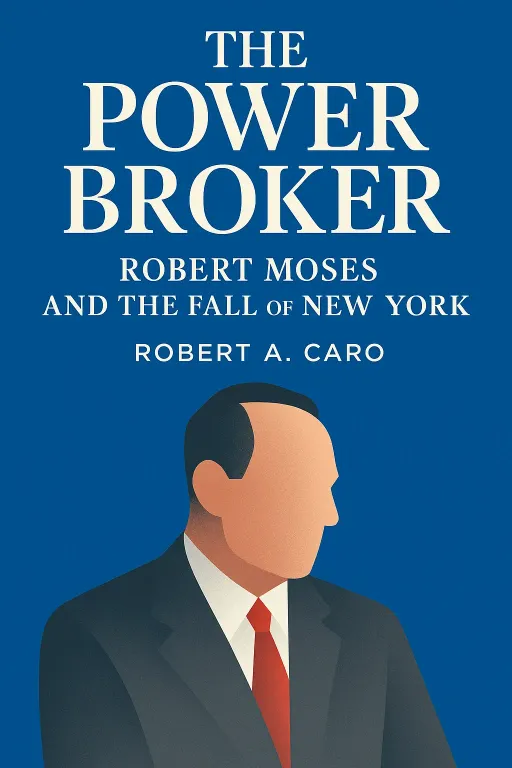
Nova: When we talk about this blind spot, there's no better, or perhaps more chilling, example than the story of Robert Moses in New York City. His life, meticulously chronicled in Robert Caro's epic biography "The Power Broker," shows how one man, without ever being elected to a major office, profoundly reshaped one of the world's greatest cities.
Atlas: Wow. So, an unelected official had that much sway? That’s going to resonate with anyone trying to navigate complex stakeholder landscapes today. What was his secret?
Nova: His secret was an unparalleled understanding of power and how to wield it. Moses wasn't just an engineer; he was a political force of nature. He amassed an astounding number of public offices, often holding multiple positions simultaneously, giving him control over parks, bridges, tunnels, highways – an entire infrastructure empire. He used public authorities, which were semi-autonomous and could issue their own bonds, to bypass traditional democratic oversight.
Atlas: That sounds incredibly powerful, but also… terrifying. So, he had this grand vision for New York. What did that look like on the ground, and what was the human cost?
Nova: His vision was one of massive, car-centric modernization. He built expressways that cut through vibrant neighborhoods, displacing hundreds of thousands of people, often poor and minority communities. He built public parks, but then, famously, designed overpasses on Long Island's parkways too low for public buses, effectively preventing poorer residents who relied on public transport from accessing the beaches.
Atlas: Oh, I see. So the physical design wasn't just about engineering efficiency, it was a deliberate social barrier. That’s a stark example of infrastructure mirroring societal values, or lack thereof. How do you, as someone thinking about urban infrastructure and ethical stewardship, balance a grand vision with avoiding that kind of unchecked power and devastating social impact?
Nova: It’s the core ethical dilemma, isn't it? Moses saw himself as a visionary, bringing progress, but his methods were ruthless. He believed in his own superior judgment and was utterly dismissive of democratic processes or community input. He operated with an almost singular focus on efficiency and monumental scale, often at the expense of human connection and existing social fabric. His legacy is literally etched into the concrete of New York, a testament to what happens when engineering prowess is divorced from ethical consideration and democratic accountability.
Atlas: Honestly, that sounds like a cautionary tale for anyone building for lasting impact. It makes me wonder what 'unquestionable assumptions' we're making today that might have similar, unintended long-term consequences.
From Construction to Societal Architecture: Paradigm Shifts in Infrastructure Thinking
SECTION
Nova: And that naturally leads us to the second key idea we need to talk about: moving beyond the Moses paradigm. If his era represents one way of thinking about infrastructure, then how do we enact a paradigm shift, as Thomas Kuhn described in "The Structure of Scientific Revolutions," but for our built environment? Kuhn showed how old scientific frameworks are eventually replaced when they can no longer explain new observations. It's the same for cities.
Atlas: Okay, so applying 'paradigm shifts' to infrastructure. That's a fascinating leap. What are some of those 'old ways of thinking' about cities and resources that are now showing cracks? And what does a new ethical framework look like in this context?
Nova: Well, one 'old way' is the unquestioning assumption that more roads, more sprawl, more consumption of finite resources is always "progress." Or that technological fixes alone can solve complex social problems. For decades, urban planning was largely car-centric, leading to infrastructure that isolated communities, fueled dependency on fossil fuels, and contributed to environmental degradation. We built for convenience, perhaps, but not necessarily for well-being or resilience.
Atlas: It's like trying to turn a supertanker, right? Shifting a paradigm, especially in something as massive as infrastructure, sounds incredibly difficult. What does that even look like on the ground for someone focused on sustainable futures and environmental ethics? How do you begin to change those 'unquestionable' assumptions?
Nova: It starts with acknowledging that infrastructure is not just a technical problem; it’s a design problem for society itself. It means moving from mere construction to what Dr. Reed calls "societal architecture." This involves explicitly integrating environmental ethics, social equity, and long-term sustainability into every design decision, not as an afterthought, but as a foundational principle.
Atlas: So, it's about asking not just "Can we build this?" but "Should we build this, and for whom, and what will the ripple effects be decades from now?" It’s a deeper moral compass guiding the blueprint.
Nova: Exactly. It's about questioning those 'unquestionable' assumptions. For example, instead of just building more lanes, a paradigm shift might mean investing in robust public transit, bike infrastructure, and mixed-use developments that reduce the need for cars altogether. It means designing with climate resilience in mind, and ensuring that new developments don't exacerbate existing social inequalities. It's about anticipating tomorrow's challenges by deeply understanding yesterday's lessons, which is precisely why that historical lens is so critical.
Synthesis & Takeaways
SECTION
Nova: So, what we've really explored today is how infrastructure, from the grand ambitions of a Robert Moses to the quiet hum of our daily lives, is a profound reflection of our society's values, power structures, and ethical choices. It’s a living archive that shapes our past, present, and future.
Atlas: I guess that makes sense. For our listeners, especially those who are strategic architects, ethical stewards, and resilient innovators, it's clear that it's not just about you build, but what values you're embedding into the very fabric of our communities. The deeper lesson here is that every pipe, every bridge, every road is a decision about who we are and who we want to be.
Nova: Absolutely. And if we don't look beyond the concrete, if we don't understand the hidden histories and the power dynamics at play, then today's 'unquestionable' assumptions about urban infrastructure will inevitably become tomorrow's 'blind spots,' leading to unintended consequences we'll regret. The challenge, and the opportunity, is to build with purpose, with foresight, and with a deep ethical compass.
Atlas: That’s actually really inspiring. It makes you pause and think about the foundational assumptions in whatever field you're in.
Nova: Indeed. So, what 'unquestionable' assumption in your own field might be tomorrow's blind spot? We encourage you to ponder that this week. This is Aibrary. Congratulations on your growth!