The Structural Integrity of Leadership
Golden Hook & Introduction
SECTION
Nova: Strategy is often seen as a complex document, a carefully crafted blueprint. But what if the real strategy isn't written down at all? What if it's the invisible architecture of how your team actually talks, collaborates, and solves problems, day in and day out?
Atlas: Oh, that's a fascinating thought to kick off with, Nova. It really makes you question what we typically think of as "strategy." It sounds like we're not just talking about a plan on paper, but something much more alive and interconnected.
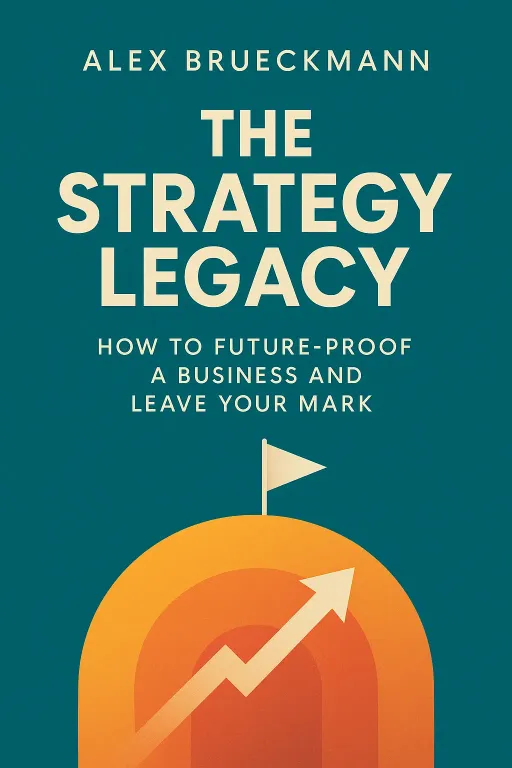
Nova: Exactly. Today, we're diving into ideas that challenge how we think about strategy and organizational success. We're drawing from insights by Alex Brueckmann in 'The Strategy Legacy' and Gene Kim and Steven J. Spear in 'Wiring the Winning Organization'.
Atlas: Sounds like we're getting into the nuts and bolts of what makes an organization actually, not just what it it's doing. For listeners like me who are focused on accelerating their career and developing leadership skills, this feels incredibly relevant.
Nova: Absolutely. Brueckmann, for instance, is a consultant who emphasizes that strategy is built through consistent leadership choices and culture, not just a static plan. And Kim and Spear, known for their work in IT and operations, look at the 'social circuitry' – the human connections that drive performance. It’s about the living, breathing organism of a company, not just its skeleton.
Strategy as a Living Legacy
SECTION
Nova: So, let's unpack Brueckmann's idea of strategy as a "living legacy." The core concept here is a radical departure from the traditional view of strategy as a document that gets created, approved, and then filed away. He argues that a strategy isn't truly established until it's embedded in the ongoing choices leaders make and the culture they cultivate.
Atlas: A living legacy. That implies it's something that grows, evolves, and has an impact over time, long after the initial decision or document is created. But how does that translate when leaders are swamped with daily crises, putting out fires, and just trying to keep operations running? Where does this "legacy building" fit in?
Nova: That's precisely the tension Brueckmann highlights. He's saying that the you handle those daily fires, the you make under pressure, the you use – these are the very things that build your strategy's legacy. It's not about setting aside special time for strategy; it's about embedding strategic thinking into the everyday fabric of leadership.
Atlas: So, it’s less about a grand strategy session and more about the sum total of thousands of micro-decisions made by leaders? For someone trying to develop their leadership potential, that feels both daunting and empowering. It means every interaction matters.
Nova: Precisely. Think of it like a sculptor and clay. The sculptor has a vision, but the final form emerges from the continuous, deliberate shaping of the material. The strategy document might be the initial sketch, but the living legacy is the finished, nuanced sculpture, formed by countless precise touches and adjustments. If the leadership consistently makes choices that reinforce a certain value – say, customer-centricity – that value becomes a cornerstone of the strategy's legacy, permeating the organizational culture.
Atlas: I can see that. It’s like a gardener tending a plot. They might have a blueprint for the garden, but the garden’s true legacy is built by the consistent watering, weeding, and pruning. If you neglect it, the blueprint means nothing. What are some tangible examples of this "intentional culture" that builds this legacy?
Nova: Great question. An intentional culture might prioritize transparency in decision-making, even when the news isn't good. Or it might foster a deep respect for diverse perspectives, actively soliciting feedback from all levels before making a significant shift. For instance, a company that consistently invests in employee development, even during tough economic times, is building a legacy of valuing its people. This isn't just a line item in a budget; it's a continuous choice that signals what the organization truly prioritizes.
Atlas: That makes sense. It sounds like it requires a high degree of self-awareness and discipline from leadership. It’s about building trust and credibility through consistent action, not just through pronouncements. It’s the difference between saying "we value innovation" and actually creating processes and giving people the psychological safety to try new things and fail without severe repercussions.
Nova: Exactly. And this is where the two ideas we're exploring today start to connect. Brueckmann's "living legacy" is the 'what' and 'why' of strategy – the guiding principles and the desired outcome. But that legacy is actually enacted, how those consistent choices are made and felt across the organization, that hinges on the next concept: social circuitry. If your culture is meant to support a legacy of innovation, but the channels for sharing innovative ideas are blocked, the legacy won't materialize.
Atlas: It’s like having a beautiful vision for a city, but the roads connecting the districts are full of potholes and traffic jams. The vision is there, but the execution is crippled. That perfectly sets us up to talk about this "social circuitry."
The Power of Social Circuitry
SECTION
Atlas: So, if strategy is this living legacy, how do we actually it happen on the ground? That sounds like it must come down to how people connect and communicate, right? How information flows, how problems get solved.
Nova: Precisely. Gene Kim and Steven J. Spear, in 'Wiring the Winning Organization,' introduce this powerful concept of "social circuitry." They posit that high-performing organizations are defined by how well their people are connected and how efficiently information flows through the hierarchy to solve problems. It's essentially the organizational nervous system or an intricate electrical grid.
Atlas: Social circuitry. I love that metaphor. It immediately brings to mind how a body reacts to a stimulus – a signal travels from the sensory organ, through the nervous system, to the brain, and then a response is sent back. If that signal gets garbled or delayed, the reaction is wrong, or worse, non-existent. What happens when that circuitry gets clogged in an organization? We've all been in meetings where ideas just die, or information gets lost going up the ladder, or you have to ask five different people to get a simple answer.
Nova: You've hit the nail on the head. Those are classic examples of bottlenecks in the social circuitry. When information is stuck, when people can't easily connect with the right colleagues or leaders to get clarity or make decisions, performance suffers. Imagine a company trying to respond to a sudden market shift. If the sales team's insights about customer demand can't quickly reach the product development team, or if a product team's concern about a technical flaw can't reach senior management for swift action, you're operating blind. The "living legacy" of being agile and customer-responsive is undermined by poor circuitry.
Atlas: So how do we even this "circuitry"? It sounds so abstract, almost invisible, but you're saying it's the fundamental driver of performance. For someone looking to accelerate their career and become a more effective leader, understanding this seems critical. Where do you even start diagnosing it?
Nova: Kim and Spear suggest looking at how information flows, not how it's to flow according to an organizational chart. It's about understanding who talks to whom, who influences whom, where decisions are made, and where requests get stalled. It involves asking questions like: When a problem arises, who is consulted? How quickly does information reach decision-makers? How does feedback loop back to the people doing the work? Often, the people on the front lines have the clearest insight into where the wires are frayed or disconnected.
Atlas: That’s a great point. The people doing the actual work often know where the friction points are, but their feedback might not be heard. So, a key part of building good circuitry is actively listening and creating pathways for that information to travel. It’s not just about the formal channels, but the informal ones too, right? Like who knows who in another department and can make a quick call?
Nova: Exactly. While formal structures are important, the informal networks are often the superhighways of information. A high-performing organization optimizes both. They ensure that formal processes are efficient and clear, but they also foster an environment where people feel comfortable reaching out across teams, sharing knowledge, and collaborating without excessive bureaucracy. Think about a company facing a complex, multi-faceted problem. If the engineers, marketers, and customer support teams can easily share insights and brainstorm together, they're much more likely to find a robust, integrated solution.
Atlas: I can picture that. It’s like when you’re building a race car. You need the best engine, but you also need every bolt, wire, and hydraulic line to be perfectly connected and functioning flawlessly for that engine to deliver its full power. If one wire is loose, the whole system falters. And I imagine this applies directly to leadership development – if I want to be an effective leader, I need to understand how to build and maintain these connections for my team, and how to escalate issues or share successes effectively.
Nova: Absolutely. And for business acumen, understanding this circuitry is vital for identifying operational inefficiencies or opportunities for collaboration that can lead to competitive advantage. It’s not just about understanding profit and loss statements; it’s about understanding the underlying human and informational flows that drive those numbers. It’s about seeing the organization as a dynamic system.
Synthesis & Takeaways
SECTION
Nova: So, as we weave these two powerful ideas together – Brueckmann's "living legacy" of strategy and Kim and Spear's "social circuitry" – we see a more complete picture of what makes organizations thrive. A brilliant, intentional legacy of strategic choices is essential, but it's rendered ineffective if the organization's pathways for communication, collaboration, and problem-solving are clogged or broken.
Atlas: It’s like having a visionary architect design a magnificent city, but then the city planners fail to build the roads, the power grid, and the water systems. The potential is immense, but it can never be realized. For us, as ambitious explorers and pragmatic strategists aiming for mastery, this means we need to focus on both the 'what' and the 'how'.
Nova: Precisely. The true competitive advantage isn't just a clever plan or a brilliant idea. It's a robust, adaptable organizational "nervous system" – the social circuitry – guided by consistent, values-driven leadership that builds a clear, enduring strategic legacy. It’s about creating an environment where information flows freely towards solutions, where problems are identified and addressed rapidly, and where the organization can effectively pivot and adapt because its people are deeply connected and empowered.
Atlas: That’s a profound insight. It shifts the focus from a top-down decree of strategy to a bottom-up and horizontal empowerment that’s guided by strong, consistent leadership principles. It’s about building both the vision and the vital pathways for that vision to not just survive, but to thrive and evolve.
Nova: And that brings us to the deep question posed by this content. If your current team's 'social circuitry' was mapped out, would information be flowing toward solutions or getting stuck in bottlenecks?
Atlas: That's a question that requires honest self-reflection. It’s easy to point fingers, but mapping it out means really understanding the flow. And the follow-up is even more critical: Reflect on one communication barrier you can remove today. For anyone listening who wants to accelerate their leadership skills, this is a tangible action.
Nova: Absolutely. It might be a recurring meeting that’s inefficient, a process that consistently delays approvals, or simply a habit of not fully listening to cross-functional input. Identifying just one of those and actively working to smooth it out can have a ripple effect. It’s about building that better circuitry, one connection at a time, which in turn strengthens the entire living legacy of your team and your organization.
Atlas: That's powerful. It’s not about overhauling everything at once, but making a focused, pragmatic improvement. For those of us driven by mastery and tangible impact, this is exactly the kind of actionable wisdom we seek.
Nova: Indeed. By focusing on both the intentionality of our leadership legacy and the effectiveness of our team's social circuitry, we can build organizations that are not only strategically sound but also incredibly resilient and high-performing.
Atlas: This has been incredibly insightful, Nova. It’s given me a lot to think about regarding how I approach communication and leadership within my own sphere.
Nova: And that’s exactly the goal.
Atlas: This is Aibrary. Congratulations on your growth!