The Legacy of Leadership: Shaping Vision and Driving Action
Golden Hook & Introduction
SECTION
Nova: Most companies treat strategy like a New Year's resolution: grand intentions, quickly forgotten. What if your strategy wasn't just a static plan, but a living, breathing entity that evolved with every market beat, deeply embedded in your organization's very DNA?
Atlas: Oh man, that's a powerful image. Because, let's be honest, those New Year's resolutions usually don't make it past February, right? And a lot of strategic plans feel exactly the same way – a lot of effort, then they gather dust on a shelf.
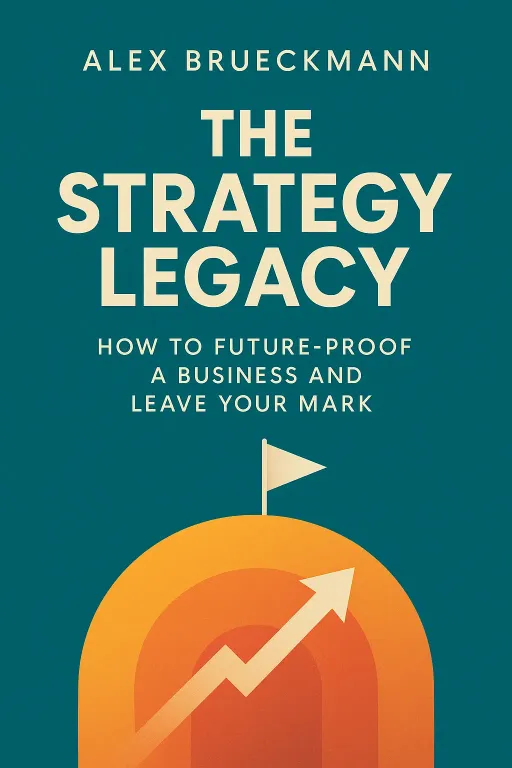
Nova: Exactly! And that's the core tension we're exploring today. We’re diving into two brilliant perspectives on leadership that, at first glance, might seem to pull in opposite directions but are actually two sides of the same coin. On one side, we have Alex Brueckmann's insightful work, "The Strategy Legacy," which emphasizes building an enduring, holistic strategic culture. And on the other, we have Ram Charan's potent "The Attacker’s Advantage," which champions an offensive, agile mindset.
Atlas: Charan, he’s the legendary advisor to so many Fortune 500 CEOs, known for his direct, no-nonsense approach to business. He really pushes leaders to confront harsh realities and move aggressively.
Nova: He certainly does. And the deep question we’re wrestling with today is: how do you integrate that long-term strategic legacy perspective with the urgent need for agile, offensive action? How do you both build enduring value and capture immediate market opportunities? It’s about not just surviving, but thriving, even in the most turbulent waters.
The Strategic Legacy: Building Enduring Value
SECTION
Nova: Let's start with Brueckmann and this idea of a "Strategic Legacy." He argues that strategy isn't just an annual planning exercise or a document crafted by a few executives in a boardroom. It's a continuous, living process that empowers the entire organization.
Atlas: I’m curious, what does "living process" actually mean in practice? Because for many, strategy that annual offsite, that big binder that gets put away. How does it become alive?
Nova: That's a great question, and it's where the magic happens. Think of it less like a blueprint for a building, and more like tending a garden. A blueprint is static; once the building is done, it's done. A garden, however, requires constant attention. You plant, you prune, you adapt to the weather, you rotate crops, you nurture. Brueckmann says strategy should be like that. It’s about fostering a culture where every team, every individual, understands the overarching vision and feels empowered to make decisions that align with it, continuously adjusting as the environment changes.
Atlas: So, it's not just about knowing the strategy is, but understanding the and having the autonomy to execute it dynamically within their sphere?
Nova: Precisely. It shifts from a top-down mandate to a collective, shared sense of purpose and direction. Imagine a large tech company we'll call "InnovateCorp." For years, their strategy was set by the executive team, then cascaded down. It was meticulously planned, but by the time it reached the front lines, market conditions had often shifted, or new technologies emerged. Teams felt disconnected, unable to pivot without lengthy approval processes. This led to internal friction, missed opportunities, and a sense of stagnation, despite having brilliant minds.
Atlas: That sounds like a familiar story for a lot of our listeners who are resilient analysts in complex organizations. They see the shifts, they know what needs to be done, but the system itself acts like quicksand.
Nova: Exactly. Now, contrast that with another company, "AgileLabs." Their leadership decided to embed strategy into their daily operations. They held frequent, short strategic sprints, involving cross-functional teams. They established clear strategic guardrails, but within those, teams had significant autonomy. When a new market trend emerged, a small team could quickly prototype, test, and iterate, knowing their actions aligned with the broader strategic intent. This fostered a culture of continuous learning and adaptation, making strategy a tool for empowerment rather than a rigid constraint.
Atlas: Wow. That's actually really inspiring. Because as someone who values sustainable solutions, I can see how that approach builds something far more resilient. It’s not just a band-aid fix; it’s a fundamental shift in how an organization breathes and moves. But how do you get everyone to buy into that, especially in a large, established structure? It sounds like it requires a massive cultural shift.
Nova: It absolutely does. It starts with leadership modeling the behavior, fostering psychological safety for experimentation, and celebrating learning from failures, not just successes. It’s about clear communication, continuous feedback loops, and truly empowering people at all levels to strategically, not just tasks.
The Attacker's Advantage: Agile, Offensive Action
SECTION
Atlas: That makes sense. But wait, Nova, while building this beautiful strategic garden is wonderful, the market doesn't exactly wait for your flowers to bloom, does it? What about the sharks in the water, the competitors, the sudden disruptions?
Nova: And that's where Ram Charan's "The Attacker’s Advantage" comes in with a necessary counterpoint. Charan argues that simply having a solid, living strategy isn't enough in today's hyper-competitive, fast-changing world. Leaders need an offensive mindset. This means not just reacting to market shifts, but anticipating them, aggressively pursuing new opportunities, and often, being the one to the shift.
Atlas: So, it’s not just about playing good defense, it’s about constantly being on the attack?
Nova: Precisely. Think of it like a game of chess. A good player doesn't just react to their opponent's moves; they plan several moves ahead, they anticipate, and they seize initiative. Charan pushes leaders to identify emerging trends, spot underserved customer needs, and then quickly and decisively move to capture that whitespace, often disrupting existing markets or creating entirely new ones.
Atlas: That makes me wonder, isn’t that just reckless, or does it require a different kind of courage and foresight? Because for our listeners who are ethical innovators, the idea of "aggressively pursuing" opportunities could sound a bit… cutthroat.
Nova: A fair point. It's not about being reckless, but about being calculatedly bold. Consider the classic tale of the video rental industry. One dominant player, let's call them "MegaRent," had a massive physical footprint and a comfortable market share. Their strategy was to optimize their existing model, focusing on store locations and late fees. They were playing defense, trying to protect their legacy business.
Atlas: And we all know how that story ended.
Nova: Indeed. Meanwhile, a smaller, newer player, "StreamFlix," saw the shift in technology and consumer behavior towards digital convenience. They didn't just to MegaRent's dominance; they aggressively the market with a completely new model – subscription-based, mail-order, then streaming. They anticipated the shift away from physical media and moved with incredible speed and conviction, effectively making MegaRent's entire business model obsolete. They didn't just adapt; they revolutionized.
Atlas: That’s a perfect example. StreamFlix didn’t wait for MegaRent to figure out streaming; they created the new playing field. It really highlights the difference between passive adaptation and active market shaping. But how do you balance that aggressive, offensive drive with the need for ethical innovation? How do you ensure you're attacking in a way that builds trust and doesn't just burn bridges?
Nova: That's the critical intersection, isn't it? The attacker's advantage, when guided by a strong strategic legacy, isn't about ruthlessness for its own sake. It's about being first to deliver superior value, to solve problems in new ways, and to innovate responsibly. It's about having the foresight to see where the market go, not just where it.
Synthesis & Takeaways
SECTION
Nova: So, we have Brueckmann pushing for strategy as a deep, living cultural force that builds enduring value, and Charan advocating for aggressive, agile action to seize new opportunities. How do we put these two powerful forces together? Because for our listeners, who are always connecting theory to real-world application, this is where the rubber meets the road.
Atlas: Exactly. It feels like a paradox. How can you be focused on building a long-term legacy while simultaneously being ready to pivot, disrupt, and attack at a moment's notice?
Nova: The integration isn't a compromise; it's a dynamic tension, a continuous dance. Your strategic legacy provides the foundational purpose, the unwavering 'why' and the ethical guardrails for your organization. It's the strong core that defines who you are and what you stand for. The attacker's advantage, then, becomes the agility, the innovation, and the bold moves that allow you to protect, grow, and even redefine that legacy in a constantly evolving world. It’s about having a clear destination, but being incredibly flexible and opportunistic about the path you take to get there.
Atlas: That's a brilliant way to put it – a clear destination, flexible path. So, for our listeners who want to shift from a reactive to a proactive 'attacker's advantage' mindset in their current or future roles, what would those first three concrete steps look like?
Nova: Excellent question. First, I'd say, map out your industry's potential disruptions. Don't just look at competitors; think about adjacent technologies, changing consumer behaviors, or even regulatory shifts that could upend your current model. Second, identify one "whitespace" opportunity – a gap in the market, an unmet customer need, or a novel application of existing tech that you could aggressively pursue. And third, empower a small, cross-functional team within your organization to experiment with that opportunity. Give them a clear mandate, resources, and freedom to fail fast and learn quickly.
Atlas: That sounds like a perfect blend of foresight and action, which I know resonates deeply with those seeking to expand their influence through global brand narratives and ethical innovation. It’s about not just predicting the future, but actively shaping it, with integrity.
Nova: Absolutely. True leadership, then, isn't just about crafting a beautiful vision, nor is it solely about winning every skirmish. It's about cultivating a culture where that vision is alive and shared, enabling everyone to act with both strategic purpose and offensive agility. It’s about building something that not only endures but actively pushes the boundaries of what’s possible.
Atlas: That’s such a powerful thought to leave our listeners with. Thank you, Nova.
Nova: My pleasure, Atlas.
Nova: This is Aibrary. Congratulations on your growth!