Charting Your Course: Crafting Unbeatable Strategy
Golden Hook & Introduction
SECTION
Nova: Forget everything you thought you knew about strategy being a bullet-point document. What if the very act of your strategy document is the moment you've already failed?
Atlas: Whoa, Nova. That's a bold claim right out of the gate. I mean, for so many of us, getting that strategy feels like the biggest win. Are you saying the victory lap is actually a stumble?
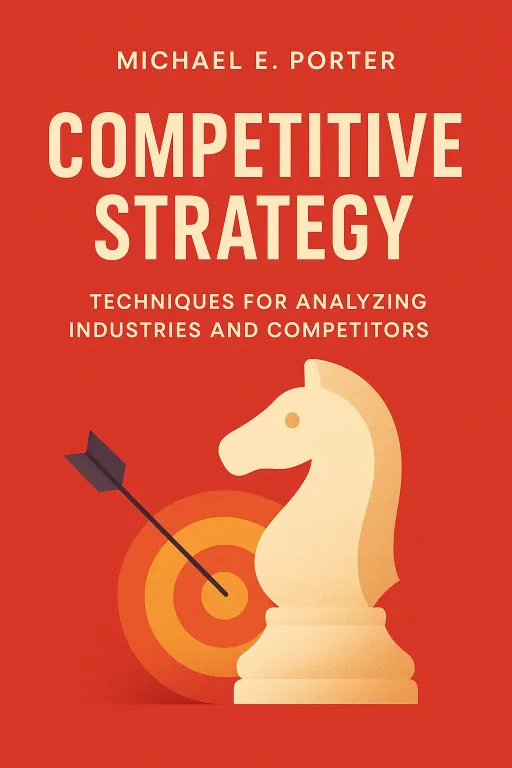
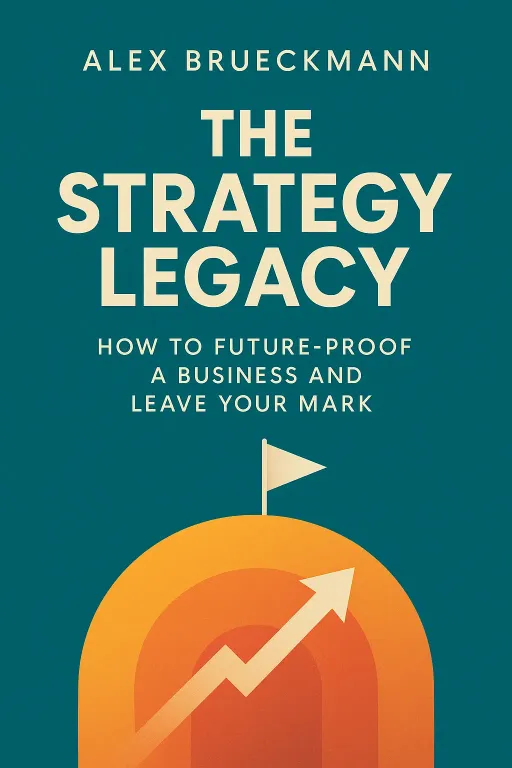
Nova: Exactly! That "done" feeling often means we've static-fied something that needs to be alive and breathing. Today, we're diving into two brilliant minds that completely reframe how we think about charting our course. We’ll be exploring insights from Alex Brueckmann’s "The Strategy Legacy" and then deconstructing the very essence of effective planning with Richard P. Rumelt’s widely acclaimed "Good Strategy/Bad Strategy." Rumelt's work, in particular, is considered a modern classic, praised for its crystal-clear approach to cutting through strategic jargon.
Atlas: Okay, so we're talking about strategy that isn't just a pretty presentation, but something that actually in the real world. That’s going to resonate with anyone who’s ever sat through a meeting full of buzzwords and walked out wondering what the actual plan was.
Nova: Precisely. We're moving beyond the illusion of strategy to its practical, impactful reality.
Strategy as a Living, Adaptive Process
SECTION
Nova: So, let's kick off with Brueckmann's "The Strategy Legacy." He introduces this brilliant concept called the "Strategy Continuum." Most people view strategy as a fixed point, right? You set it, you forget it, you execute. But Brueckmann argues that strategy isn't a destination; it's a continuous journey. It's adaptive.
Atlas: A continuous journey. I like that. But wait, how does that work for leaders who need to provide clear direction to their teams? If the strategy is always moving, doesn't that create instability or confusion?
Nova: That's the core tension, isn't it? The "Empathetic Leader" within us wants to provide certainty. But the "Future Navigator" knows that the landscape is constantly shifting. Brueckmann's point is that the or the remains constant, but the to get there must be flexible. Think of it like a captain navigating a ship. Their destination is clear – say, a specific port. But they don't draw a straight line on the map and ignore storms or changing currents. They constantly adjust their sails, their rudder, their speed, all while keeping the destination in mind.
Atlas: That’s a great analogy. So the "Strategy Continuum" isn't about aimlessness, it’s about agile execution towards a fixed purpose. It’s like, you know you’re going somewhere, but you’re not afraid to change you get there if a new, better route appears, or a hurricane pops up.
Nova: Exactly! He emphasizes integrating purpose with practical execution. It's not enough to have a grand vision; you need to constantly evaluate if your current actions are still the most effective way to realize that vision given the current realities. A static strategy becomes obsolete the moment the market shifts, a new competitor emerges, or technology evolves.
Atlas: I can see how a "Pragmatic Strategist" would find that incredibly useful. It moves strategy from a theoretical exercise to a living, breathing part of daily operations. But for many, the idea of "constantly adapting" can feel overwhelming. How do you instill that mindset without creating chaos? Is it just about being perpetually flexible, or are there guardrails?
Nova: Great question, Atlas. It's not about chaos; it's about building in feedback loops and learning mechanisms. Brueckmann suggests creating a culture where questioning and adjusting the strategy is not only permitted but encouraged. It's about small, iterative adjustments based on real-world data, rather than waiting for a massive, disruptive failure to force a complete overhaul. Imagine a software development team using agile methodologies. They have a product vision, but they release small updates, gather user feedback, and continuously refine. Their "strategy" for the product isn't a single 100-page document; it's a dynamic roadmap.
Atlas: That makes perfect sense. It transforms strategy from a rigid, top-down decree into a continuous organizational conversation. It empowers teams to be part of the solution, not just execute a pre-written script. So, the goal isn't to the strategy, but to constantly it.
Nova: Precisely. It’s about building a legacy of adaptability, not just a legacy of plans.
The 'Kernel' of Good Strategy: Diagnosis, Policy, Action
SECTION
Nova: Now, while Brueckmann gives us the "how" of strategy's lifecycle, Rumelt, in "Good Strategy/Bad Strategy," gives us the "what"—the essential ingredients that make a strategy truly effective. He argues that good strategy has a "kernel" made of three distinct parts: a diagnosis, a guiding policy, and coherent actions.
Atlas: Okay, a "kernel." That sounds wonderfully concrete. I’m curious, what does he mean by "diagnosis"? Because I’ve seen a lot of "diagnoses" that were just rephrasing the problem in fancier words.
Nova: That’s the key distinction! A good diagnosis isn't just stating the problem; it's identifying the. It's pinpointing the obstacles, the root causes, the asymmetries that make the situation difficult. It requires deep analysis, not just surface observation. Rumelt would say bad strategy often skips this or offers a generic diagnosis that applies to almost any organization. For example, a bad diagnosis might be "We need to increase market share." A good diagnosis would be "Our market share is declining because our product, while high-quality, is priced 20% higher than competitors who offer comparable features, and our distribution channels are outdated."
Atlas: I see. So it's about truly understanding the battlefield before you even think about firing a shot. It requires a sharp intellect to cut through the noise and identify the core issue. And then, once you have that diagnosis, what’s the "guiding policy"?
Nova: The guiding policy is the overall approach chosen to overcome the critical challenge identified in the diagnosis. It's not a list of goals or a mission statement; it's a coherent response. It's about you intend to deal with the diagnosis. If the diagnosis was "our high-priced, high-quality product is losing to cheaper competitors due to outdated distribution," a guiding policy might be: "Streamline our supply chain and forge strategic partnerships with online retailers to reduce costs and expand reach, allowing us to compete on price while maintaining perceived quality."
Atlas: That’s a powerful distinction. It’s not just a wish, it’s a specific of attack. It makes me wonder, how many "strategies" out there are just a collection of ambitious goals without a clear guiding policy to connect them to a diagnosis? Probably too many.
Nova: Far too many. And that leads us to the third part of the kernel: coherent actions. These are the steps you take that are consistent with, and reinforce, the guiding policy. They're not just random initiatives; they're mutually reinforcing actions that amplify each other's effects. If your guiding policy is to reduce costs and expand online reach, your coherent actions might include investing in new logistics technology, hiring e-commerce specialists, and negotiating new terms with shipping providers.
Atlas: That makes me think of the Deep Question we set out with: How can you apply this "kernel" to your current professional challenges, ensuring your actions are truly coherent with your diagnosis and guiding policy? It sounds like many people might have a decent diagnosis, maybe even a guiding policy, but then their actions are all over the place, or worse, contradictory.
Nova: Precisely. Rumelt is brilliant at highlighting how "bad strategy" is often characterized by fluff, buzzwords, and vague goals that lack this internal coherence. Imagine a company whose diagnosis is "we need to innovate," their guiding policy is "be more innovative," and their actions are "have more brainstorming meetings." That's bad strategy. A good strategy would have a precise diagnosis of innovation is lacking, a guiding policy of they will foster it, and concrete, coherent actions like "create dedicated innovation labs with protected time and resources, separate from daily operations, and establish clear metrics for experimentation."
Atlas: I can definitely relate to that. It’s like, you know, the difference between saying "I want to be healthier" versus "I'm going to run three miles every morning and eat a plant-based diet." One is a vague aspiration, the other is a coherent set of actions tied to a clear diagnosis and guiding policy. This framework gives you something tangible to hold onto.
Synthesis & Takeaways
SECTION
Nova: So, bringing Brueckmann and Rumelt together, we see that strategy isn't just a static document, nor is it merely a set of good intentions. True strategy, the kind that drives impact, is a dynamic, adaptive process—a continuum—that is built upon a solid kernel of clear diagnosis, a focused guiding policy, and mutually reinforcing, coherent actions. It's about constantly evaluating your course while ensuring your fundamental approach is sound.
Atlas: That's actually really inspiring. It means you don't have to be paralyzed by the idea of getting your strategy "perfect" on day one. You just need to get it coherent and then be ready to adapt. It also gives you a powerful lens to evaluate any "strategy" you encounter—whether it's your own, your team's, or even your personal goals. If it lacks a clear diagnosis, a focused policy, and coherent actions, it might just be fluff.
Nova: Exactly. It's about moving from a passive, 'set it and forget it' approach to an active, engaged, and impactful one. For our listeners who are "Pragmatic Strategists" and "Empathetic Leaders," this offers a profound shift. Instead of just reacting, you become a conscious architect of your future, constantly adjusting, but always with a solid understanding of your core challenge and how you intend to tackle it.
Atlas: That makes me wonder, what's one immediate thing our listeners can do to apply this?
Nova: I'd say take 20 minutes this week. Pick a professional challenge you're currently facing. Then, apply Rumelt's kernel. What's your diagnosis of the critical challenge? What's your —your overall approach to overcome it? And what are the you'll take that reinforce that policy? Don't just list goals; connect them.
Atlas: That’s a fantastic, actionable step. And I’d add, share your insights! If you've applied this kernel or thought about your strategy continuum, we’d love to hear how it shifted your perspective. Connect with us and let us know what you uncovered.
Nova: Absolutely. Your growth is our mission.
Nova: This is Aibrary. Congratulations on your growth!