

Architects of Thought: Journey Through Philosophical Movements
Golden Hook & Introduction
SECTION
Nova: Atlas, quick question for you. If I said the word "philosophy," what's the very first, unfiltered thought that pops into your head? No judgment.
Atlas: Oh man, "philosophy." Okay, my first thought is probably… dusty old books, bewilderingly long sentences, and a distinct smell of pipe tobacco and intellectual superiority. Possibly a toga. Maybe a very confused look on my own face.
Nova: A toga! I love that. So, not exactly a cozy fireside chat, then?
Atlas: Definitely not a "grab a cup of tea and curl up" kind of vibe. More like "grab an extra strong espresso and a dictionary, then maybe a nap." It feels... intimidating. Like a secret club for people with very impressive beards and even more impressive vocabularies.
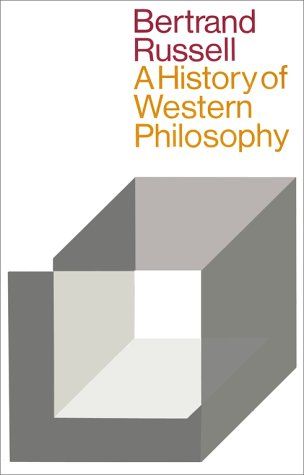
Nova: And that's exactly why we need to talk about it today. Because while the image of the stoic, impenetrable philosopher persists, the reality is far more inviting, and dare I say, essential. We're diving into the intellectual landscapes mapped out by two giants today: Bertrand Russell's monumental "A History of Western Philosophy" and Will Durant's utterly captivating "The Story of Philosophy."
Atlas: Russell and Durant. Those names themselves sound like they belong on Mount Olympus.
Nova: Well, they might as well. Russell's work is this incredible, sweeping survey, a truly monumental undertaking that charts Western thought from the pre-Socratics all the way to the early 20th century. It’s highly acclaimed for its comprehensiveness, though it’s also been debated for his subjective interpretations of certain thinkers. He really stamped his own logical positivist leanings onto the narrative.
Atlas: So, a grand tour guide with an opinion. I can appreciate that.
Nova: Exactly! And then you have Will Durant, who took this vast, often daunting subject and made it sing. His "The Story of Philosophy" was groundbreaking in its accessibility, widely beloved for its storytelling, and became a perennial bestseller that introduced millions to philosophical thought. He brought the lives and ideas of these thinkers to life like no one else before him.
Atlas: So, one's the incredibly detailed, authoritative map, and the other is the engaging, character-driven travelogue. I can already see how that helps chip away at the "intimidating" factor.
The Enduring Allure and Accessibility of Philosophical Inquiry
SECTION
Nova: Precisely. And that's our first big idea today: The Enduring Allure and Accessibility of Philosophical Inquiry. Because for deep thinkers like us, the initial hurdle often isn't the of curiosity, but the sheer of the subject. Where do you even begin?
Atlas: That’s it! It feels like trying to drink from a firehose. How do you even pick one philosopher or one school of thought without feeling like you're missing out on everything else, or worse, getting it entirely wrong?
Nova: And that's where Durant's genius, in particular, shines. He understood that philosophy isn't just a collection of abstract theories; it's a living, breathing narrative of humanity's enduring questions. He didn't just present ideas; he presented the behind them, their struggles, their lives, their times.
Atlas: So, less of a textbook, more of a biography. That makes a huge difference. It's like instead of just reading about gravity, you're meeting Isaac Newton and seeing the apple fall.
Nova: Exactly! Imagine a busy professional, someone juggling a demanding career, family, and maybe even a side hustle. They hear "philosophy" and picture dense academic papers, impenetrable jargon. But then they pick up Durant, and suddenly they're not just reading about Plato's Forms; they're connecting with a man grappling with the ideal society in a chaotic Athens. They're not just studying Kant's categorical imperative; they're seeing a meticulous German professor trying to define universal moral laws.
Atlas: That makes sense. It’s not just about what they thought, but they thought it, and the context that shaped their ideas. That human element makes it far more relatable.
Nova: And that relatability is key. Philosophy, at its core, is about asking the big questions: What is truth? What is good? What does it mean to live a meaningful life? These aren't academic questions; they're fundamentally human questions. Durant made those questions accessible by wrapping them in compelling stories. He essentially said, "Come sit by the fire, and let me tell you about these incredible minds who wrestled with the same things you do."
Atlas: So, it's less about finding answer, and more about engaging with the questions themselves? That feels like a massive relief, honestly. Because the pressure to "get it" or "understand it all" is what often shuts people down.
Nova: Absolutely. The questions the path. And Russell, in his own way, provides the map for that path. While his style is more academic, his overarching narrative allows you to see the connections, the evolution of ideas, the dialogues across centuries. It’s like a mental gym. You don't walk in expecting to lift the heaviest weights on day one. You start with what you can manage, and slowly, you build intellectual muscle.
Atlas: I like that analogy. A mental gym. So, it's not about being a philosophical weightlifter from the get-go, but consistently engaging with the ideas, even if it's just one philosopher at a time.
Nova: Precisely. And for someone who seeks fundamental truths and values understanding, these books offer not just knowledge, but a framework for how to about those truths. They show you the historical arguments, the counter-arguments, the evolution of intellectual discourse.
Bridging Ancient Wisdom to Modern Living: Philosophy's Practical Resonance
SECTION
Atlas: Okay, I’m convinced that philosophy isn't just for the bearded elite anymore. But let's be real. We're living in 2024. What does some ancient Greek guy debating the nature of reality have to say to my mortgage payments or my daily struggle with decision fatigue? How does ancient wisdom actually bridge to modern living?
Nova: That's a fantastic question, and it brings us to our second core idea: Bridging Ancient Wisdom to Modern Living. Because the beauty of philosophy is its timelessness. Take, for example, the existentialist thinkers. The user profile mentions "Existentialism" as a next destination, and for good reason. Thinkers like Kierkegaard and Nietzsche, and later Sartre and Camus, grappled with meaning, freedom, and responsibility in a world that felt increasingly chaotic and godless.
Atlas: Meaning, freedom, responsibility... those sound like pretty universal human struggles, even more so today with all the choices and information overload.
Nova: Exactly. Imagine a young professional feeling completely overwhelmed by career choices, societal expectations, and the constant pressure to "find their purpose." They're experiencing a crisis of meaning, a deep sense of angst. They might feel like a cog in a machine, or that their life lacks inherent meaning.
Atlas: I can definitely relate to that feeling, and I bet a lot of our listeners can too. That search for purpose, for something beyond the daily grind.
Nova: Now, while ancient philosophers didn't have LinkedIn or TikTok, their insights into human nature and the quest for meaning are incredibly relevant. An existentialist perspective would argue that meaning isn't, it's. You are condemned to be free, as Sartre put it. This isn't a depressing thought; it's incredibly empowering. It means you are the architect of your own values and purpose.
Atlas: So, instead of waiting for purpose to tap you on the shoulder, you have to go out and build it yourself. That shifts the entire dynamic from passive waiting to active creation. That's a profound insight.
Nova: It fundamentally changes how you approach decisions. It encourages radical self-responsibility. Or consider ethics, another one of our listener's "Next Destinations." Ancient Stoicism, for instance, offers incredible tools for resilience and navigating external chaos by focusing on what you control – your reactions, your judgments.
Atlas: So, when my internet goes out right before a big meeting, instead of throwing my laptop, I should channel my inner Marcus Aurelius?
Nova: Precisely! It's about cultivating inner tranquility regardless of external circumstances. It's a framework for building a moral compass, not just a set of rules. The "deep thinker" who values understanding and self-improvement can apply these frameworks to decode decisions in their own life, to build a resilient mindset. The questions these philosophers asked centuries ago – about justice, about virtue, about the good life – are the same fundamental questions we wrestle with in our boardrooms, our relationships, and our personal lives today.
Atlas: It's like they laid the groundwork for understanding the human condition, which hasn't really changed all that much, even if the technology around us has. So, these movements aren't just historical footnotes; they're living toolkits for navigating modern existence.
Synthesis & Takeaways
SECTION
Nova: Absolutely, Atlas. What we uncover through these philosophical journeys, whether it’s Russell’s grand map or Durant’s engaging stories, is that philosophy isn't a dusty relic. It's a vital, dynamic conversation that spans millennia, offering profound insights into what it means to be human. It empowers us to grapple with meaning, to define our freedom, and to build that essential moral compass.
Atlas: It’s not about finding answer, but learning to ask better questions, to think more deeply, and to see the connections between ancient wisdom and our own contemporary struggles. It's about embracing the journey of questioning, knowing that the questions themselves are the path to personal growth and self-improvement.
Nova: And for anyone who considers themselves a curious explorer, an empathetic analyst, or a self-reflector, diving into these philosophical movements is one of the most rewarding intellectual adventures you can undertake. It’s like discovering an operating manual for existence, written by the sharpest minds in history.
Atlas: So, for our listeners, I wonder: which philosopher or philosophical movement, after hearing this, feels like your next intellectual adventure? Where will your journey of questioning take you?
Nova: This is Aibrary. Congratulations on your growth!