

Designing Your Career Pivot
Golden Hook & Introduction
SECTION
Nova: "Follow your passion." Three words. What do they evoke for you, Atlas?
Atlas: Oh man, "Anxiety. Debt. And probably a life-coaching influencer who sells courses." It's one of those phrases that sounds great on a motivational poster, but in practice, it feels like a setup for profound disappointment.
Nova: Exactly! It’s the kind of advice that, while well-intentioned, often leaves people paralyzed by the enormity of the task. Because what if you don't your passion? Or what if your passion doesn't pay the bills?
Atlas: Right? That’s going to resonate with anyone who’s ever tried to map out their next big move. You’re told to look deep inside, find your true calling, then make a giant leap. But for people building complex systems or strategizing market entries, that sounds… incredibly inefficient.
Nova: Well, today, we're diving into two brilliant minds who challenge that exact notion, offering a far more strategic and iterative approach to shaping your professional future. We’re talking about Herminia Ibarra, a distinguished professor of organizational behavior, and Reid Hoffman, the legendary co-founder of LinkedIn. Both have incredibly insightful, yet distinct, perspectives on how to navigate career pivots.
Atlas: That’s a powerful duo. Ibarra, from the academic rigor of organizational behavior, and Hoffman, from the high-stakes, rapid-fire world of Silicon Valley entrepreneurship. I'm curious how their ideas converge.
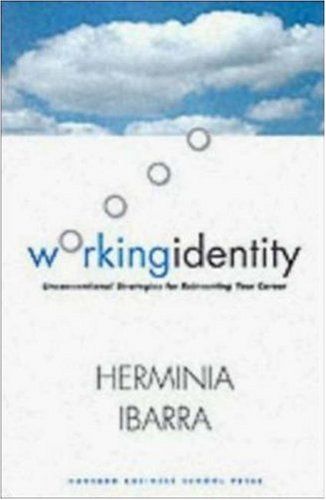
Nova: They converge beautifully on the idea that career change isn't a singular, internal discovery, but an active, dynamic process. Ibarra, in her seminal work "Working Identity," really pushes back against the idea that you need to figure yourself out before making a change.
Deep Dive into Herminia Ibarra's "Identity Experiments"
SECTION
Nova: She argues that successful career change happens through what she calls "identity experiments." It’s less about purely internal reflection and more about active iteration. Think about it: how often do we truly know what we want until we’ve actually tried it?
Atlas: That’s a great way to put it. I mean, we build business models by testing assumptions in the market, not by just thinking really hard in a boardroom. So you’re saying she applies that build-measure-learn loop to our own professional identities?
Nova: Precisely! Her core insight is that we, rather than thinking our way into a new way of acting. It’s a profound shift. Instead of waiting for clarity, you create it through small, real-world trials.
Atlas: Okay, so, what does an "identity experiment" actually look like? Because for a lot of our listeners who are managing high-pressure teams or driving scalable growth, "experimenting" might sound a bit… unfocused. Or risky.
Nova: That’s a fair point, and it’s why understanding the of these experiments is key. They’re not reckless leaps. They’re small, low-risk forays into potential new professional identities. Imagine Elena, a corporate lawyer, who felt increasingly unfulfilled by her high-powered firm. She loved the intellectual challenge but felt a growing desire to contribute to social justice.
Atlas: Right, so the classic "golden handcuffs" scenario. What did she do? Did she quit to join a non-profit?
Nova: Not at all. That would be the traditional, high-risk approach. Instead, Elena started small. Her first experiment was volunteering for a legal aid clinic one evening a week, focusing on immigrant rights. It was a toe in the water. She wasn’t abandoning her Plan A, but she was actively testing a Plan B.
Atlas: I see. So the cause was her growing dissatisfaction, the process was a low-commitment volunteer role, and the outcome was... what? Did she suddenly realize she wanted to be a full-time immigration lawyer?
Nova: Not directly. The outcome was. She learned that while she enjoyed the direct impact, the day-to-day legal aid work was emotionally draining in a way her corporate work wasn't. But, crucially, she also discovered a passion for within the non-profit sector, something she hadn't even considered. This led to her next experiment: joining a policy committee for a small advocacy group. Each step informed the next, building a clearer picture of what truly resonated with her.
Atlas: That’s fascinating. It’s like she was running A/B tests on her own career. It makes total sense for someone who builds efficient systems; you don't roll out a massive change without small, controlled tests first. The "cause" was a vague sense of dissatisfaction, but the "process" of small experiments led to a much more defined outcome.
Nova: Exactly. It’s about being agile with your identity, allowing it to evolve through action and feedback, rather than trying to define it perfectly upfront. It reduces the paralysis and the perceived risk.
Deep Dive into Reid Hoffman's "ABZ Planning"
SECTION
Nova: And once you're doing these identity experiments, how do you actually structure that exploration? How do you maintain stability while pursuing these potential pivots? That's where Reid Hoffman comes in with "The Start-up of You."
Atlas: Ah, the entrepreneurial mindset applied to the individual. I’m all for that. I often analyze business models and market entry, so the idea of applying startup strategies to personal development really clicks with me.
Nova: It should! Hoffman, coming from the world of venture capital and building companies like LinkedIn, recognized that individuals need to think like startups. They need agility, resilience, and a clear strategy for growth and adaptation. And his most powerful framework for this is "ABZ Planning."
Atlas: Okay, tell me about ABZ planning. I've heard the term, but how does it actually work in practice for a career?
Nova: ABZ Planning helps you map out your next career move with entrepreneurial rigor.
Atlas: That makes me wonder... how is Plan B different from just having a backup plan? We all have backup plans, right?
Nova: That’s a crucial distinction. A typical "backup plan" is often passive, something you hope you never need. Plan B, in Hoffman's framework, is. You are actively investing time and energy into developing it, running those identity experiments we just discussed. It's about parallel processing your career growth.
Atlas: So it's not a "what if I fail" scenario, but a "what if I in exploring something new" scenario?
Nova: Exactly. Think of David, a senior manager in a traditional manufacturing firm. He was good at his job, but he saw the writing on the wall for his industry and was deeply interested in renewable energy. His Plan B wasn't to quit and start a solar panel company. Instead, he began taking online courses in sustainable energy management, attending industry webinars, and networking with people in that field. He even started advising a small local non-profit on their energy efficiency.
Atlas: So his Plan B was building expertise and connections, testing the waters. What about Plan Z? Because for many, "safety net" can feel like a luxury, especially if you're trying to design the future of commerce or fuel sustainable growth. How realistic is that safety net for someone who's already stretched thin?
Nova: That's where the strategic mindset comes in. David's Plan Z wasn't just "move back in with parents." It was a clear understanding of his highly transferable skills: project management, team leadership, and financial acumen. He knew he could always consult independently in a related field, or even take a step back into a more junior, but stable, role if absolutely necessary. It's about identifying your that can always provide for you, even if your grander plans don't pan out immediately. It's about building resilient systems for your own life.
Atlas: That’s a powerful reframing. Plan Z isn't about giving up; it's about knowing your baseline and having the confidence that you can always provide value. It frees you up to take more intelligent risks with Plan B.
Nova: Precisely. It allows you to explore Plan B with less fear, knowing you have a solid foundation. And it’s not a static plan. As you learn from your Plan B experiments, your Plan A might shift, or your Plan Z might become more robust. It's continuous adaptation.
Synthesis & Takeaways
SECTION
Nova: So, what we see here is a beautiful integration. Ibarra gives us the permission and methodology for iterative experimentation—acting our way into new insights. And Hoffman gives us the strategic framework—the ABZ plan—to contain and direct those experiments, managing risk and maintaining resilience.
Atlas: So, it’s about being agile but also having a compass, right? Not just flailing, but intelligently exploring. It’s about building a career that’s robust and adaptable, not just rigid. For our listeners who are visionaries and builders, this offers a concrete way to approach growth recommendations like "embrace iterative learning."
Nova: Absolutely. It’s reframing career change from a daunting, singular event to an ongoing, empowering process of self-creation and adaptation. The true power lies in understanding that your professional identity isn't fixed; it's something you actively build and refine through strategic action. It’s crucial for anyone seeking scalable success in a rapidly changing world.
Atlas: That’s actually really inspiring. It takes the pressure off "finding" your one true path and puts the power back into your hands to it, step by step.
Nova: Indeed. So, for our listeners, we want to leave you with this: What small, low-risk identity experiment could you launch this week to explore a potential Plan B?
Atlas: And what would your Plan B look like, if you allowed yourself to dream it, knowing you have a solid Plan A and a resilient Plan Z?
Nova: This is Aibrary. Congratulations on your growth!